Featured Solar Storage Welding Solutions
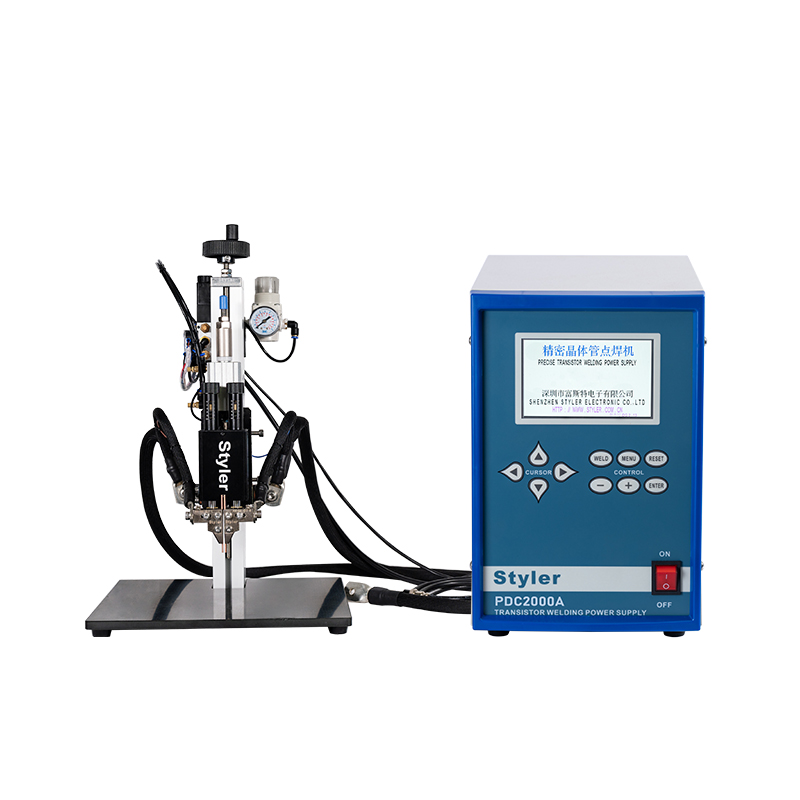
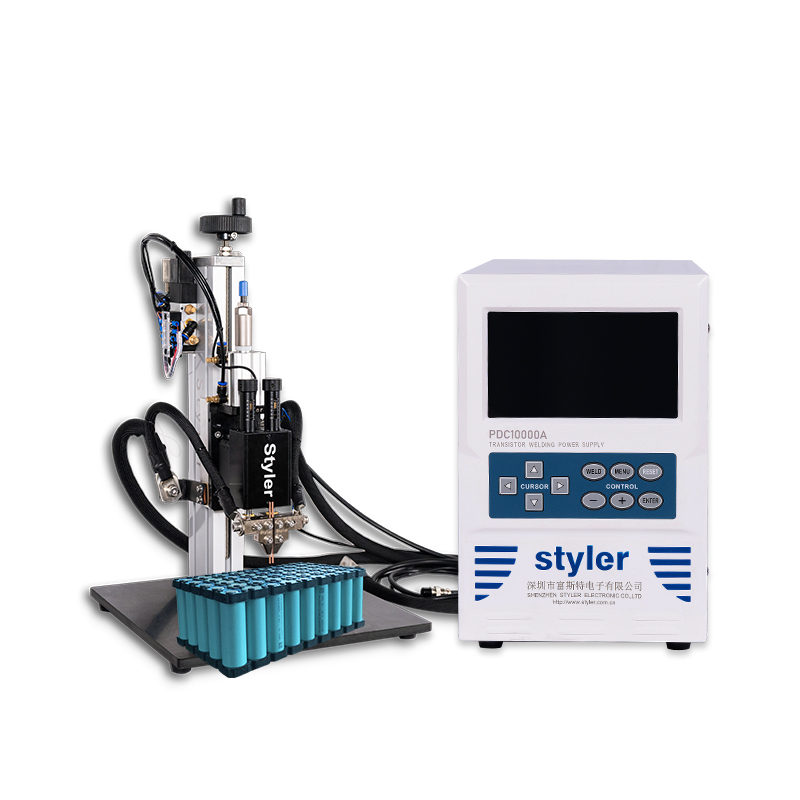
The Vital Role of Manual Spot Welding in Solar Storage Module Production
As the global transition to renewable energy accelerates, the demand for high-capacity Battery Energy Storage Systems (BESS) has reached unprecedented heights. Solar energy, while abundant, is inherently intermittent. To ensure a stable and resilient power grid, both residential and commercial sectors are rapidly adopting lithium-ion battery modules to store harvested solar energy. The production of these modules relies heavily on the mechanical and electrical integrity of cell-to-cell connections. In this landscape, the manual spot welding machine stands out as a critical, highly flexible manufacturing asset.
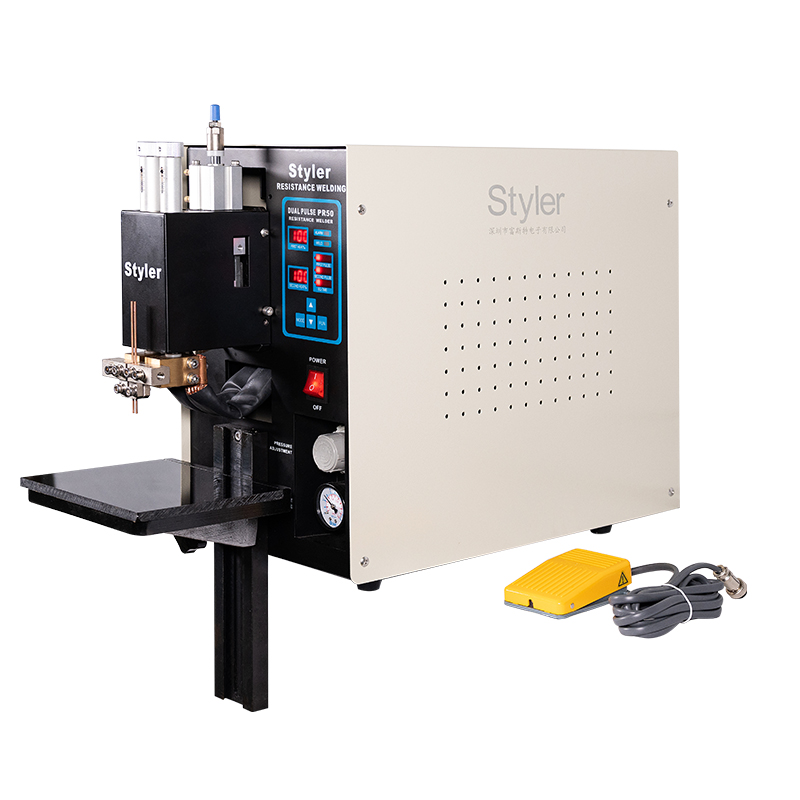
While automated laser systems dominate high-volume electric vehicle (EV) battery lines, manual resistance spot welding remains the cornerstone of the custom solar storage module production sector. Solar storage packs often require complex, multi-layered layouts with heavy pure nickel or copper-nickel composite busbars to handle sustained high currents. A manual spot welder allows operators to adapt dynamically to diverse module designs, ensuring precise contact pressure and localized heat delivery without compromising the delicate internal structure of the battery cells.
Industrial and Commercial Landscape of Solar Storage Manufacturing
The manufacturing landscape for renewable energy storage is highly diverse. Unlike standardized automotive battery packs, solar storage modules are engineered for a wide range of applications, including residential wall-mounted batteries, agricultural off-grid microgrids, telecommunications backup systems, and large-scale utility containerized storage. This variation in scale and configuration makes fully automated production lines financially unviable for many regional manufacturers and custom integrators.
Manual spot welding machines bridge this gap by providing an affordable, high-precision entry point for medium-scale production and prototyping. They offer the agility required to switch between different cell formats (such as 18650, 21700, 32650, and the newer 4680 formats) and varying tab thicknesses without extensive downtime for reprogramming. Furthermore, in the commercial assembly of Battery Energy Storage Systems (BESS), manual operations allow for real-time quality inspection and adjustments, significantly reducing the risk of defective welds that could lead to catastrophic thermal runaway events.
- High Adaptability Seamlessly switch between cylindrical cell form factors (18650, 21700, 32650) and varying tab materials.
- Optimized Thermal Control Localized micro-pulse energy delivery minimizes heat transfer to the sensitive battery separators.
- Cost-Effective Scalability Low initial capital expenditure (CAPEX) with low maintenance overhead compared to automated laser systems.
- Enhanced Quality Control Allows operators to visually inspect and manually adjust contact pressure before initiating the weld sequence.
Deep-Dive Application Scenarios in Solar Storage Production
Understanding the exact application scenarios of manual spot welders helps manufacturers optimize their assembly lines for maximum efficiency and product lifespan. In solar storage module production, these machines are primarily deployed in three critical phases: prototyping, custom low-to-medium volume assembly, and post-production repair/refurbishment.
1. High-Current Busbar Welding for Residential ESS
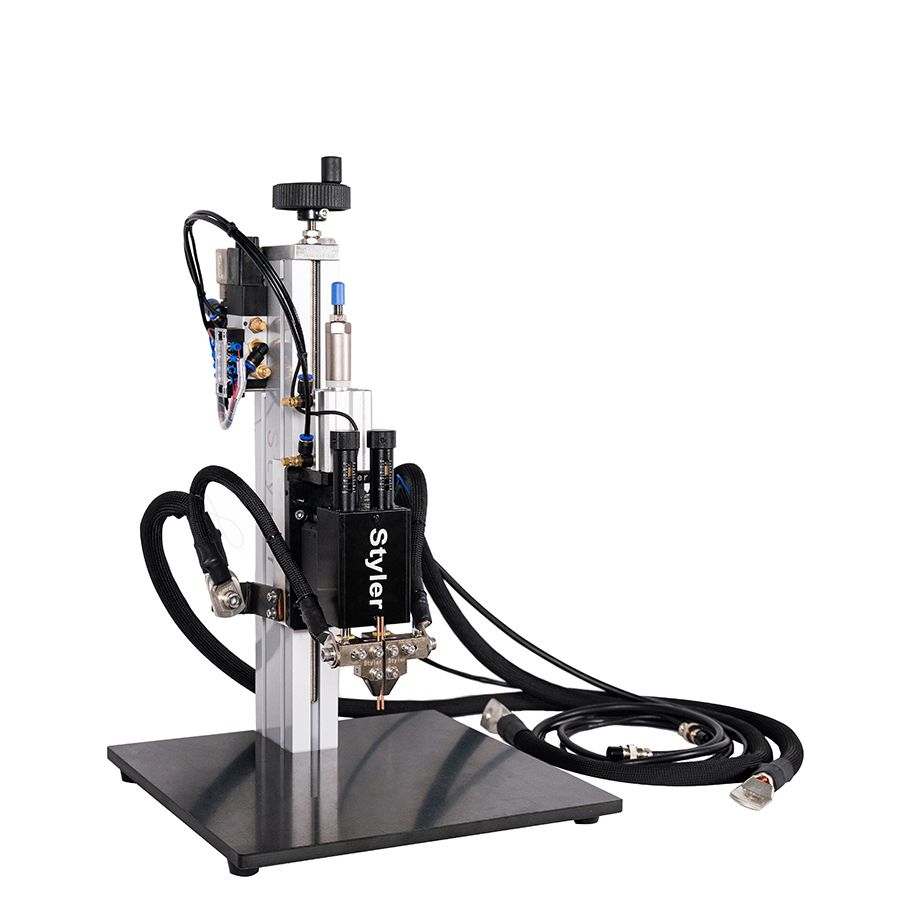
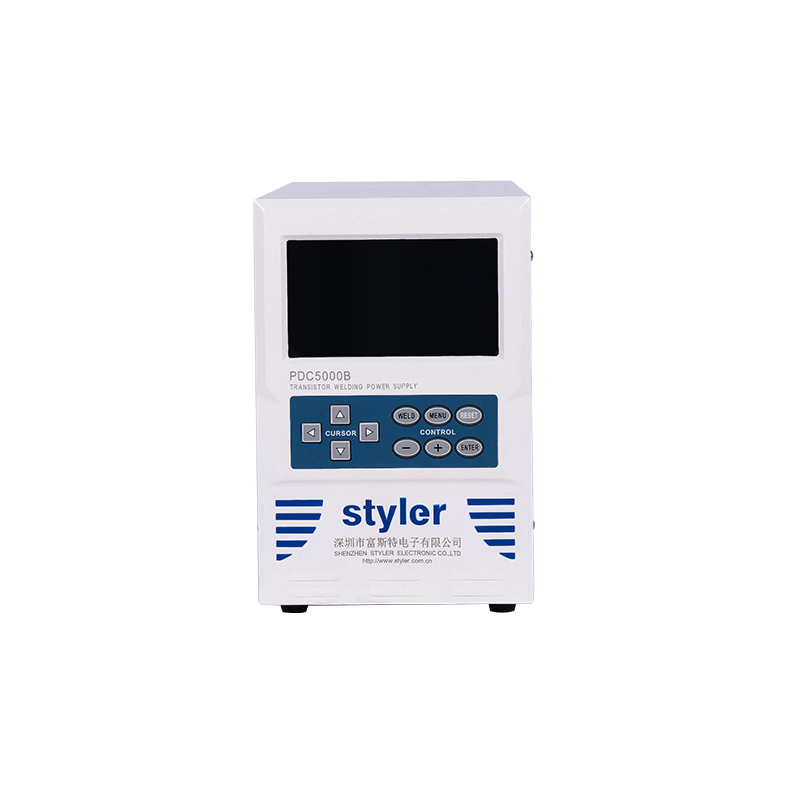
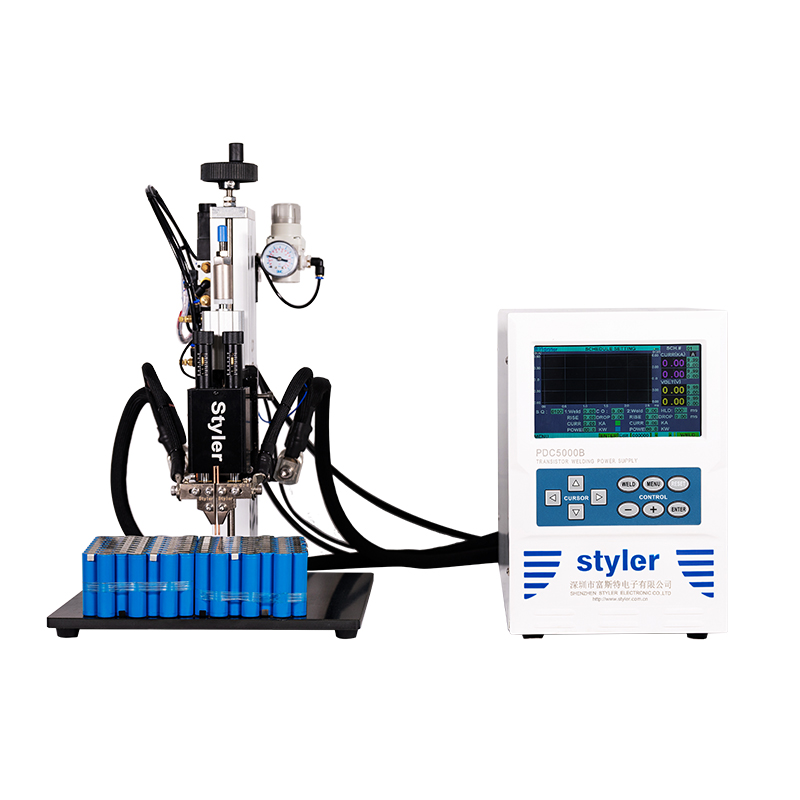
Residential solar storage walls (typically 48V or 51.2V configurations) require connecting dozens of cylindrical cells in parallel and series. To minimize voltage drops and heat generation during high-power discharge cycles, thick nickel strips or copper-nickel composite materials are utilized. A high-performance manual spot welding machine, such as the Styler PDC5000B or PDC10000A, delivers the high peak currents necessary to penetrate these low-resistance materials, forming a highly conductive molecular bond with minimal contact resistance.
2. Prototype Development and R&D Testing
Before launching a commercial solar battery pack, engineers must test multiple configurations to optimize thermal management and discharge profiles. Manual spot welders are indispensable tools in research laboratories and R&D departments. They enable engineers to rapidly prototype design iterations without the need to design complex fixtures or write CNC paths required by automated systems. The ability to fine-tune weld parameters (such as pre-heat pulse, main pulse, and squeeze time) on the fly accelerates the product development lifecycle.
3. Off-Grid Microgrids and Custom Industrial Packs
Remote telecommunication towers and off-grid agricultural operations require customized energy storage solutions tailored to harsh environmental conditions. These packs often incorporate reinforced structural frames and non-standard connection geometries. Manual spot welding allows operators to maneuver the welding head into tight spaces or weld at angles that standard automated gantry systems cannot reach. This flexibility ensures that structural reinforcement tabs and electrical connection tabs can be secured in a single workflow.
Future Trends: Smart Integration and Advanced Materials
The future of manual spot welding in the renewable energy sector is defined by technological convergence. Modern manual systems are increasingly incorporating "smart" features. Real-time monitoring of voltage, current, and displacement provides operators with immediate feedback on weld quality. If a weld falls outside the pre-programmed quality window, the machine alerts the operator, preventing defective modules from moving down the assembly line. Furthermore, as the industry transitions toward pure copper connections to further enhance efficiency, advanced manual systems utilizing high-frequency inverter technology and specialized dual-pulse profiles are becoming standard to overcome copper's high thermal conductivity.
About Us
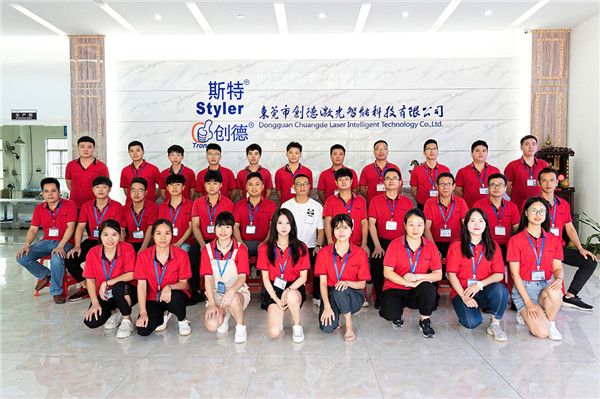
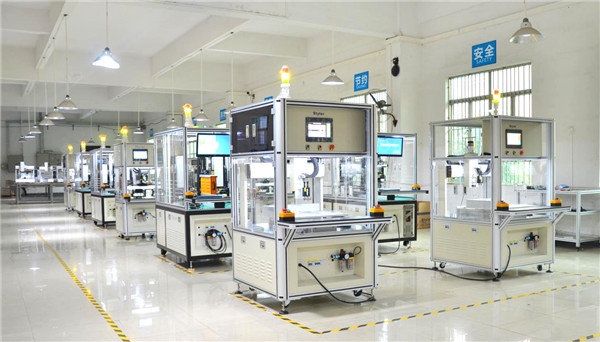
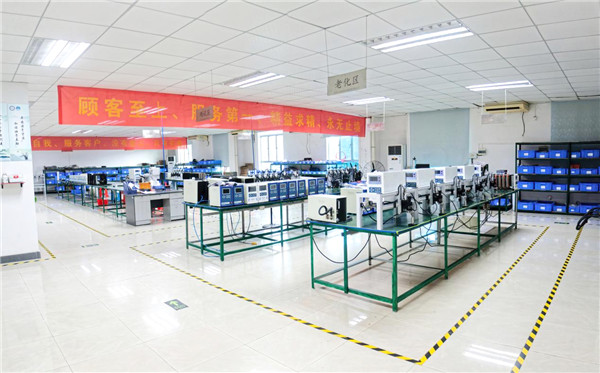
Styler is a professional manufacturer aims to provide high quality and trustful welding machine to the customer. Our company has unique understanding and innovative idea in the field of resistance welding and laser applications, and the welding technology has reached to the international level through continuously investing in the technical research and development. We also cooperate with education institutes on the technology development to enhance our machine’s performance and application area.
Customer Centric is our core value. Besides of providing personalized high performance and durable machines to the customer, we value the hospitality the most, as we wish customers to have a pleasant purchase experience with us for each visit. Therefore, we have been providing ongoing training internally to provide excellent customer service to our customer. We believe the customer-oriented direction is the key to success, and it has been successfully helping us to develop a strong reputation in the industry, allowing us to retain customers and attracting new customers to start the business with us.


Company Vision
To provide a cutting-edge welding machine in a reasonable price to the customer has been the long-term goal for Styler, and thus, we will continually be developing innovative, stable, and budgeting machine to the customer around the world.
Corporate Social Responsibility
Giving back to the society is important as we are not able to go this far without the community’s support. Therefore, Styler has been actively participating in the charity works and government events each year, to improve the local municipal service and facility.
Employee Development
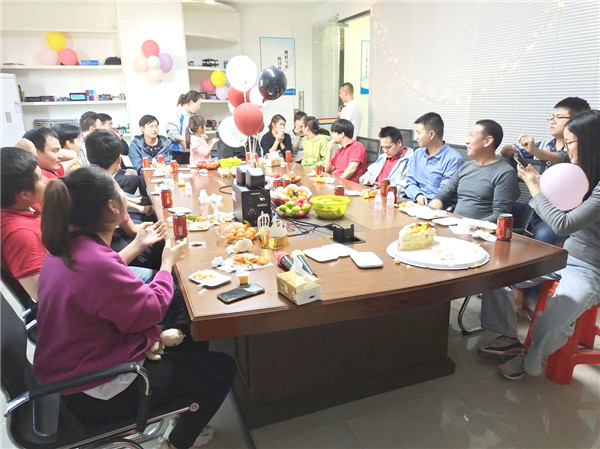
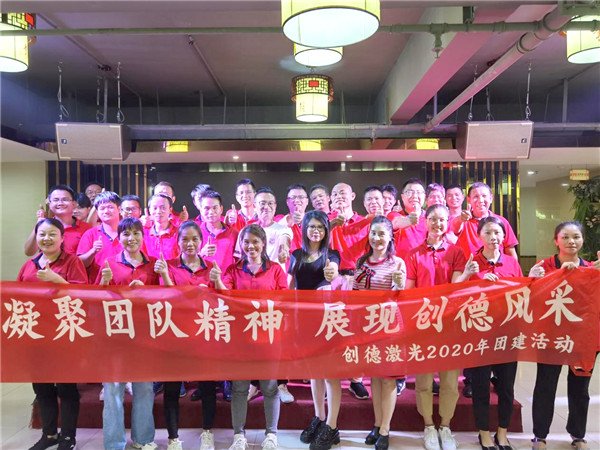
Despite all the growth that has occurred over the years, we remain extremely employee centric. Our management team works tirelessly to ensure each Styler Welding employee feels fulfilled from work and life. As work-life balanced living style is proved that it would increase employee’s performance at work, and consequently, providing better service and product to the customer.