
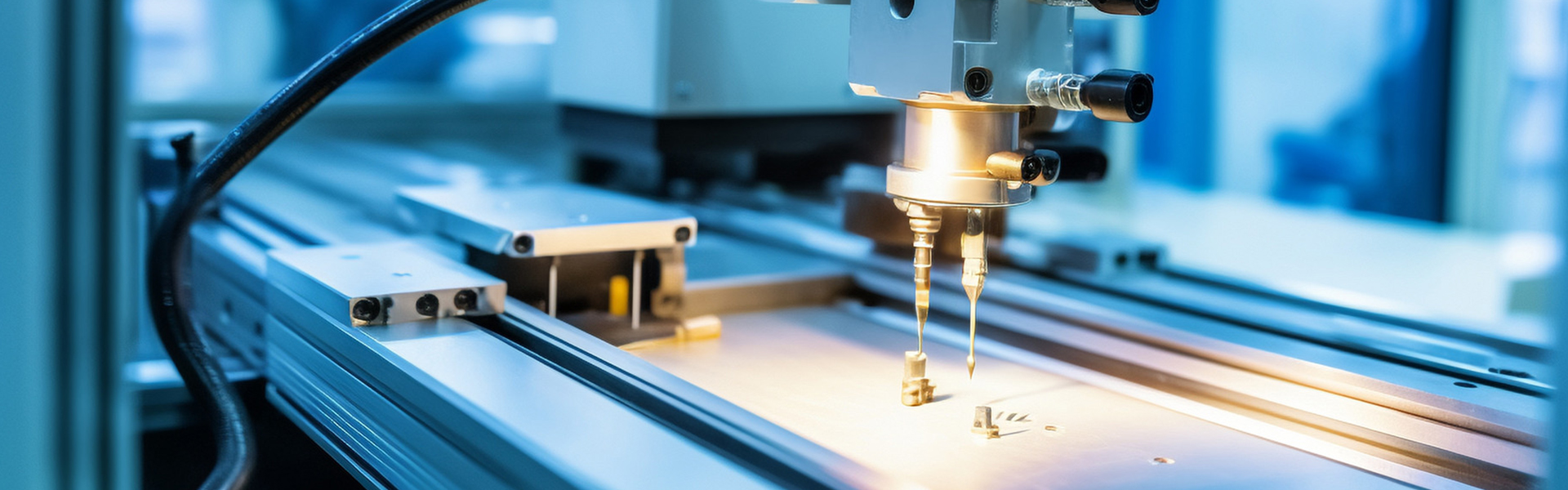
A few successful sample welds do not necessarily mean a battery spot welder is ready for continuous production.
Why Sample Welding Is Only the First Step
Sample welding is an important part of equipment evaluation. It allows the supplier and buyer to test the actual battery cell, connection material, thickness, and joint structure and determine whether a suitable welding process can be developed.
Initial testing may evaluate weld appearance, mechanical strength, electrical performance, and the basic welding schedule.
However, a small number of successful samples only confirms initial feasibility under the tested conditions. Continuous production introduces additional requirements. Electrodes experience repeated contact. The machine operates through repeated welding cycles. Fixtures must position each product consistently. Loading and unloading must fit the required cycle time. Maintenance intervals also become part of the production process.
For this reason, equipment selection should progress from sample welding to repeated-cycle and production-condition validation.
1. Evaluate Welding Performance During Repeated Operation
A battery spot welder should not be evaluated only by maximum current or one successful welding schedule. Buyers should determine whether the complete welding system can maintain acceptable process performance during repeated production cycles.
Important variables include welding current, pulse duration, electrode force, material combination, material thickness, joint structure, electrode condition, and workpiece positioning.
The selected welding parameters must remain appropriate for the actual application throughout production. A fixed program does not automatically guarantee fixed welding conditions. Electrode condition, material surfaces, fixture positioning, and other operating factors may change during production even when the programmed welding current and pulse time remain the same.
The objective is therefore to verify repeatable weld quality rather than simply verify that the machine can repeatedly execute the same program.
2. Confirm the Recommended Operating Conditions
Peak output alone does not define production capability. Buyers should confirm the equipment manufacturer’s recommended operating conditions for the intended welding process.
Depending on the equipment and application, this discussion may include required welding frequency, welding schedule, expected production cycle, cooling requirements, electrode condition, operating environment, and maintenance requirements.
The machine should be evaluated using the welding schedule and production rate expected in the actual factory. For example, a machine may perform well during occasional sample welding but require further evaluation when the same process is repeated at a much higher production frequency.
This is why the intended production conditions should be discussed before the equipment configuration is finalized.
3. Check Electrode Life and Maintenance Requirements
Electrodes are wear components in resistance welding. Their condition can influence electrical contact, heat generation, and weld consistency.
During repeated production, electrode tips may gradually wear or become contaminated. This can change the contact condition even when the welding program remains unchanged.
Buyers should ask what electrode material is recommended, how electrode condition should be inspected, what maintenance procedure is required, whether electrode position and force can be adjusted, what replacement or dressing procedure is recommended, and what cooling conditions are required.
There is no universal electrode life that applies to every battery welding application. Actual wear depends on factors such as the material being welded, welding parameters, production frequency, electrode condition, and maintenance practices. Electrode performance should therefore be evaluated under the intended application rather than assumed from a general replacement interval.
4. Consider Temperature and Cooling During Repeated Welding
Repeated welding creates operating conditions that may not appear during a short sample test. The equipment should therefore be evaluated under the production frequency expected in actual use.
Buyers should pay attention to equipment temperature during repeated operation, electrode heating, cooling requirements, and changes in process behavior during extended operation.
A process that performs well during a short cold-start test should still be checked under repeated production conditions. The purpose is not to assume that temperature will create a problem, but to verify that the equipment and welding process remain within the agreed operating conditions during the intended production cycle.
5. Evaluate the Complete Production Cycle, Not Only Welding Time
The welding pulse may represent only a small part of the complete production cycle. Battery pack manufacturing may also involve loading, positioning, clamping, electrode movement, welding, hold time, inspection, and unloading.
Manual handling and fixture design can therefore have a significant effect on actual output. A machine with a fast welding pulse does not automatically provide high production capacity if positioning or loading becomes the bottleneck.
Before purchasing equipment, buyers should define target output, required cycle time, number of weld points per product, loading method, unloading method, fixture requirements, and inspection requirements.
If production demand is higher, the equipment configuration may need to include multi-point welding, customized fixtures, automatic positioning, or other automation functions. The correct configuration depends on the battery structure and production workflow.
6. Consider Product and Fixture Repeatability
For repeated production, the workpiece must be presented to the welding electrodes consistently. Fixture accuracy and positioning can influence electrode contact, weld location, workpiece stability, and production cycle.
A sample produced manually by an experienced technician may not represent the conditions of a production line. The production fixture should therefore be evaluated together with the welding process.
If several battery models will be produced on the same equipment, the buyer should also consider how fixtures and welding programs will be changed between products. The objective is to reproduce the approved welding condition consistently during normal production.
7. Validate the Machine Under Production-Like Conditions
Before moving from sample development to mass production, buyers should conduct a more representative validation.
A practical evaluation can include actual battery cells and connection materials, an approved welding schedule, repeated welding cycles, electrode inspection, operating-condition checks, fixture verification, and weld-quality sampling.
The number of cycles and test duration should be defined according to the specific project and acceptance requirements rather than using one universal test quantity.
During validation, buyers should evaluate whether weld quality remains within the agreed acceptance criteria; the required cycle time can be maintained; electrode condition remains manageable; fixture positioning remains repeatable; cooling and operating conditions remain appropriate; and the production sequence can be performed consistently.
Successful sample welding confirms initial feasibility. Repeated-cycle validation provides additional evidence about whether the equipment and process are suitable for the intended production conditions.
What Should Be Included in Continuous-Production Acceptance?
For a production project, continuous-operation requirements should be discussed before the equipment is completed.
Where applicable, Factory Acceptance Test (FAT) requirements can define the test product and materials, approved welding schedule, target cycle time, repeated-run requirements, weld inspection method, acceptance criteria, electrode maintenance during the test, allowed interruptions, alarm handling, and fixture and positioning requirements.
These requirements should be agreed according to the individual project. A FAT should not rely only on a statement that the machine “runs normally.” The buyer and supplier should establish measurable acceptance criteria that reflect the intended production application.
What Information Should Buyers Provide?
Before requesting a battery spot welder(https://www.stylerwelding.com/10000a-resistance-welding-diy-battery-spot-welding-machine-product/) recommendation, manufacturers should provide the supplier with information such as the battery cell format, connection material, material thickness, joint structure, required weld quality, target production output, expected cycle time, and required automation level.
Actual battery cells and welding materials are also useful when sample testing is required. The more closely the evaluation reflects the intended production conditions, the more meaningful the equipment recommendation becomes.
Buyer Checklist
Before approving a battery spot welder for production, confirm:
1. Has the actual battery cell and connection material been tested?
2. Has an appropriate welding schedule been established?
3. Has the process been evaluated across repeated welding cycles?
4. Is electrode maintenance understood?
5. Are the required cooling and operating conditions defined?
6. Can the complete machine achieve the target production cycle?
7. Is the production fixture repeatable?
8. Are loading and unloading included in the cycle-time evaluation?
9. Are weld acceptance criteria clearly defined?
10. Have continuous-production requirements been included in FAT or project validation?
Why Styler
Styler provides battery spot welding machines, transistor resistance welding equipment, and battery pack assembly solutions for battery manufacturing applications.
For production projects, equipment configuration can be evaluated according to the actual battery cell format, connection material, material thickness, joint structure, welding requirements, target production cycle, fixture requirements, and automation level.
Depending on the project, Styler can discuss sample welding, repeated-cycle evaluation, fixture configuration, equipment selection, and automation requirements before the final solution is confirmed.
The appropriate equipment configuration should be based on the actual welding application and production conditions rather than a single maximum-output specification.
Frequently Asked Questions
Does a successful sample weld mean the machine is ready for mass production?
No. A successful sample confirms initial feasibility under the tested conditions. Continuous production also requires evaluation of repeated welding, electrode condition, production cycle, fixtures, cooling, and maintenance requirements.
Can I judge production capability from maximum welding current?
No. Maximum current is only one equipment specification. Production capability also depends on the welding schedule, operating frequency, electrodes, fixtures, cooling, cycle time, and complete machine configuration.
How long should a continuous-production test run?
There is no universal test duration or number of welds. The test requirement should be agreed according to the intended production conditions and project acceptance criteria.
How often should welding electrodes be replaced?
There is no universal interval. Electrode condition depends on the welding material, process parameters, production frequency, cooling, and maintenance practices.
Does continuous production mean the machine can run without stopping?
No. Continuous production should be understood as repeated production under defined operating and maintenance conditions. Planned inspection, electrode maintenance, cooling requirements, and other normal production activities still need to be considered.
Conclusion
A battery spot welder should not be selected based only on maximum current or a few successful sample welds.
Sample welding confirms whether a process is initially feasible. Production readiness requires a broader evaluation.
The machine and welding process should be tested at the intended production cycle while considering repeated welding, electrode wear, fixture positioning, operating conditions, cooling, maintenance, and weld-quality acceptance criteria.
The real question is not whether the machine can make one acceptable weld. It is whether the complete welding process can continue meeting the agreed requirements throughout repeated production.
Planning a Battery Pack Welding Project?
Share your battery cell specifications, connection materials, material thickness, joint drawings, quality requirements, and expected production output with Styler.
Our team can review the application and discuss sample testing, repeated-cycle evaluation, and a suitable equipment configuration for your production requirements.
Post time: Nov-10-2026


