In the rapidly evolving landscape of energy storage and electric mobility, agility and precision are no longer luxuries—they are imperatives. For a mid-sized battery pack integrator , the journey from reliance on manual assembly stations to embracing full-scale automation is a profound leap, defining not just operational efficiency but also the very future of the enterprise. Today, we’re excited to share a transformation story that highlights how strategic investment in advanced manufacturing technologies can redefine capabilities, quality, and scalability.
The Crossroads: Manual Processes and Mounting Challenges
Our story begins with a skilled team working across multiple manual workstations. Each battery pack was a testament to craftsmanship, but consistency and throughput faced natural human limits. Variability in weld quality, pacing bottlenecks in complex assemblies, and the escalating demand for higher volumes and stricter safety standards signaled a clear need for change. The integrator faced a critical decision: continue with incremental improvements or embark on a comprehensive digital transformation.
The Turning Point: Precision as the Foundation
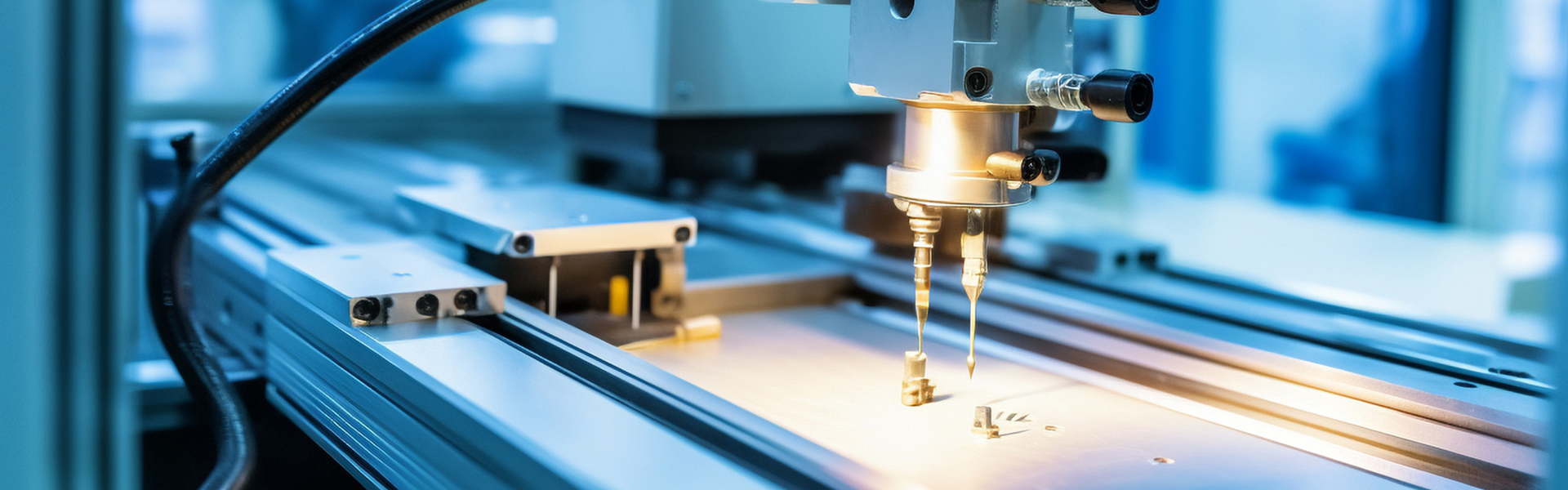
The first and most crucial step was securing the highest quality electrical connections—the lifelines of any battery pack. This is where Styler’s Precision Spot Welding Machines entered the picture. More than just tools, these systems brought data-driven repeatability to the most sensitive junctions. With advanced adaptive control and real-time monitoring, every weld became a documented event, ensuring optimal conductivity, minimal thermal damage, and flawless structural integrity. The precision of Styler’s welders eliminated the guesswork, turning a critical manual skill into a reliably automated process. This wasn’t just an upgrade; it was the establishment of a new, unshakeable standard for core pack construction.
Expanding Capabilities: The Versatility of Advanced Joining
As pack designs grew more sophisticated, incorporating diverse cell formats and intricate busbar geometries, the need for flexible, non-contact joining solutions became apparent. The integrator integrated Styler’s Laser Welding Equipment into their new production flow. This technology provided a clean, precise, and highly controllable method for creating robust electrical and mechanical bonds. The laser systems handled materials sensitive to traditional welding with finesse, enabling designs previously considered too complex or risky for manual production. The result was an expanded design envelope and enhanced pack performance, all achieved with stunning accuracy and speed.
The Culmination: Integrated Automated Assembly
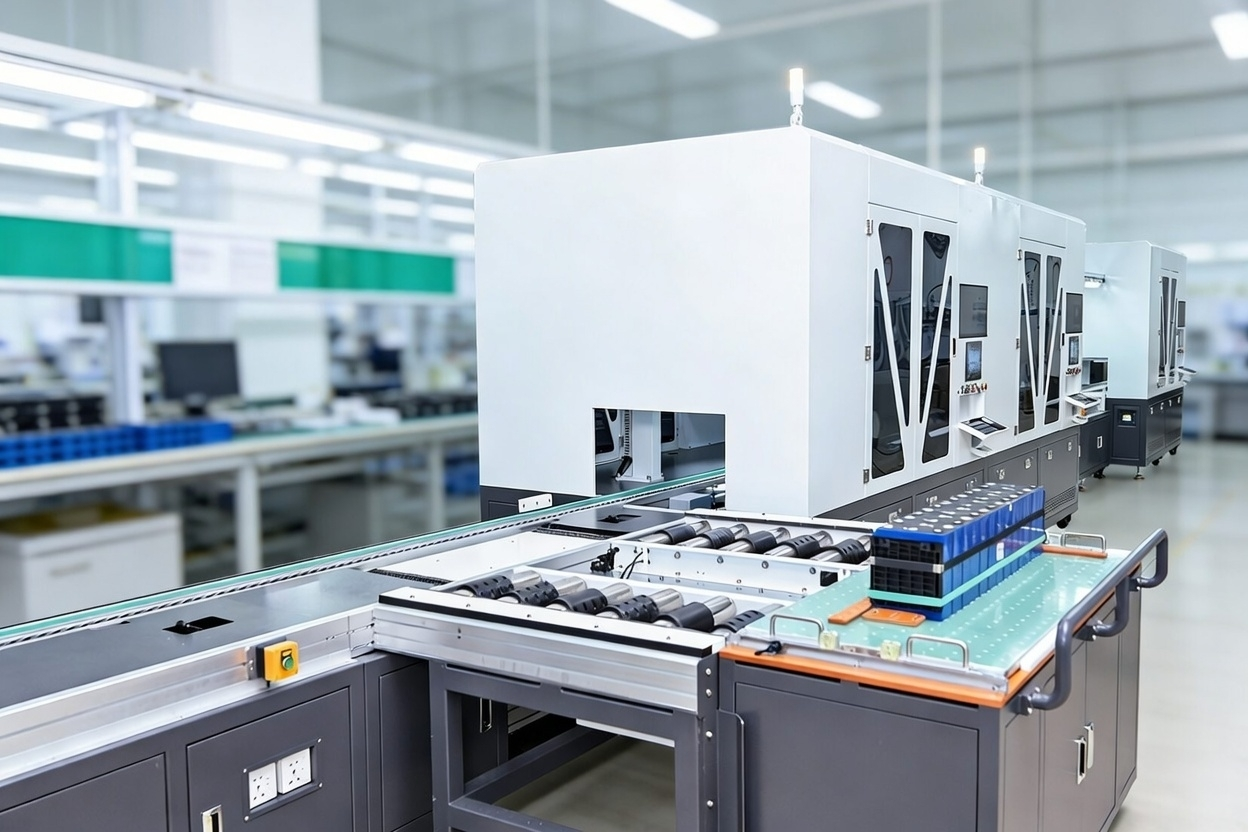
With core joining processes mastered, the vision expanded to the entire pack assembly. The goal was a seamless, synchronized flow from component handling to final testing. This led to the adoption of a complete Styler Automated Battery Pack Assembly Line.
This transformative system integrated automated conveyance, robotic precision in placing modules, busbars, and BMS components, automated fastener application, and in-line verification stations. The manual stations were now interconnected nodes within a smart, flowing process. The assembly line’s PLC, synchronized with MES (Manufacturing Execution System), provided real-time production data, traceability for every component, and predictive insights into maintenance needs.
The Transformed Reality: Outcomes of the Journey
The digital transformation journey, powered by Styler’s suite of solutions, yielded dramatic results:
*Quality & Consistency: Defect rates plummeted. Every pack leaving the line met identical, stringent specifications.
*Productivity & Scalability: Output increased exponentially without expanding floor space or workforce proportionally. The line could easily adapt to different pack models with quick changeovers.
*Traceability & Data: Every weld, every torque, and every component was logged. This data became invaluable for quality assurance, continuous improvement, and customer reporting.
*Safety & Ergonomics: Repetitive strain injuries and exposure to potential hazards at manual stations were drastically reduced, creating a safer, more sustainable work environment.
*Competitive Edge: The integrator moved from being a competent assembler to a technologically advanced manufacturer, capable of winning contracts that demanded proven, automated, and auditable production processes.
Conclusion: A Blueprint for the Future
For the mid-sized battery pack integrator , the journey from manual stations to automation was not about replacing human expertise but about augmenting it with intelligent, precise, and reliable technology. By strategically implementing Styler’s Precision Spot Welders, Laser Welding Systems, and the fully integrated Automated Assembly Line, they built a foundation for sustainable growth in an increasingly competitive market.
This transformation story is a powerful blueprint. It demonstrates that the digital leap is within reach and is, in fact, essential for any integrator aiming to lead in the new era of electrification. The future of battery manufacturing is smart, connected, and automated—and that future starts with a single, precise weld.
Post time: Jan-23-2026