

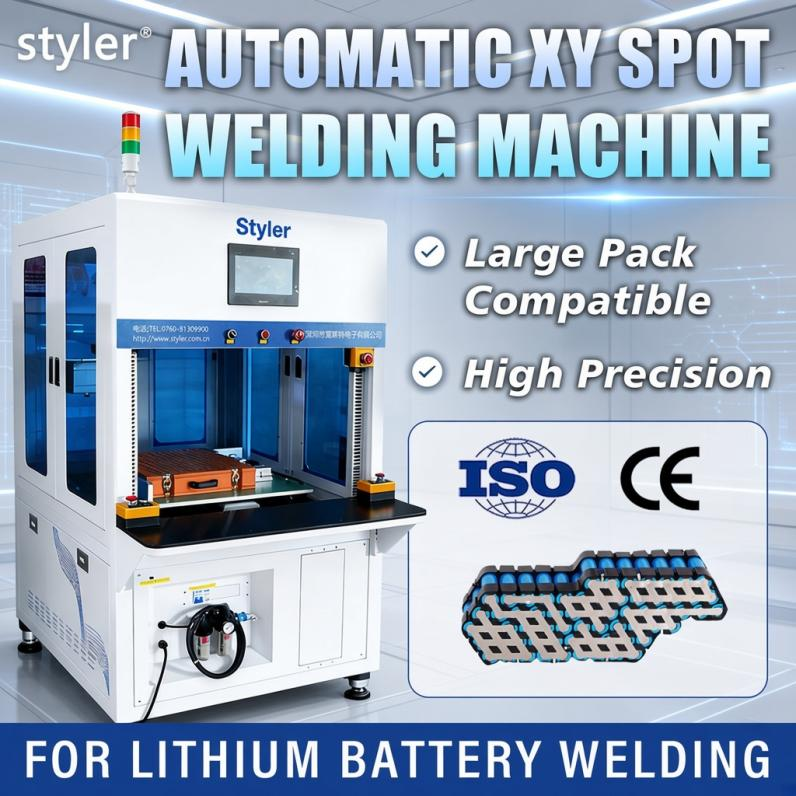
As battery pack manufacturing continues to evolve, manufacturers are looking for more efficient and consistent welding solutions. For production involving cylindrical lithium-ion cells, an Automatic XY battery spot welding machine can help simplify welding operations by automating electrode positioning and programmed welding movements.
However, choosing the right machine involves more than comparing automation levels or machine specifications. Buyers need to consider battery pack dimensions, welding materials, joint configurations, positioning requirements, and production targets.
This guide explains the key factors to evaluate when selecting an Automatic XY battery spot welding machine for cylindrical battery pack production.
1. Define battery pack Dimensions and Working Area
Before selecting an XY welding machine, manufacturers should identify the dimensions and structural characteristics of their battery packs.
Important considerations include:
● Maximum and minimum battery pack dimensions
● Required XY working area
● Cell arrangement and spacing
● Welding point distribution
● Fixture and positioning requirements
The machine’s working area should accommodate the actual welding positions without restricting electrode access.
For manufacturers handling multiple battery pack models, it is also important to evaluate whether the machine can support different fixture configurations and welding programs.
2. Evaluate Welding Materials and Joint Requirements
Material compatibility is one of the most important factors in resistance welding.
Cylindrical battery pack assembly commonly involves connecting selected tabs, nickel strips, or nickel-plated components to battery cells.
Before choosing a welding machine, buyers should provide information about:
● Material type and grade
● Material thickness
● Number of material layers
● Joint geometry
● Required weld strength
● Electrode configuration
Copper and aluminum applications require additional technical evaluation because of their electrical and thermal properties. Not every resistance welding machine is suitable for every material combination.
Sample welding tests are recommended when introducing new or unvalidated applications.
3. Check XY Positioning and Welding Path Requirements
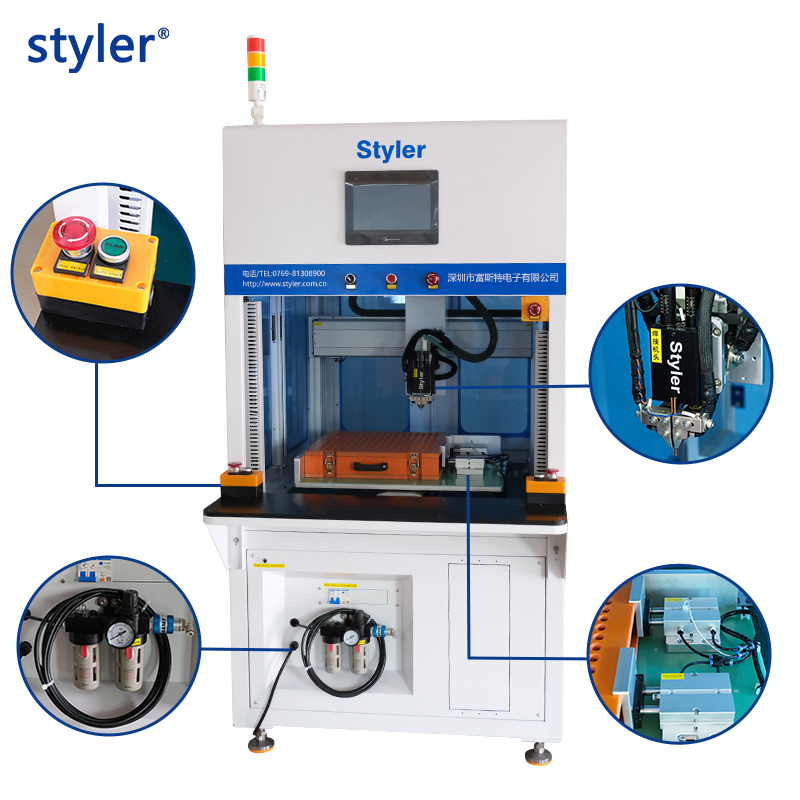
An Automatic XY Spot Welding Machine uses programmable horizontal and vertical movement to position the welding head at designated welding points.
When evaluating the positioning system, manufacturers should consider:
● XY travel range
● Required positioning accuracy and repeatability
● Number and distribution of welding points
● Program editing and storage requirements
● Fixture alignment
● Accessibility for loading and unloading
The required positioning performance should be defined according to the actual battery pack design and welding process.
For products with multiple welding points, a programmable XY system can help reduce repetitive manual positioning. Actual cycle time and production efficiency should still be verified through application testing.
4. Consider Production Capacity and Cycle Time
Automation should match the manufacturer’s production requirements.
A machine designed for small-batch production may have different configuration requirements from equipment intended for continuous, high-volume manufacturing.
Buyers should evaluate:
● Required daily or hourly output
● Number of welding points per battery pack
● Loading and unloading time
● Welding sequence
● Operator involvemen
● Changeover time between battery pack models
The total production cycle should include material handling, positioning, welding, and unloading rather than measuring welding time alone.
5. Evaluate Fixture Design and Model Changeover
Fixture design directly affects battery pack positioning and welding accessibility.
A suitable fixture should hold the battery pack securely, maintain consistent positioning, and provide sufficient access for the welding electrodes.
For manufacturers producing different battery pack models, fixture replacement and program changeover should also be considered.
Before purchasing equipment, buyers should confirm whether customized fixtures or application-specific positioning solutions are required.
6. Determine Monitoring and Traceability Requirements
Some battery manufacturing applications require additional process monitoring and production data management.
Depending on the project, buyers may consider:
● Welding current monitoring
● Voltage monitoring
● Electrode force monitoring
● Welding parameter recording
● Recipe management
● MES communication
These functions should be specified according to the factory’s quality management and traceability requirements. They should not be assumed to be standard features on every machine.
7. Validate the Application Before Purchasing
Machine specifications alone cannot guarantee suitable welding results.
Before confirming an equipment configuration, manufacturers should evaluate representative battery pack samples and define clear acceptance criteria.
A practical validation process should include:
1. Providing representative battery cells and connecting materials.
2. Confirming the joint design and welding positions.
3. Evaluating suitable welding parameters.
4. Checking weld appearance and mechanical strength.
5. Testing positioning consistency across multiple welding points.
6. Reviewing the expected production cycle.
The final equipment configuration should be based on actual sample results and production requirements.
Why Work with Styler?
Selecting an automatic battery spot welding machine requires a clear understanding of the application, not just the machine specifications.
Styler supports battery manufacturing customers with welding equipment solutions, application evaluation, sample testing, and customized automation integration.
By defining battery pack dimensions, material combinations, welding positions, and production targets at the beginning of a project, manufacturers can better identify a suitable equipment configuration.
Frequently Asked Questions
Q1: What is an Automatic XY battery spot welding machine?
An Automatic XY battery spot welding machine uses programmable X-axis and Y-axis movement to position the welding head at designated welding locations. It can reduce repetitive manual positioning in battery pack assembly.
Q2: Can one XY spot welding machine handle different battery pack models?
Possibly. Compatibility depends on working area, fixture design, cell arrangement, material combinations, welding positions, and available program configurations. Each application should be evaluated individually.
Q3: Is an XY spot welding machine suitable for copper and aluminum?
Not necessarily. Copper and aluminum present specific resistance welding challenges due to their electrical and thermal properties. Sample testing and technical evaluation are needed to determine whether resistance welding is suitable.
Q4: What information should buyers provide before requesting a quotation?
Buyers should prepare battery pack drawings, cell specifications, material types and thicknesses, welding point layouts, expected production capacity, and automation requirements.
Q5: Does an automatic XY system guarantee higher production efficiency?
Not by itself. Actual production efficiency depends on positioning time, welding sequence, loading and unloading, fixture design, and overall process integration.
Conclusion
Choosing an Automatic XY battery spot welding machine requires evaluating the complete battery pack assembly process.
Working area, positioning requirements, welding materials, fixture design, production capacity, and process validation should all be considered before purchasing equipment.
A well-defined application and properly validated welding process provide a more reliable foundation for selecting equipment that matches real production requirements.
Contact Styler to discuss your battery pack welding application and equipment requirements.
Website: www.stylerwelding.com
Email: sales4@styler.com.cn
WhatsApp: +86-15218784866
(the “Site”) is for general informational purposes only. All information on the Site is provided in good faith, however, we make no representation or warranty of any kind, express or implied, regarding the accuracy, adequacy, validity, reliability, availability or completeness of any information on the Site. UNDER NO CIRCUMSTANCE SHALL WE HAVE ANY LIABILITY TO YOU FOR ANY LOSS OR DAMAGE OF ANY KIND INCURRED AS A RESULT OF THE USE OF THE SITE OR RELIANCE ON ANY INFORMATION PROVIDED ON THE SITE. YOUR USE OF THE SITE AND YOUR RELIANCE ON ANY INFORMATION ON THE SITE IS SOLELY AT YOUR OWN RISK.
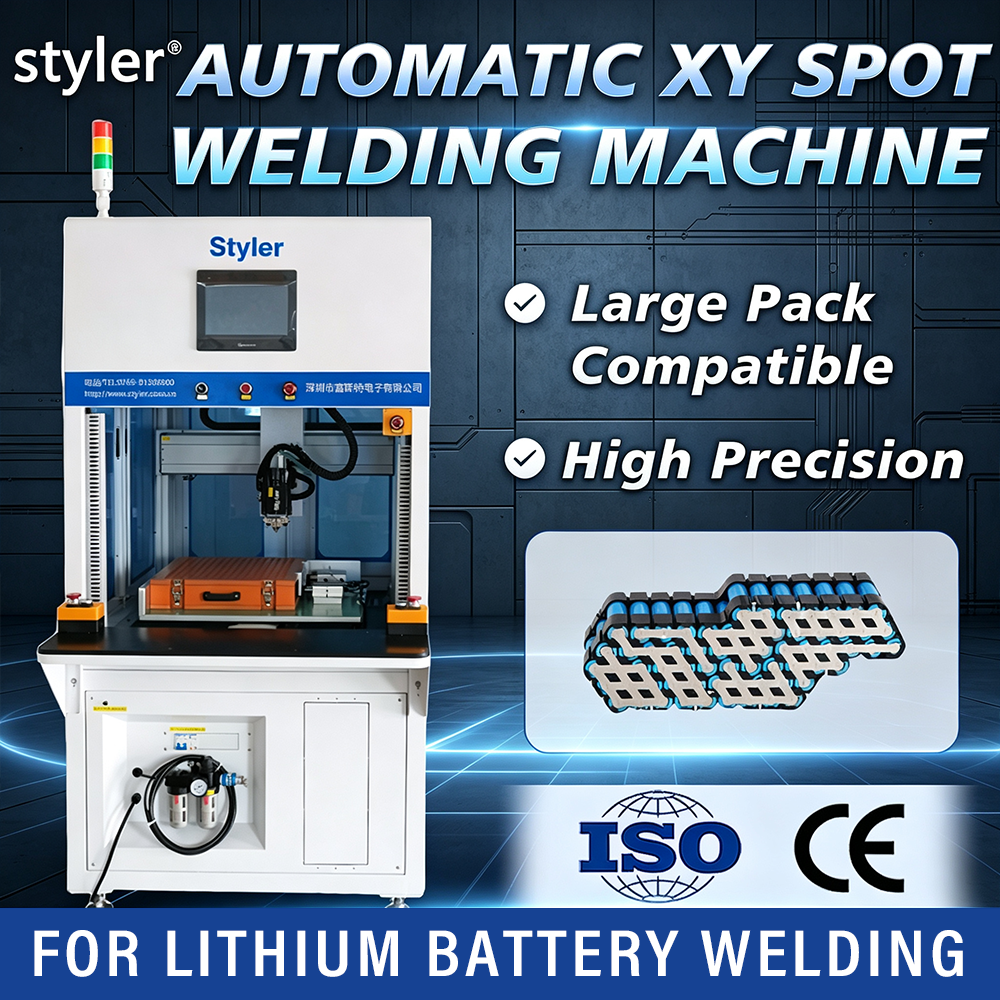
(Credit: Image from Styler)
Post time: Nov-18-2026


