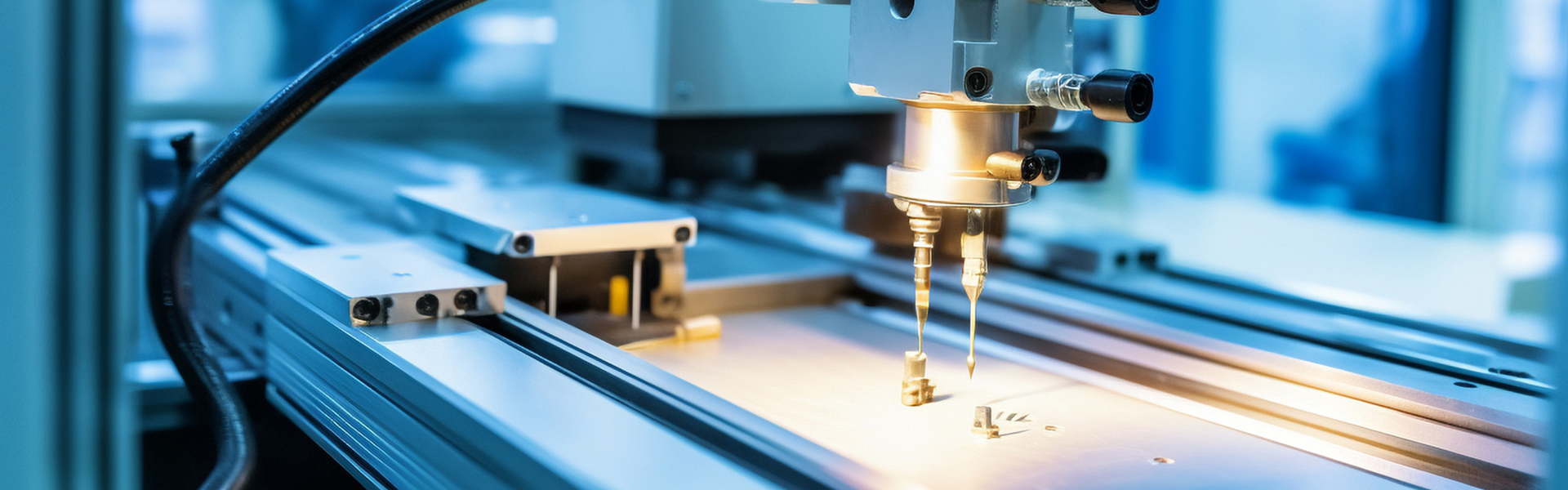
With the explosive growth of the global electric vehicle (EV) and energy storage system (ESS) market, battery manufacturing is facing a severe test. Battery welding, as the core link of production, requires not only accuracy and consistency standards, but also unprecedented flexibility to deal with various battery specifications (cylindrical, soft bag, prismatic) and to adapt to smaller batch and customized production requirements. Conventional and highly automated battery welding production lines are often difficult to cope with this new challenge, and there are many pain points. Such as the switching time of new product line is too long, high cost of equipment transformation, and the security risks caused by manual intervention in complex welding tasks.
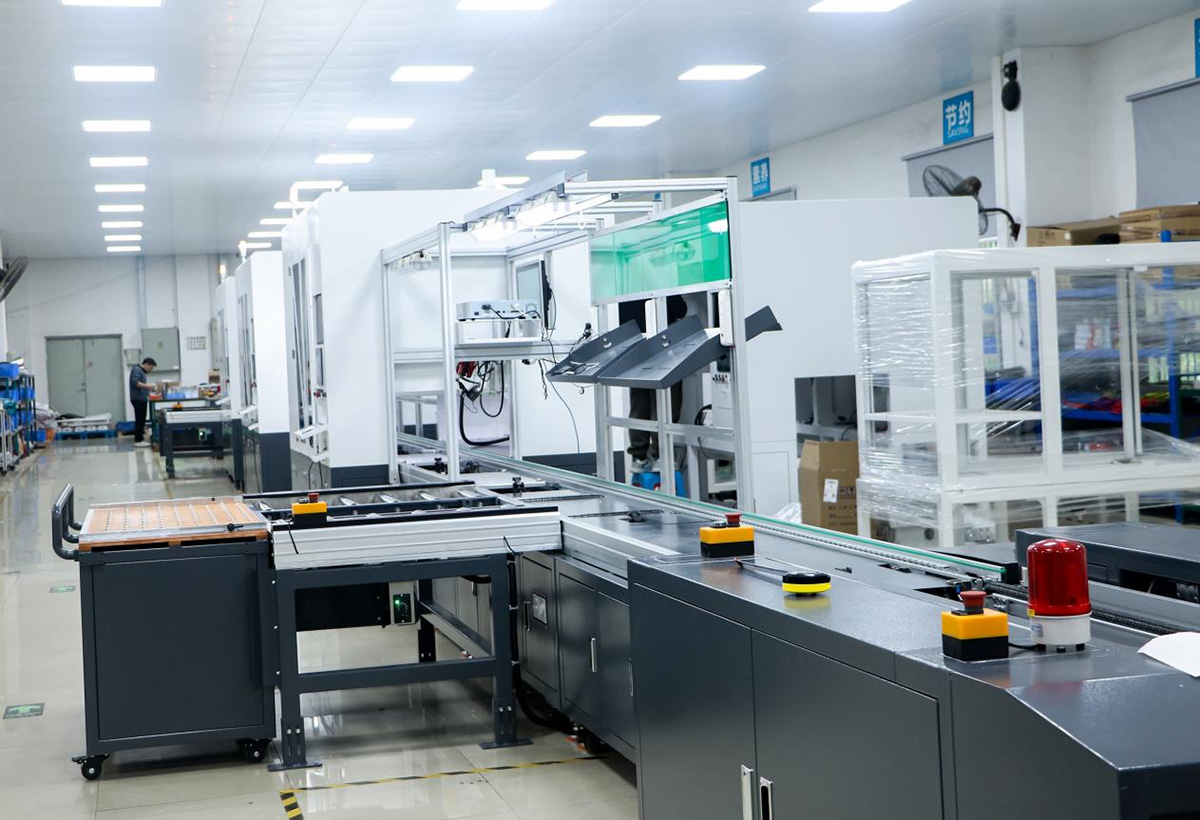
Collaborative Robots (Cobots) is bringing revolutionary changes to the manufacturing industry. Unlike traditional industrial robots, Collaborative Robots (Cobots) can work safely with human operators without complicated safety protection devices. Its inherent flexibility makes it especially suitable for the production mode of high mixing and small batch in the field of advanced battery welding. It can be quickly redeployed and reprogrammed to perform different welding tasks, from bus welding to lug welding, thus significantly reducing downtime, and enabling production to quickly respond to changes in market demand and realize agile production.
Practical application of Collaborative Robots (Cobots) in the field of battery welding has achieved remarkable results worldwide. One of the leading European battery module manufacturers has integrated a laser welding unit driven by a Collaborative Robots (Cobots), which specializes in prototype development and small batch production. Equipped with a vision system, the Collaborative Robots (Cobots) can accurately track the welds of batteries with different geometries. This case shows that the switching cycle of production line is shortened by 40%, and thanks to the remarkable improvement of welding accuracy, the defective rate of products is greatly reduced.

(Credit: Image from Pixabay)
An electric vehicle startup in North America deployed Collaborative Robots (Cobots)s in the welding operation of final assembly. Collaborative robots are responsible for fine electrical connection welding, while manual technicians carry out quality inspection and component assembly simultaneously. With this man-machine cooperation mode, the utilization rate of workshop space is increased by 30%, and the overall equipment efficiency (OEE) is improved by realizing continuous operation. These vivid cases jointly reveal a trend: Collaborative Robots (Cobots) are cleverly filling the gap between rigid short boards in fully automated production and quality fluctuation in manual welding, providing an expandable and economical transformation path for the industry.
Modern Collaborative Robots (Cobots) battery welding unit incorporates a number of core technologies. It is equipped with advanced force sensing technology, which enables the robot to achieve soft and accurate motion control, which is especially critical in welding scenes that require precise contact. The Collaborative Robots (Cobots) can adapt to the tolerance of parts in real time and ensure the welding consistency when it is used with laser displacement sensor or 2D/3D vision system. It is very important for welding thin precision materials used in modern battery packs. Moreover, the Collaborative Robots (Cobots) and the advanced battery welding machine are seamlessly connected to build an intelligent welding workstation.
Battery manufacturing development direction clearly points to a higher degree of customization and a faster innovation cycle. Battery welding unit driven by flexible Collaborative Robots (Cobots) is moving from concept stage to industrial core, and has become a key strategic choice for manufacturers to maintain market competitiveness. The transformation shows that the market demand for battery welding automation solutions with both performance and quick return on investment is increasing.
Styler Electronic has always been at the forefront of the changes in battery pack manufacturing. We understand the complex challenges of modern battery welding, and are committed to designing and developing precision equipment that can give full play to the advantages of automatic battery welding. We aim to improve the production flexibility, safety and product quality of your battery pack.
Contact us and our professional engineering team will discuss how to implement customized Collaborative Robots (Cobots) combined with battery pack assembly production line to improve the efficiency of battery welding unit according to your specific production scene.
(the “Site”) is for general informational purposes only. All information on the Site is provided in good faith, however, we make no representation or warranty of any kind, express or implied, regarding the accuracy, adequacy, validity, reliability, availability or completeness of any information on the Site.
UNDER NO CIRCUMSTANCE SHALL WE HAVE ANY LIABILITY TO YOU FOR ANY LOSS OR DAMAGE OF ANY KIND INCURRED AS A RESULT OF THE USE OF THE SITE OR RELIANCE ON ANY INFORMATION PROVIDED ON THE SITE. YOUR USE OF THE SITE AND YOUR RELIANCE ON ANY INFORMATION ON THE SITE IS SOLELY AT YOUR OWN RISK.
Post time: Dec-26-2025