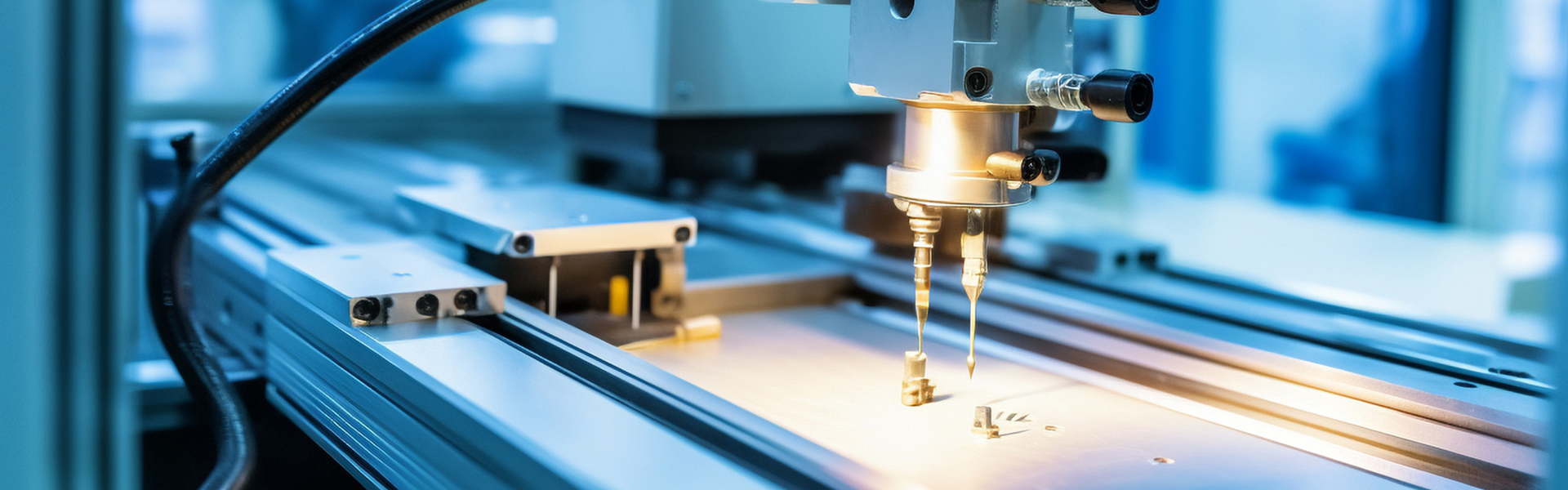
The performance, safety and lifespan of pouch cell are very important in the rapidly developing battery industry. One of the major challenges in the manufacturing process is tab welding, and the formation of heat affected zone (HAZ) will have a negative impact on the quality and overall performance of the battery.
The Challenge of Heat-Affected Zone in Pouch Cell Tab Welding
The heat-affected zone (HAZ) refers to the area around the weld where the material properties change due to heating during welding. A large HAZ reduces electrical conductivity, weaken mechanical strength, and even bring potential safety hazards, such as potential thermal runaway. Thus, minimizing the heat-affected zone is very important to improve the performance, safety and service life of the battery.
Understanding the Heat-Affected Zone in Pouch Cell Tab Welding
Heat-affected zone (HAZ) will be formed when welding heat changes the microstructure of tab material. The key factors influencing its formation include:
Material characteristics: Different metals (such as aluminum and copper) have different thermal conductivity, which will affect the heat diffusion.
Weld parameters: Welding speed, input power and heating time will all affect the size of heat-affected zone.
Process design: Choosing suitable welding method and control system is helpful to reduce thermal effect.
Optimizing these factors can significantly reduce the heat-affected zone (HAZ), thus improving the battery performance and service life.
Many advanced technologies have been developed to minimize the heat-affected zone. The technologies include precision welding technology, real-time monitoring system and material optimization.
1. Adopt advanced welding technology and low heat input method.
Laser welding and ultrasonic welding are both key low heat input technologies.
The laser welding: Provide highly localized heat, minimize the heat-affected zone, and obtain a firm and high-quality weld.
The ultrasonic welding: Using high-frequency sound waves to generate heat through friction, significantly reducing the thermal effect.
2. Real-time monitoring of precision control system.
Real-time monitoring and adaptive control system enables manufacturers to adjust welding parameters according to real-time conditions. The systems help to reduce overheating, shrink the heat-affected zone and improve welding consistency by tracking temperature, pressure and welding time.
3. Material and welding process optimization
Choosing suitable materials and optimizing welding process can reduce thermal diffusion. Thinner tab or materials with better thermal conductivity can form stronger welds and reduce heat generation, thus reducing the size of heat-affected zone (HAZ). Moreover, improving heat resistance through surface treatment can also minimize the thermal impact.
Analysis of real cases
Case 1: European electric vehicle manufacturers
For example, Tesla’s Berlin Gigafactory employs advanced laser welding technology equipped with closed-loop control systems, reducing the heat-affected zone (HAZ) by approximately 40%. This approach enhanced the safety and performance of the battery and reduce the incidence of thermal runaway.
Case 2: Asian Battery Super Factory
CATL, a global leader in battery manufacturing, employs a multi-stage welding process combining ultrasonic and laser welding. With this method, the welding yield is increased by 25%, the heat-affected zone (HAZ) is reduced, and the consistency of the battery is improved.
Case 3: North American Energy Storage Company
Fluence Energy, a leader in grid-scale energy storage, has successfully implemented a hybrid welding solution integrating resistance welding and laser welding technologies. It reduces the heat-affected zone (HAZ), prolongs the cycle life of the battery and improves the durability of long-term energy storage.
Conclusion: The key solution to minimize the heat-affected zone (HAZ).
It is very important to minimize the heat-affected zone (HAZ) in the welding process of Pouch Cell tab to improve the performance, safety and service life of the battery. Some advanced technologies, such as laser welding, ultrasonic welding and precision control system, are helpful to realize high quality and low heat-affected zone welding. The optimization of materials, such as the selection of conductive materials and the optimization of tab design, also plays a vital role in reducing the heat-affected zone.
Styler Electronic Co., Ltd provides precision welding solutions for Pouch Cell manufacturing and has rich experience in laser welding and resistance welding. We can provide customized equipment services, which can help manufacturers minimize the heat-affected zone, improve efficiency and reduce maintenance costs.
Shenzhen Styler Electronic Co., Ltd specializes in providing high-precision welding equipment for battery production. We provide tailor-made solutions for manufacturers using laser welding and resistance welding technology, and pay attention to quality and innovation. Our solution aims to improve efficiency and meet international safety standards.
Partner with innovators like Styler Electronic to lead the way in the global shift toward sustainable energy storage.
Learn more: https://www.stylerwelding.com
Contact us: rachel@styler.com.cn |Whatsapp: +86-18575415751
#stylerwelding #styler
(the “Site”) is for general informational purposes only. All information on the Site is provided in good faith, however, we make no representation or warranty of any kind, express or implied, regarding the accuracy, adequacy, validity, reliability, availability or completeness of any information on the Site. UNDER NO CIRCUMSTANCE SHALL WE HAVE ANY LIABILITY TO YOU FOR ANY LOSS OR DAMAGE OF ANY KIND INCURRED AS A RESULT OF THE USE OF THE SITE OR RELIANCE ON ANY INFORMATION PROVIDED ON THE SITE. YOUR USE OF THE SITE AND YOUR RELIANCE ON ANY INFORMATION ON THE SITE IS SOLELY AT YOUR OWN RISK.

(Credit: Image from Styler)
Post time: Jan-15-2026