
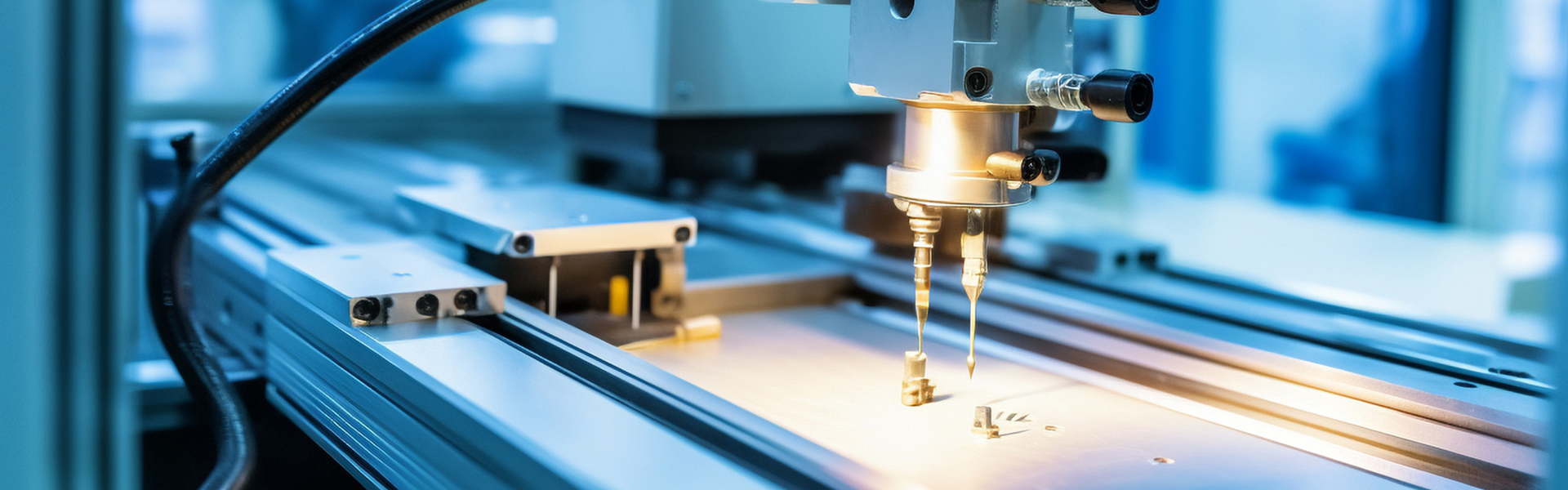
Battery welding equipment is designed for repeated production, but some components naturally wear, become contaminated, or require replacement over time.
For battery manufacturers, the question is not simply: “What parts may eventually fail?”
A more useful question is: Which wear parts, critical spare parts, tooling components, and production consumables should be prepared before they affect production?
The answer depends on the actual machine configuration, production volume, battery type, welding process, operating environment, and replacement lead time.
A suitable spare-parts plan can help maintenance teams respond faster to routine wear and unexpected equipment issues without overstocking unnecessary components.
Wear Parts, Spare Parts, Tooling and Consumables Are Not the Same
Wear Parts
Wear parts gradually deteriorate during normal equipment operation and should be inspected regularly.
● Welding electrodes / welding needles
● Protective optical components used in laser systems
● Filter elements
● Electrical testing probes
Critical Spare Parts
Critical spare parts are not necessarily replaced frequently. However, if one fails, production may stop until a replacement is available. Depending on the machine configuration, these may include:
● Sensors
● Selected pneumatic components
● Cell grippers or pickup units
● Barcode or code-reading components
● Foot pedals
● Electrode holders
● Selected motion or positioning components
The quantity kept on site should depend on the failure impact, local availability, and supplier lead time.
Tooling and Replaceable Fixture Components
Fixtures should not automatically be treated as routine spare parts. Depending on the machine, tooling may include:
● Welding fixtures
● Product nests
● Positioning components
● Replaceable locating parts
● Clamping jaws
Some customers may need spare tooling for fast product changeover or to reduce downtime. Others may only need replacement components rather than a complete spare fixture.
Production Consumables
Some items used during battery production are not machine spare parts. For example, insulating kraft paper used in certain cylindrical battery assembly applications should be treated separately from machine maintenance components.
Production consumables should be planned according to the battery product and manufacturing process rather than the equipment maintenance schedule.
1. Resistance Welding Equipment
For manual and automatic battery spot welding machines, the most common wear components are the welding electrodes. For international technical communication, these can be described as welding electrodes (welding needles).

Why Welding Electrodes Need Regular Inspection
The electrodes directly contact the workpiece during resistance welding. Their condition can affect:
● Electrode contact
● Current distribution
● Weld-point geometry
● Mechanical pressure
● Heat generation
● Weld consistency
During production, electrode tips may gradually:
● Wear
● Change shape
● Pick up material
● Become contaminated
● Lose alignment
There is therefore no universal replacement interval. Replacement should be based on actual electrode condition, welding performance, production volume, welding parameters, and the processed material.
Recommended Parts to Evaluate for Stock
Depending on the machine model and configuration:
● Welding electrodes / welding needles
● Electrode holders
● Foot pedals for relevant manual machines
● Selected positioning sensors
● Replaceable fixture components
● Handles or operator-interface hardware where applicable
Not every customer needs to stock all of these components. The final recommendation should be machine-specific.
2. Automatic Battery Spot Welding Machines
Automatic welding equipment introduces additional components beyond the welding power supply and electrodes. Buyers should pay particular attention to components that affect:
● Positioning
● Motion
● Product detection
● Clamping
● Welding repeatability
A small sensor may have a low individual cost but still cause a production interruption if the machine cannot complete its automatic sequence without it. For this reason, component criticality can be more important than part price.
3. Battery Laser Welding Equipment
Laser welding systems require a different spare-parts strategy from resistance welding equipment. Depending on the optical configuration, components exposed to dust, fumes, or welding spatter may require regular inspection.
Where equipped, common optical wear components may include:
● Galvanometer scanner protective lenses
● Collimating-lens protective lenses
● Other protective windows used in the beam-delivery path
Protective optical components can become contaminated during operation. Their condition should therefore be monitored according to:
● Welding process
● Fume level
● Spatter level
● Production volume
● Operating environment
Possible spare components may also include clamping jaws, XYZ-axis sensors, and selected fixture components, depending on the machine design.
A laser machine should not be assigned a generic spare-parts list without first checking the actual optical and automation configuration.
4. Cylindrical Battery Assembly Lines
A cylindrical battery assembly line may combine several functions such as cell handling, positioning, welding, identification, inspection, and automated transfer. Rather than treating every item as the same category, it is better to separate them by function.
Welding Station
● Welding electrodes / welding needles
● Electrode holders
● Relevant fixture components
● Cell grippers
● Pickup units
● Selected sensors
● Pneumatic components
Cell Handling and Positioning
Identification and Traceability
Where equipped:
● Barcode scanners
● Code-reading components
● Related sensors
Automation Components
Depending on the design:
● Stopper cylinders
● Pneumatic fittings
● Positioning sensors
● Selected motion-related components
Production Consumables
Where used in the battery product or assembly process:
● Insulating kraft paper or other product-specific consumables
These should be planned separately from machine spare parts.
5. Prismatic Battery Assembly Lines
Prismatic battery assembly lines can vary considerably depending on the process scope. A line may include laser welding, material handling, dust extraction, electrical testing, identification, inspection, and automated transfer.
These should not be interpreted as standard components on every prismatic battery line. Instead, spare-parts planning should follow the actual stations installed.
Laser Welding Station
Where equipped:
● Protective optical components
● Clamping parts
● Relevant sensors
Dust Extraction
Where installed:
● Dust collector filter elements
Electrical Testing or Sorting
Where included:
● Contact or testing probes
Repeated mechanical contact can gradually wear testing probes, so inspection and replacement planning should reflect actual testing frequency.
Automation and Handling
Depending on the line:
● Sensors
● Barcode scanners
● Stopper cylinders
● Pneumatic fittings
● Clamping components
6. How Should Buyers Decide Which Spare Parts to Keep On Site?
A long spare-parts list is not automatically a good spare-parts strategy. Buyers should evaluate at least five factors.
Production Volume
Higher production volume normally means more operating cycles and potentially faster wear. Wear components used in high-cycle stations may require a larger on-site quantity.
Component Criticality
If this component fails, can the machine continue operating?
A relatively inexpensive sensor can be critical if the entire machine stops without it.
Replacement Frequency
Frequently replaced wear parts should usually be stocked locally. Rarely replaced components may not need the same inventory level.
Supplier Lead Time
A component with a long procurement or international shipping lead time may justify local inventory even if its failure rate is low.
Local Availability
Some standard pneumatic, electrical, or automation components may be readily available locally. Others may be machine-specific and need to come from the equipment supplier. These two categories should not be managed in the same way.
7. Ask for a Machine-Specific Spare-Parts List Before Shipment
When purchasing new battery manufacturing equipment, buyers should request a spare-parts recommendation specifically for the machine being ordered.
A useful spare-parts document can include:
● Part description
● Machine location or station
● Part number
● Installed quantity
● Recommended spare quantity
● Wear-part / spare-part / tooling classification
● Inspection or replacement guidance
● Estimated procurement lead time
● Relevant component specification
This is more useful than relying on a generic list of sensors, lenses, fixtures, and electrodes. The recommended inventory should correspond to the actual machine BOM and process configuration.
8. Replacement Intervals Should Be Condition-Based
A common buyer question is:
How often should this part be replaced?
For many components, there is no universal answer. Replacement frequency may depend on:
● Production volume
● Welding parameters
● Battery material
● Surface condition
● Operating environment
● Maintenance practices
● Cooling
● Equipment configuration
For example, welding electrodes should be replaced or serviced according to their condition and process performance rather than a fixed number that applies to every battery welding application. Similarly, laser protective lenses should be inspected according to the actual contamination and operating environment.
9. Recommended Maintenance Approach
Inspect → Monitor → Prepare → Replace → Verify
Inspect
Check wear components and critical machine parts according to the maintenance plan.
Monitor
Watch for changes in:
● Weld consistency
● Electrode condition
● Sensor performance
● Optical contamination
● Testing probe condition
● Pneumatic operation
Prepare
Keep suitable quantities of critical components available.
Replace
Replace parts according to condition, process requirements, and machine recommendations.
Verify
After replacement, confirm that:
● The component is installed correctly
● Relevant machine positions are correct
● Welding or testing results remain acceptable
● Production can resume under the approved process conditions
10. Buyer Checklist
1. Which parts are considered regular wear components?
2. Which parts are considered critical production spares?
3. Which components are machine-specific?
4. Which parts can be sourced locally?
5. Which parts have long lead times?
6. Which tooling components may require replacement?
7. Are protective optical parts included for laser systems?
8. Are testing probes required for the configured testing stations?
9. What spare quantity is recommended for the expected production volume?
10. Will a machine-specific spare-parts list be provided before shipment?
A spare-parts plan should be based on the actual equipment configuration rather than a generic machine category.
Why Styler
Styler provides battery welding equipment and battery pack assembly solutions for battery manufacturing applications.
The equipment portfolio includes:
● Manual battery spot welding machines
● Automatic battery spot welding machines
● Battery laser welding equipment
● Cylindrical battery assembly equipment
● Prismatic battery assembly equipment
● Customized battery pack production solutions
For each project, spare-parts requirements can be discussed according to the equipment configuration, welding process, automation scope, production volume, and operating conditions.
Maintenance planning should support equipment availability and process stability without assuming that every component requires the same inventory or replacement schedule.
Frequently Asked Questions
What is the most common wear part on a battery spot welding machine?
Welding electrodes, also commonly called welding needles in battery welding equipment, are regular wear components because they repeatedly contact the workpiece during resistance welding.
How often should welding electrodes be replaced?
There is no universal interval. Replacement depends on electrode condition, welding performance, production volume, material, process parameters, and maintenance practices.
What spare parts should be kept for an automatic battery welder?
The recommendation depends on the machine configuration. Commonly evaluated items may include welding electrodes, selected sensors, fixture components, electrode holders, and critical automation parts.
What wear parts may be needed for battery laser welding equipment?
Depending on the optical configuration, protective lenses or windows used in the beam-delivery system may require regular inspection and replacement. The exact parts should be confirmed from the machine-specific optical configuration.
Should every sensor and pneumatic component be kept in stock?
Not necessarily. Inventory should be based on component criticality, failure impact, local availability, replacement frequency, and supplier lead time.
Can regular maintenance improve production yield?
Maintenance cannot guarantee a particular production yield. However, keeping electrodes, fixtures, optical components, sensors, and other critical parts in suitable condition can help reduce avoidable equipment-related process variation.
Conclusion
Battery welding machine maintenance is not only about replacing worn components after they fail.
A better approach is to distinguish between wear parts, critical spare parts, tooling, and production consumables.
Then determine which components should be stocked according to production volume, equipment configuration, criticality, replacement frequency, and supplier lead time.
For resistance welding equipment, welding electrodes usually require the most regular attention.
For laser welding systems, protective optical components should be monitored according to the actual optical design and operating environment.
For automated battery assembly lines, sensors, handling components, testing parts, and pneumatic devices should be evaluated according to the installed stations.
The most useful spare-parts list is therefore not a generic catalog. It is a machine-specific maintenance and spare-parts plan based on the actual production equipment.
Planning New Battery Welding Equipment?
When discussing a battery welding machine or battery assembly line with Styler, ask for a recommended spare-parts plan based on the actual machine configuration, production volume, and process requirements.
Recommended CTA: Request an Equipment & Spare-Parts Recommendation
The information provided by Styler on https://www.stylerwelding.com/ is for general informational purposes only. All information on the Site is provided in good faith, however, we make no representation or warranty of any kind, express or implied, regarding the accuracy, adequacy, validity, reliability, availability or completeness of any information on the Site. UNDER NO CIRCUMSTANCE SHALL WE HAVE ANY LIABILITY TO YOU FOR ANY LOSS OR DAMAGE OF ANY KIND INCURRED AS A RESULT OF THE USE OF THE SITE OR RELIANCE ON ANY INFORMATION PROVIDED ON THE SITE. YOUR USE OF THE SITE AND YOUR RELIANCE ON ANY INFORMATION ON THE SITE IS SOLELY AT YOUR OWN RISK.
Post time: Oct-12-2026


