⚡ The Industrial Landscape of Automated Battery Assembly
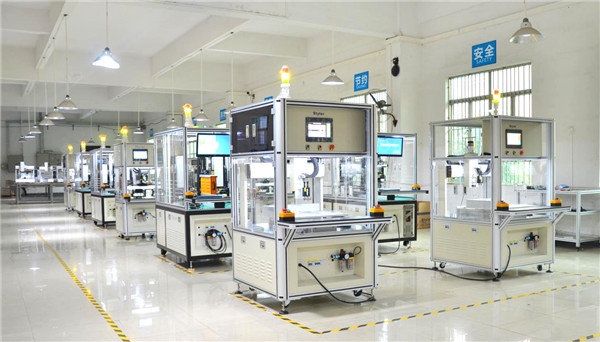
The global transition toward clean energy, electric mobility, and grid-scale storage has catalyzed an unprecedented demand for high-efficiency battery packs. In modern Gigafactories and automated robotic manufacturing plant floors, the assembly of lithium-ion battery packs represents a highly critical phase. The integrity of the electrical connections between hundreds, or even thousands, of individual cylindrical, prismatic, or pouch cells determines the safety, lifespan, and overall efficiency of the final battery module.
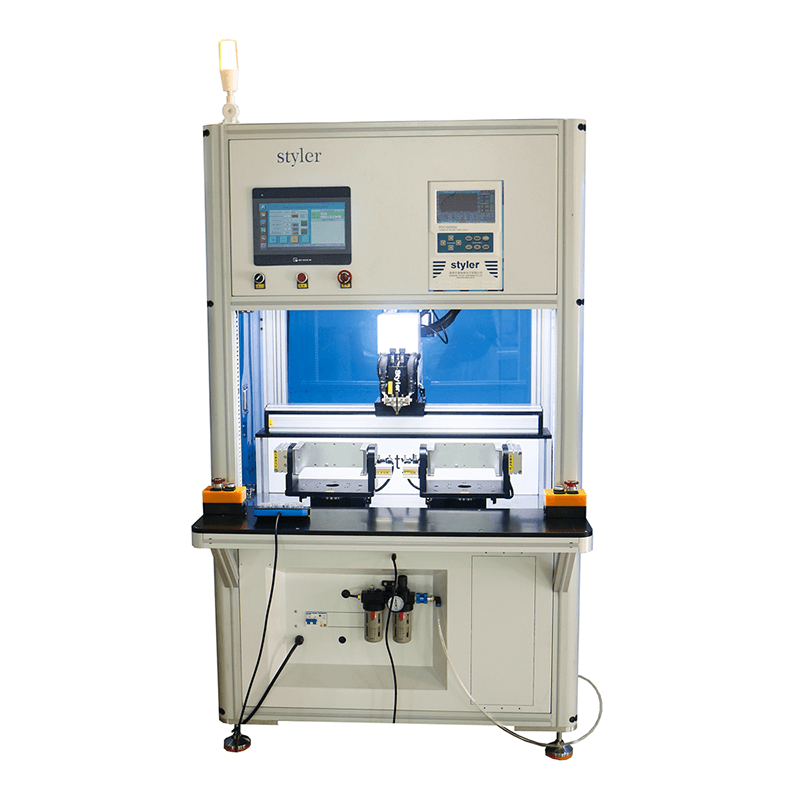
Historically, battery pack assembly relied on manual or semi-automated resistance spot welding. However, as production demands scale into millions of watt-hours annually, manual processes introduce unacceptable levels of variability, thermal stress, and defect rates. Today, automated robotic systems equipped with specialized spot welding heads and real-time monitoring systems are the standard. These systems operate continuously, delivering sub-millisecond control over current and pressure, ensuring that each weld joint achieves optimal mechanical strength and low contact resistance without damaging the sensitive internal chemistry of the cells.
Key Industry Standard: Modern EV battery manufacturing requires defect rates below 10 PPM (parts per million). Achieving this level of quality is only possible by pairing advanced inverter-based power sources with multi-axis articulated robotic arms.
🎯 Key Technical Requirements for Robotic Battery Spot Welding
Integrating spot welding equipment onto automated plant floors demands a deep understanding of electrical resistance, metallurgy, and robotic motion dynamics. Unlike structural welding, battery welding involves joining thin-gauge tabs (often nickel, copper, or aluminum) to cell terminals. The process requires solving several technical challenges:
Dynamic Pressure Control
Robotic actuators must apply precise, consistent force to the weld joint before, during, and after the current pulse to prevent arc formation and material expulsion.
Ultra-Fast Inverters
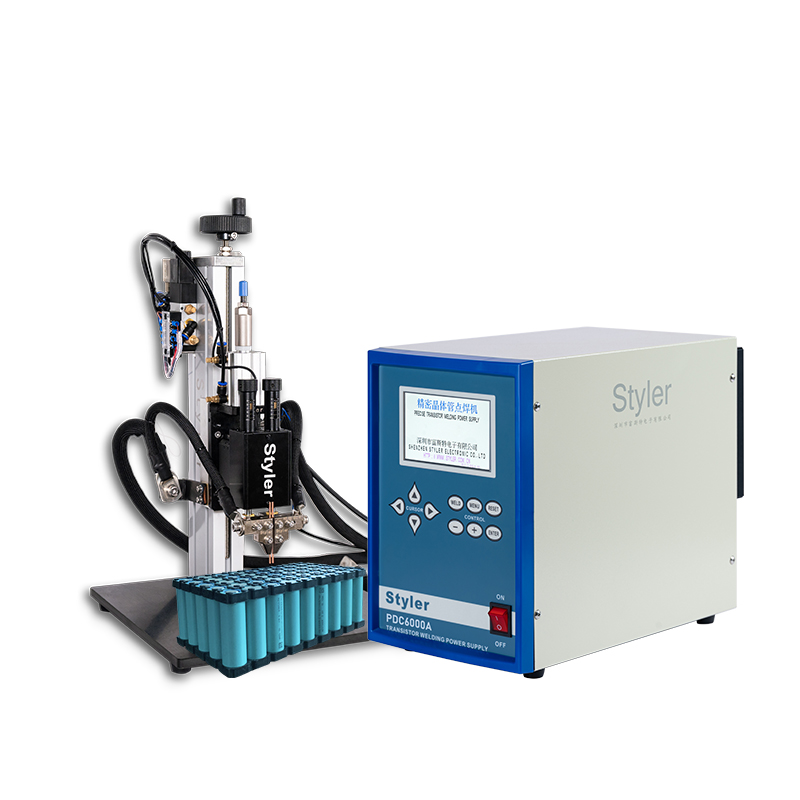
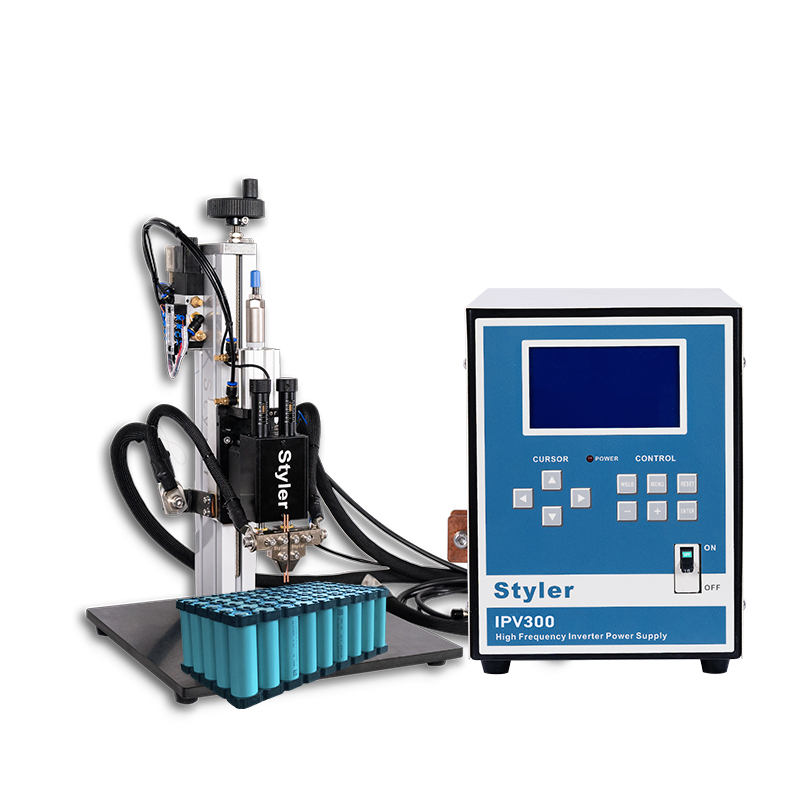
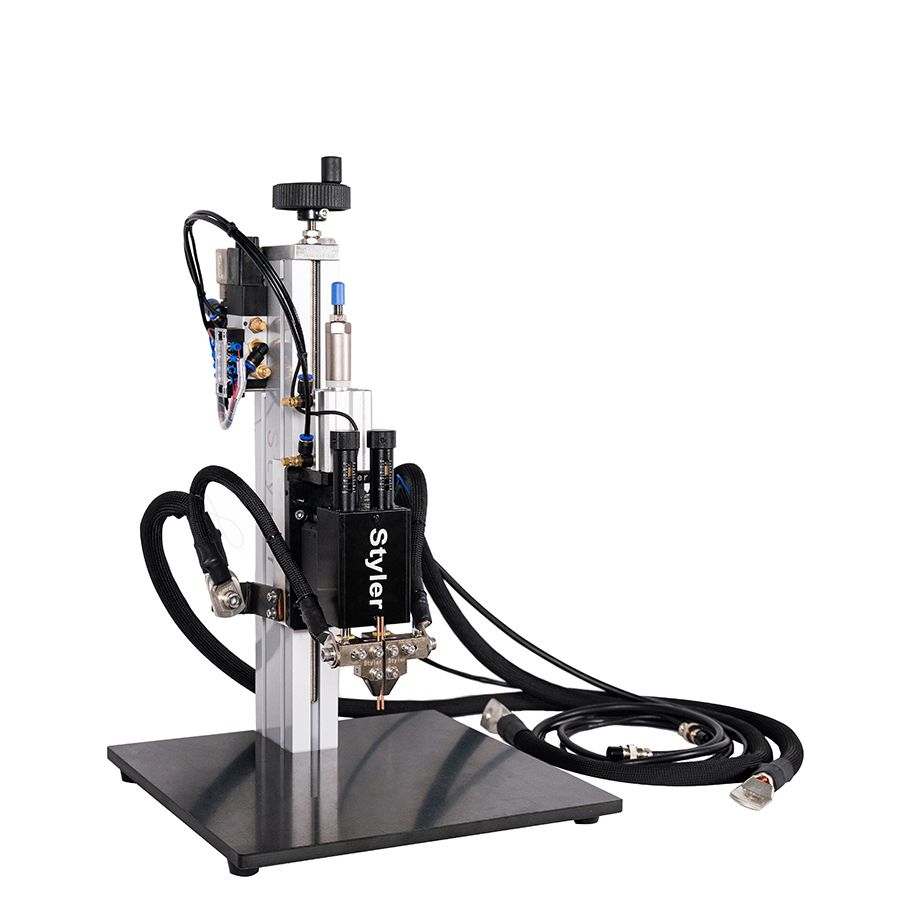
Mid-frequency inverter (MFDC) or transistor-based power sources supply high welding current in milliseconds, minimizing the heat-affected zone (HAZ).
Integrated Quality Tracking
Real-time displacement, voltage, and current monitoring systems track the formation of every single weld nugget, flagging anomalies instantly.
Material Challenges: The Copper and Aluminum Dilemma
As energy density requirements rise, manufacturers increasingly opt for copper and aluminum busbars due to their superior electrical conductivity compared to traditional nickel-plated steel. However, welding these highly conductive materials is notoriously difficult. Copper and aluminum rapidly dissipate heat and reflect laser energy, requiring highly specialized welding technologies.
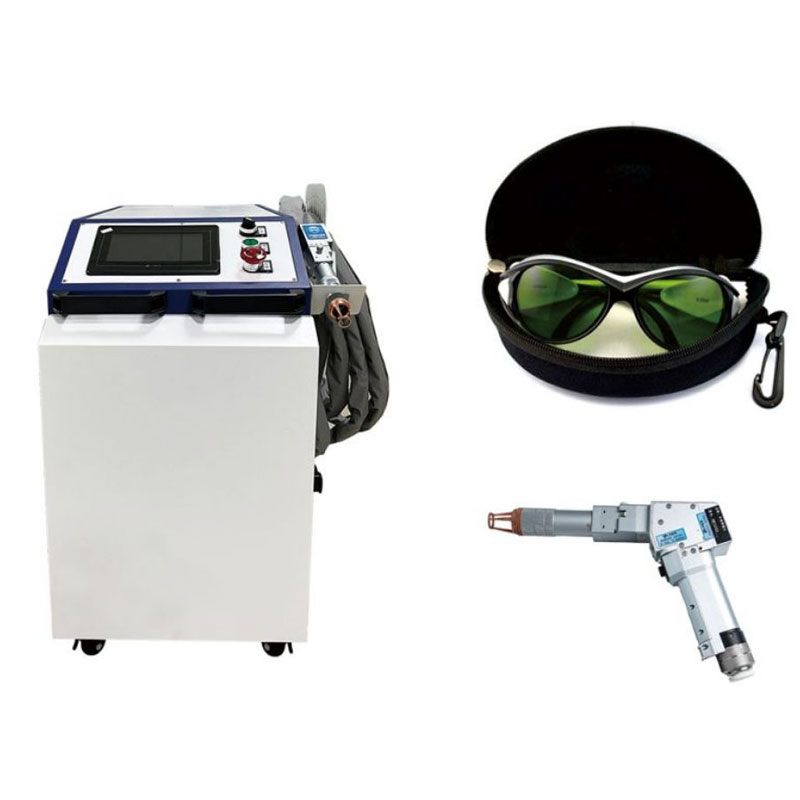
To address this, advanced spot welding machines utilize composite pulses—delivering a brief pre-weld current to clean and seat the materials, followed by a rapid, high-energy peak current to forge the bond. Alternatively, high-power fiber laser welding systems are integrated directly onto robotic arms, using precise beam modulation to achieve deep-penetration keyhole welds on highly reflective metals.
🔍 Deep-Dive: Robotic Battery Assembly Scenarios
On the automated manufacturing floor, robotic spot welding machines are deployed in various configurations depending on the cell format and pack architecture:
1. Cylindrical Cell Pack Assembly (21700 / 4680 Form Factors)
In cylindrical cell assembly, speed is paramount. A typical EV pack contains thousands of cells arranged in dense matrices. Robots equipped with dual-pin spot welding heads move in rapid raster patterns, performing multiple welds per second. The welding system must dynamically adjust to minor height variations of the cells to maintain consistent contact pressure, preventing damage to the cell's internal safety vent or cap.
2. Prismatic Module Busbar Welding
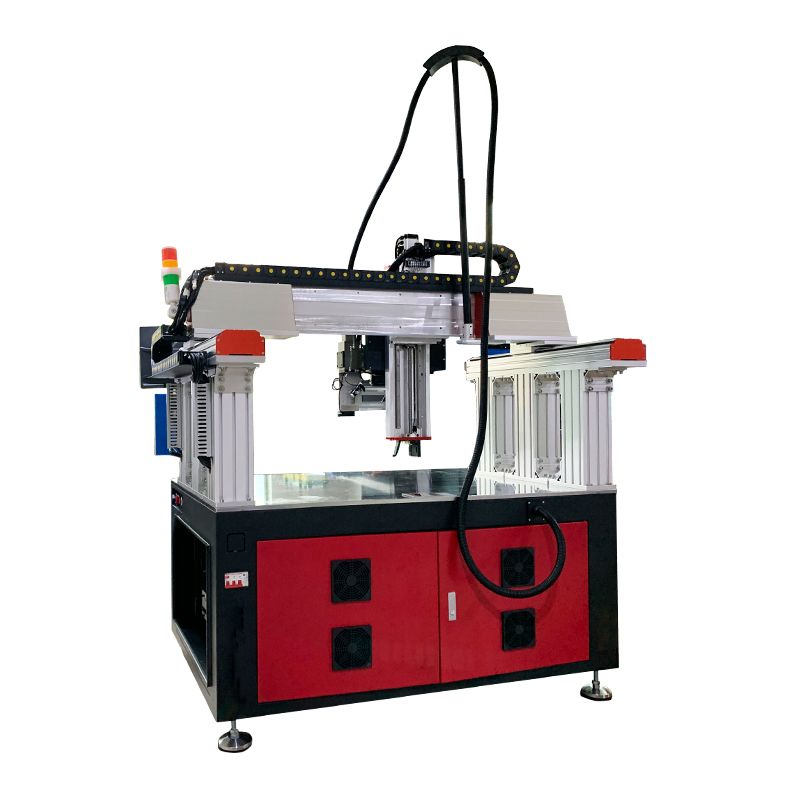
Prismatic cells feature larger, more robust terminals, which are typically joined using heavy-duty copper busbars. This application demands higher welding current and longer weld times. Robotic cells designed for prismatic welding often utilize automated fiber laser welding stations (such as 3000W systems) or heavy-duty resistance projection welding heads to achieve the necessary tensile strength and low electrical resistance required for high-draw heavy industrial batteries.
3. ESS (Energy Storage System) Container Manufacturing
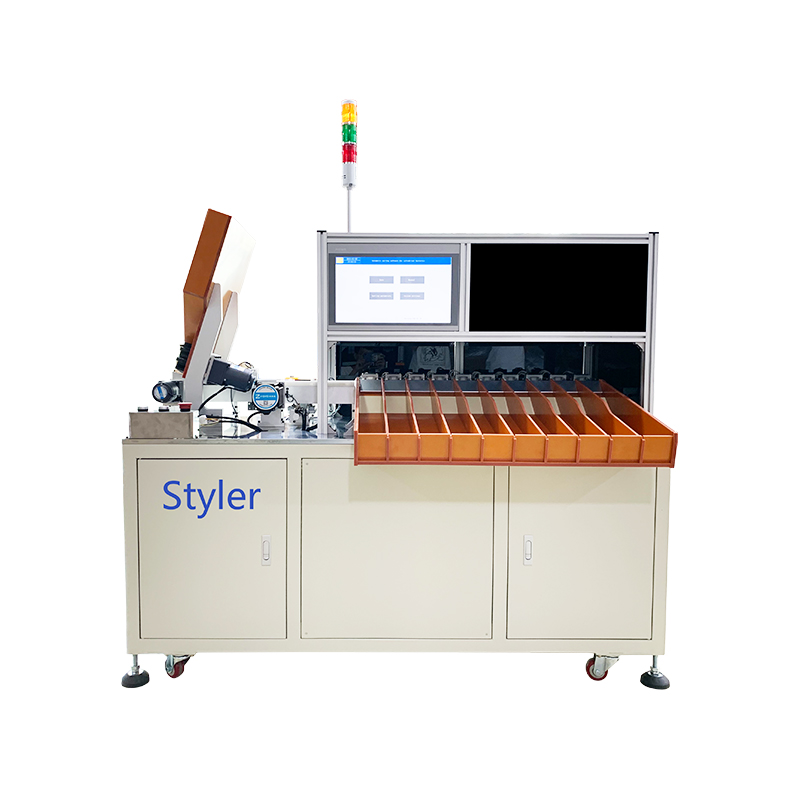
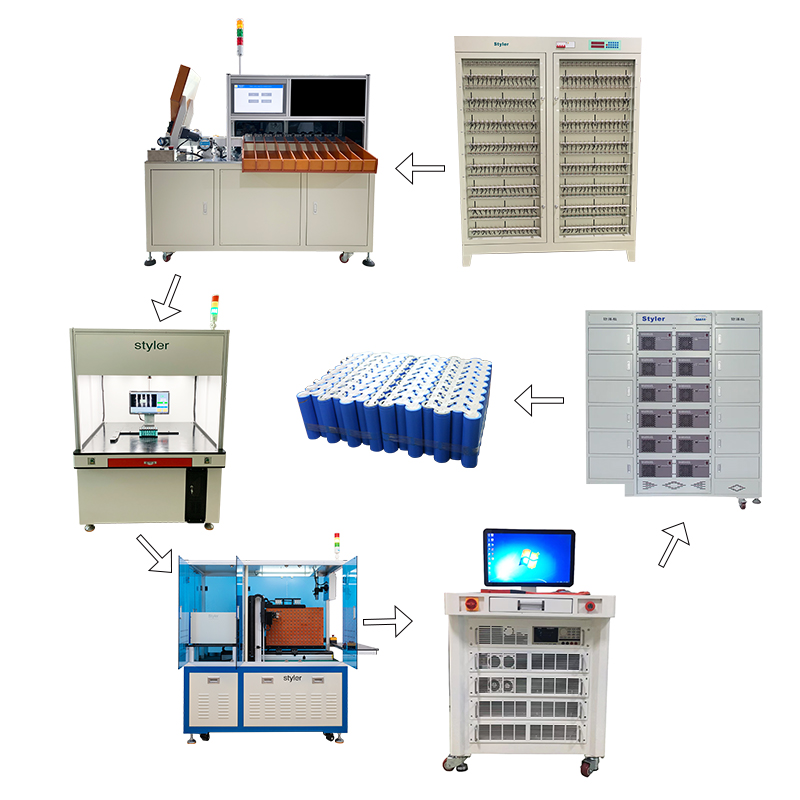
For utility-scale grid storage, reliability and long-term durability are the primary design drivers. These massive battery systems must operate for decades under fluctuating thermal conditions. Automated lines utilize robotic welding gantries that integrate cell sorting, automated testing, and multi-stage welding to build robust modules that are subsequently assembled into large rack systems.
🚀 Future Trends in Automated Battery Welding
The future of automated battery manufacturing lies in the deeper integration of Industry 4.0 concepts. We are seeing a rapid shift towards smart closed-loop feedback systems, where artificial intelligence analyzes electrical signatures and thermal imaging data from the weld in real-time. If a weld nugget is detected to be undersized, the system automatically adjusts the parameters of the subsequent weld to compensate.
Additionally, the adoption of collaborative robots (cobots) on factory floors allows for more flexible production layouts. Cobots can safely work alongside human operators, performing precise spot welding tasks on smaller production runs or custom prototype packs, while fully enclosed high-speed robotic cells handle mass-production lines.