
Introduction
Battery welding issues such as virtual welds, electrode sticking, unstable pull test results, and inconsistent weld quality remain common challenges in lithium battery manufacturing.
Over the past 20 years, Styler has worked with battery manufacturers across energy storage, EV, power tools, and consumer electronics. Based on real production scenarios, we have summarized ten of the most common battery welding questions we receive from customers.
The answers below focus on practical factory-level guidance rather than marketing claims. Whether you are assembling cylindrical battery packs, welding tabs for energy storage systems, or building battery modules for electric vehicles, these are some of the most common issues that can affect welding quality, manufacturing efficiency, and long-term product reliability.
Q1: What is the most common cause of inconsistent battery tab welding?
Inconsistent electrode force during the weld cycle is one of the most common causes of unstable battery tab welding.
Many operators focus only on welding current, but resistance welding depends on three key factors working together:
• Current
• Time
• Force
If electrode force changes due to head wear, poor alignment, or unstable actuation, contact resistance also changes. This can lead to weak welds, excessive heat, weld expulsion, or inconsistent appearance even when current settings remain unchanged.
For automated battery welding equipment, regular force calibration and electrode dressing are essential. For manual welding, stable positioning and operator technique also play a major role.
Q2: How do I know if my weld parameters are correct for a new tab material?
There is no single welding parameter that works for all tab materials.
Pure nickel, nickel-plated steel, copper, and aluminum all have different electrical resistance and heat conductivity. The best approach is to test welding parameters using the actual tab material and battery terminal you plan to use in production.
Start with recommended baseline settings, then adjust current, weld time, and force while performing pull tests and visual inspections.
The goal is to find a stable welding window where the weld is strong enough without excessive heat marks, splatter, or sticking.
Q3: What causes electrode sticking, and how can I reduce it?
Electrode sticking happens when the welding tip partially fuses to the tab after discharge.
This is usually caused by:
• Excessive welding energy
• Insufficient electrode force
• Dirty or worn welding tips
• Improper tip alignment
To reduce sticking:
• Clean and dress the welding tips regularly
• Lower current or weld time gradually
• Verify the welding head force is correct
• Make sure the tips are properly aligned
Reducing electrode sticking helps improve welding stability and reduce downtime.
Q4: How often should welding tips be dressed or replaced?
The correct maintenance interval depends on:
• Welding volume
• Material type
• Weld quality requirements
For high-volume battery pack welding using pure nickel tabs, dressing every 2,000 welds is a common starting point.
However, the actual interval should be based on:
• Pull test performance
• Tip contamination
• Tip diameter growth
• Visible wear
If dressing no longer restores a proper contact surface, the welding tips should be replaced.
Q5: Why do some welds pass pull tests but still have high resistance?
A weld can appear mechanically strong while still having poor electrical performance.
This happens when the weld nugget is too small or oxidation exists at the interface.
In these situations, the tab may pass a pull test but still create high electrical resistance during pack operation.
High resistance welds generate heat during battery cycling and may cause premature pack failure over time.
For critical battery applications, electrical resistance testing should be used together with pull testing.
Q6: Resistance Welding vs. Laser Welding: Which One Is Right for Your Battery Pack?
Small cylindrical cells and large prismatic cells have very different welding requirements.
For cylindrical battery cells such as 18650 and 21700:
• Precision resistance spot welding is usually the better option
• Thin nickel tabs require lower force and shorter weld times
• Stable current control is critical
For large prismatic cells:
• Laser welding is often more suitable
• Thick copper and aluminum busbars require deeper penetration
• Laser welding provides better performance on highly conductive materials
Choosing the correct welding method can significantly improve welding quality and manufacturing efficiency.
Q7: What is a virtual weld, and how can I prevent it?
A virtual weld happens when the tab appears attached but has very little real fusion underneath.
It may look acceptable visually but fail during pull testing, vibration testing, or long-term use.
Common causes include:
• Low welding energy
• Dirty welding tips
• Poor force control
• Current discharge before full tip contact
To reduce virtual weld risk:
• Keep tips clean
• Check actual welding current, not just set values
• Ensure force is fully applied before discharge
• Perform regular peel tests during production
Q8: How does welding equipment affect manufacturing yield?
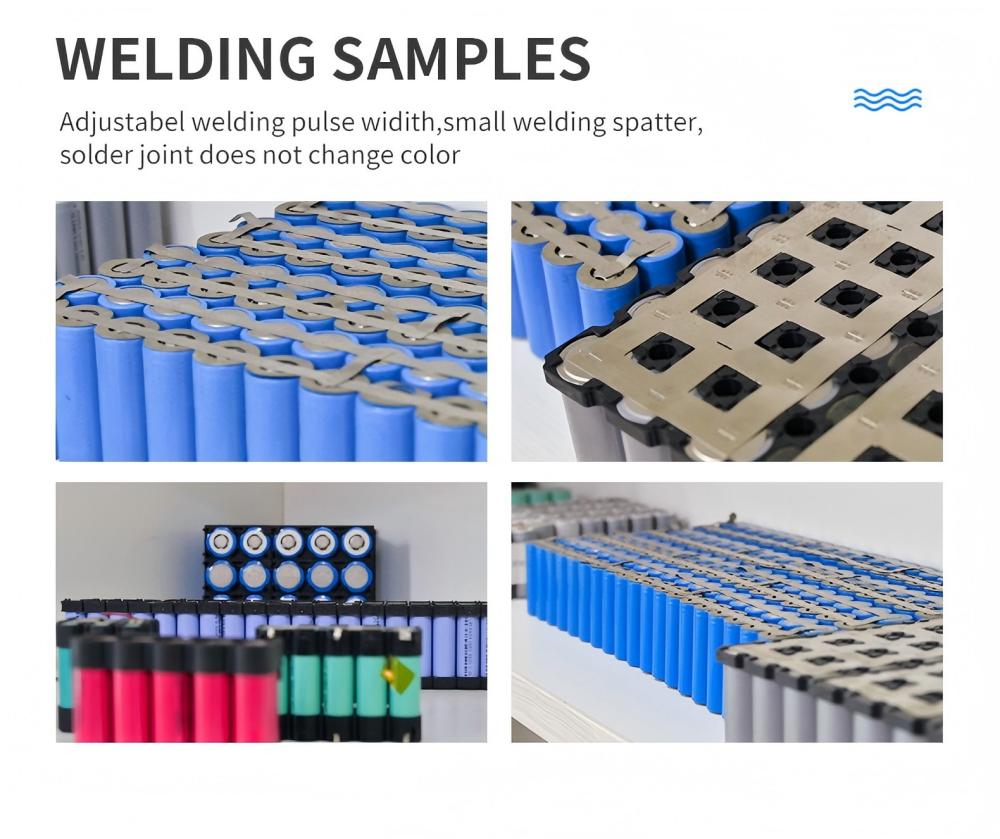
Battery welding equipment has a direct impact on production yield.
Unstable welding causes:
• Rework
• Scrap
• Lower first-pass yield
• More quality inspection time
Equipment with stable force control, repeatable positioning, and consistent energy output can reduce welding variation and improve overall process reliability.
The goal is not zero defects, but a more predictable and controllable welding process.
Q9: Is automation always better than manual welding?
Not always.
For large-scale battery manufacturing with repetitive weld patterns, automated welding systems usually provide better consistency and higher throughput.
However, for:
• Prototype projects
• Small batch production
• Repair work
• High-mix products
Manual welding can still be more flexible and cost-effective.
The best choice depends on production volume, product type, and process complexity.
Q10: What maintenance should be scheduled for battery welding equipment?
A preventive maintenance plan should include:
Daily:
• Inspect welding tips
• Clean contamination
• Check cooling systems
Weekly:
• Verify tip alignment
• Test weld quality
• Perform pull tests
Monthly:
• Check cables and connectors
• Inspect moving parts
• Verify system stability
Quarterly:
• Calibrate welding force
• Verify current output
• Check wear on critical components
Regular maintenance helps reduce downtime, improve welding consistency, and extend equipment life.
Conclusion
Whether you are producing cylindrical battery packs, prismatic battery modules, or energy storage systems, selecting the right welding technology is critical for manufacturing stability and long-term product reliability.
Styler provides spot welding machines, laser welding systems, and automated battery pack assembly solutions for a wide range of battery manufacturing applications.
If you would like to discuss your battery welding process, our technical team is ready to help.
For more information, please visit:
Or contact:
The information provided by Styler on https://www.stylerwelding.com/ is for general informational purposes only. All information on the Site is provided in good faith, however, we make no representation or warranty of any kind, express or implied, regarding the accuracy, adequacy, validity, reliability, availability or completeness of any information on the Site. UNDER NO CIRCUMSTANCE SHALL WE HAVE ANY LIABILITY TO YOU FOR ANY LOSS OR DAMAGE OF ANY KIND INCURRED AS A RESULT OF THE USE OF THE SITE OR RELIANCE ON ANY INFORMATION PROVIDED ON THE SITE. YOUR USE OF THE SITE AND YOUR RELIANCE ON ANY INFORMATION ON THE SITE IS SOLELY AT YOUR OWN RISK.
Post time: Apr-10-2026


