
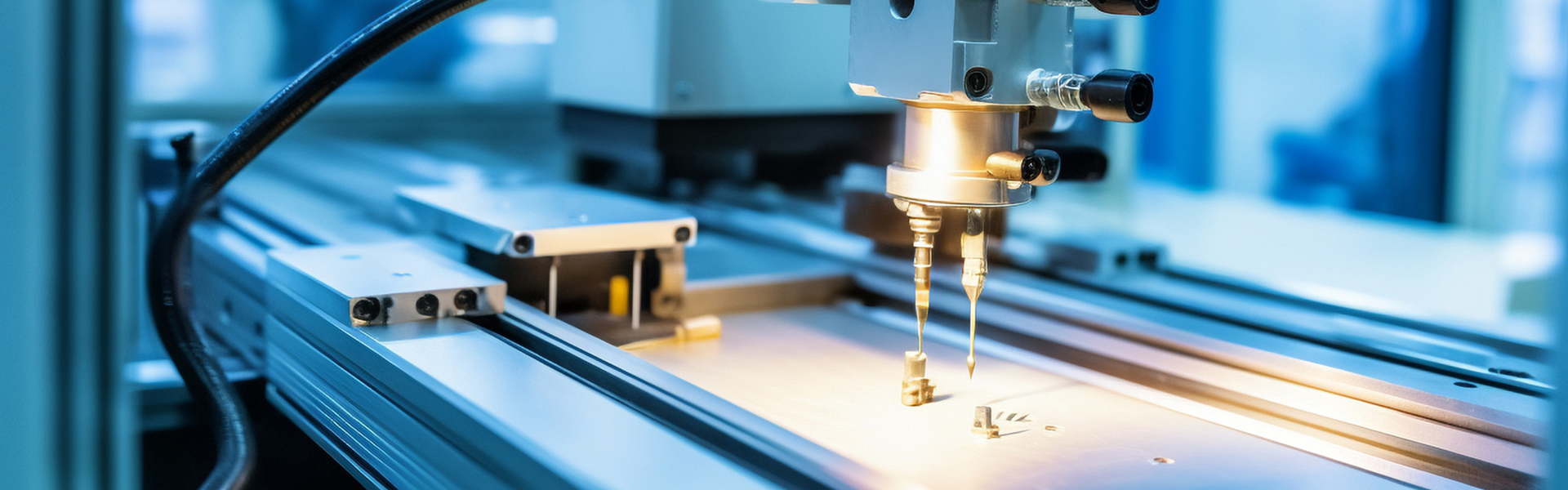
Why Different Battery Materials Behave Differently
Modern battery assemblies often require joining combinations such as:
- Copper to aluminum
- Nickel to copper
- Aluminum busbars to battery tabs
- Nickel-plated components
- Multi-layer conductive materials
Each material absorbs laser energy differently.
For example:
- Copper has high thermal conductivity and reflects much of the incoming laser energy.
- Aluminum melts relatively easily but is sensitive to oxidation.
- Nickel generally offers good weldability but requires different process parameters depending on material thickness and surface condition.
These differences make it difficult for a single welding setup to achieve optimal results across every material combination.
Is One Laser Wavelength Always Enough?
The answer depends on the application.
Traditional laser welding systems typically operate with a single wavelength, which performs well for many battery manufacturing processes.
However, when joining certain dissimilar materials or highly reflective metals, manufacturers may experience challenges such as:
- Unstable weld penetration
- Excessive spatter
- Porosity
- High thermal distortion
- Inconsistent electrical conductivity
To address these challenges, manufacturers may optimize laser parameters, beam shaping, shielding gas, fixture design—or, in some specialized applications, consider multi-wavelength laser technology.
Rather than being a universal solution, wavelength selection is one of several engineering factors that influence welding performance.
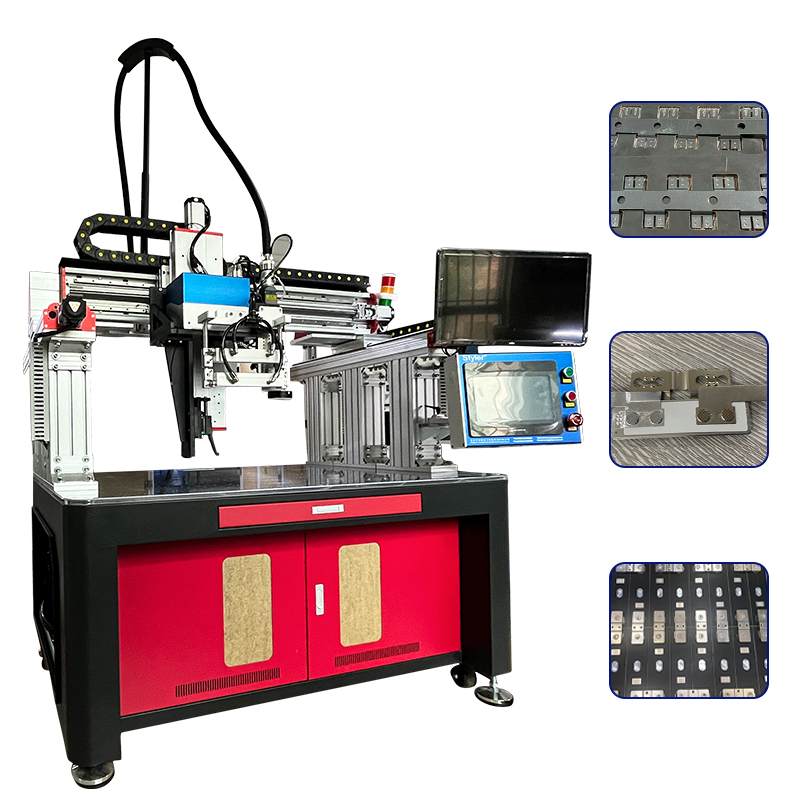
Where Multi-Wavelength Laser Welding May Offer Advantages
Multi-wavelength laser welding combines two or more laser wavelengths within the same welding process.
For suitable material combinations, this approach may improve energy coupling and provide a wider process window.
Potential advantages include:
- Improved energy absorption for selected materials
- Better weld pool stability
- Reduced process variation
- Greater flexibility when joining certain dissimilar metals
- Improved consistency in suitable applications
The actual benefits depend on material combinations, joint geometry, process parameters, and production requirements.
Choosing the Right Welding Technology
There is no single welding solution suitable for every battery manufacturing application.
Manufacturers should evaluate:
- Material combinations
- Joint design
- Required electrical conductivity
- Production volume
- Automation requirements
- Product flexibility
- Long-term manufacturing efficiency
For many battery applications, precision resistance spot welding remains one of the most efficient and cost-effective solutions.
Laser welding becomes particularly valuable when applications require higher precision, complex geometries, or minimal mechanical contact.
Many manufacturers combine both technologies to achieve the best balance between efficiency, flexibility, and product quality.
Supporting Automated Battery Manufacturing
Modern battery production increasingly depends on integrated automation rather than standalone equipment.
Whether using spot welding, laser welding, or a combination of both, manufacturers benefit from production systems that include:
- Automatic cell handling
- Vision-assisted positioning
- Process monitoring
- Online inspection
- Welding data collection
- Production traceability
Integrated manufacturing systems help improve production consistency while supporting future expansion and new battery designs.
Why Choose Styler
With more than 20 years of experience in battery welding technology, Styler provides comprehensive solutions for lithium battery manufacturing.
Our product portfolio includes:
Rather than promoting a single welding technology, we help manufacturers evaluate the most suitable solution based on material characteristics, production requirements, and long-term manufacturing goals.
Conclusion
Battery welding is becoming increasingly complex as manufacturers adopt new materials and battery designs.
Instead of searching for a single welding solution that fits every application, manufacturers benefit from understanding how material properties influence welding performance.
By selecting the appropriate welding technology and integrating it into a stable manufacturing process, manufacturers can improve production consistency, reduce process variation, and support long-term manufacturing efficiency.
If you are evaluating welding solutions for your next battery manufacturing project, Styler is ready to help.
Post time: Jul-28-2026


