
Introduction
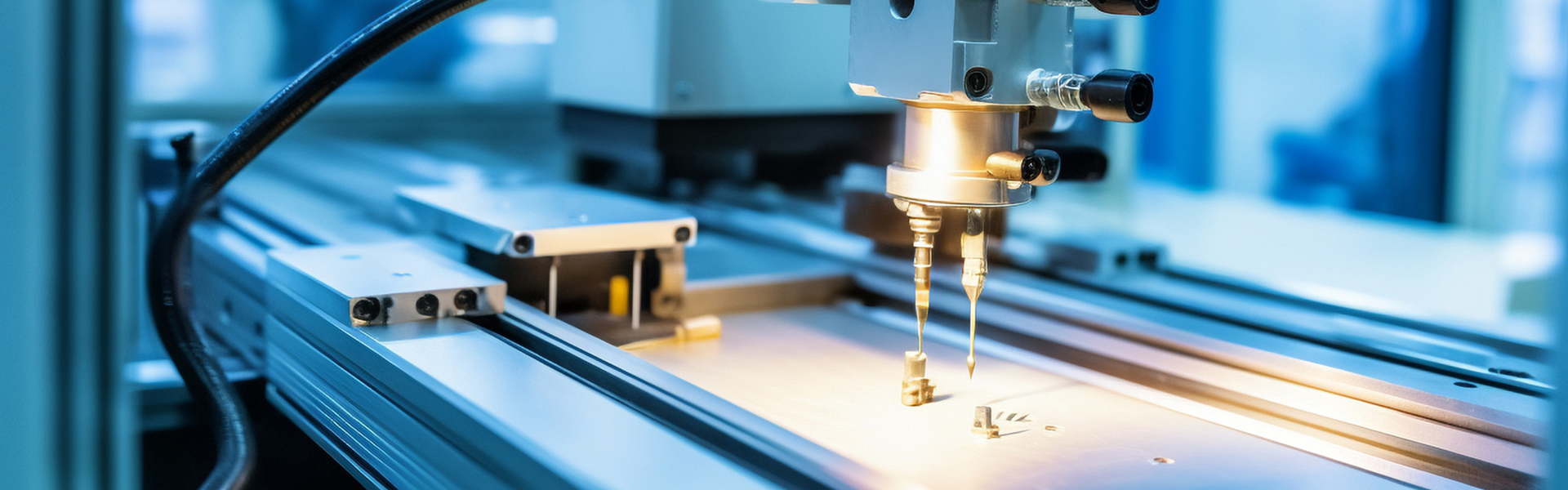
As demand for energy storage systems continues to grow, battery manufacturers face increasing pressure to improve both production efficiency and long-term battery reliability.
In modern ESS battery production, welding quality directly affects:
Electrical conductivity
Thermal stability
Battery pack safety
Production consistency
For automated battery pack assembly lines, even small welding variations can create larger problems over time, especially during continuous high-volume production.
This is why more manufacturers are focusing on welding stability and process consistency rather than simply increasing production speed.
Common Challenges in ESS Battery Manufacturing
Energy storage battery packs require large numbers of welded connections between cells, tabs, and busbars.
During production, manufacturers often encounter issues such as:
Inconsistent weld quality
Variable contact resistance
Welding splash
Electrode wear
Heat-affected zones around welding points
These issues may not immediately stop production, but over time they can lead to:
Increased rework
Lower production yield
Reduced battery pack reliability
More difficult process control
For large-scale ESS battery projects, maintaining stable welding quality becomes increasingly important.
Why Welding Stability Is Critical for Battery Pack Performance
In battery welding, stable process control is more important than peak welding power.
Welding quality depends heavily on the balance between:
Welding current
Pulse timing
Electrode force
Electrode alignment
If these parameters fluctuate during continuous production, weld consistency becomes difficult to maintain.
For example:
Excessive heat may damage surrounding materials
Insufficient fusion may create virtual welds
Unstable pressure may increase contact resistance
Over long production cycles, these small variations can affect both battery performance and manufacturing efficiency.
How Modern Welding Systems Improve ESS Battery Production
(Credit: Image from Styler)
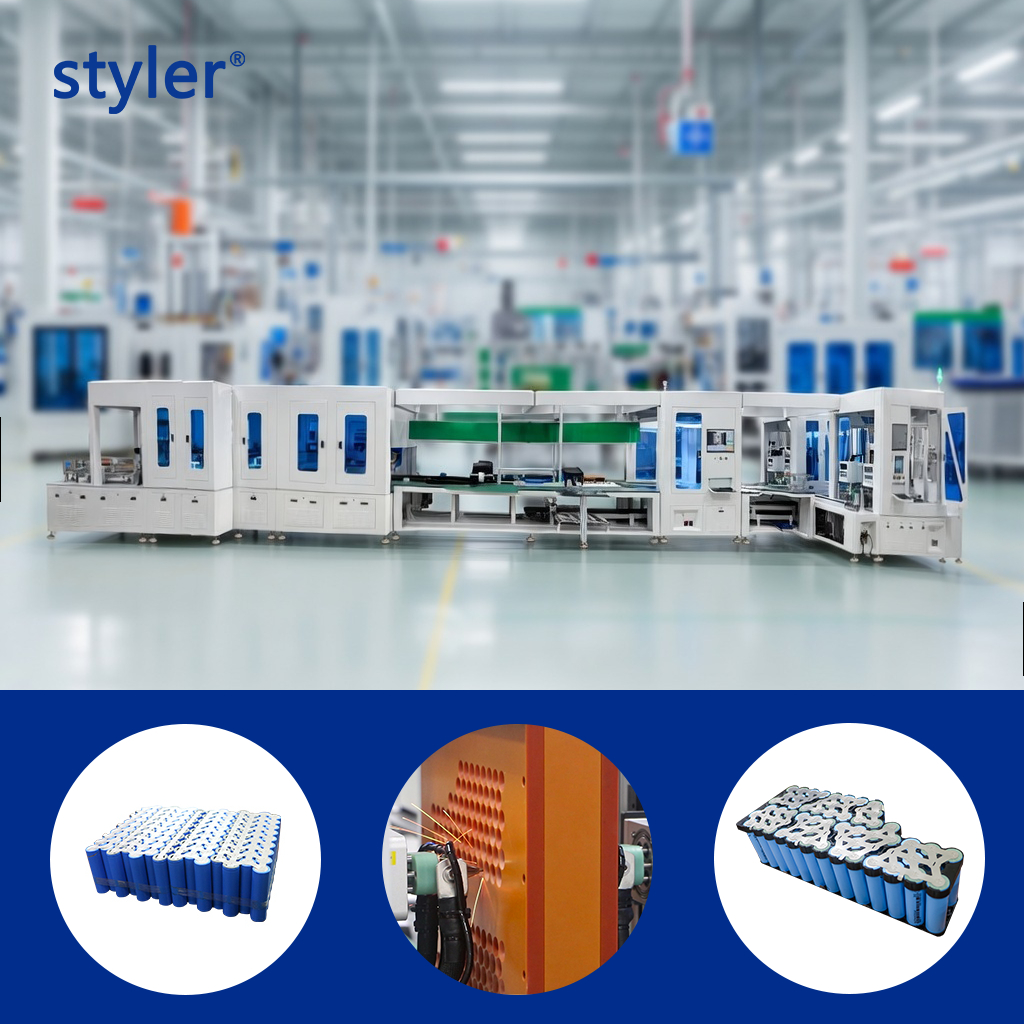
Modern battery welding systems help reduce variation through:
Stable current control
Repeatable force application
Pulse shaping technology
Real-time process monitoring
Inline welding data collection
These functions help manufacturers maintain more stable welding conditions during automated battery pack production.
Real-time monitoring is especially useful because it allows operators to identify abnormal welding conditions before larger quality problems appear.
Styler’s Approach to Battery Welding Solutions
Styler Electronic develops welding systems for lithium battery manufacturing and energy storage battery assembly applications.
Our solutions are designed for:
Battery tab welding
Busbar welding
Battery module assembly
Battery pack welding
Automated ESS battery production
Key focuses include:
Stable welding current output
Consistent welding pressure
Long-term production stability
Integration with automated assembly lines
Process monitoring and traceability support
For manufacturers running high-volume ESS battery production, stable welding performance helps reduce unnecessary rework while improving overall production consistency.
Production Impact of Better Welding Control
When welding consistency improves, manufacturers typically see:
Lower contact resistance variation
Reduced welding defects
Better thermal stability
Improved pack reliability
Higher first-pass yield
More stable production output
In large-scale energy storage battery manufacturing, even small improvements in welding consistency can significantly affect long-term production efficiency and battery quality.
Conclusion
As ESS battery manufacturing continues to scale, maintaining stable welding quality becomes increasingly important.
Reliable welding systems help manufacturers improve production consistency, reduce variation, and support long-term battery pack reliability.
Styler Electronic continues focusing on battery welding solutions designed for stable and repeatable battery manufacturing environments.
Website: www.stylerwelding.com
Email: sales4@styler.com.cn
WhatsApp: +86-15218784866
(the “Site”) is for general informational purposes only. All information on the Site is provided in good faith, however, we make no representation or warranty of any kind, express or implied, regarding the accuracy, adequacy, validity, reliability, availability or completeness of any information on the Site. UNDER NO CIRCUMSTANCE SHALL WE HAVE ANY LIABILITY TO YOU FOR ANY LOSS OR DAMAGE OF ANY KIND INCURRED AS A RESULT OF THE USE OF THE SITE OR RELIANCE ON ANY INFORMATION PROVIDED ON THE SITE. YOUR USE OF THE SITE AND YOUR RELIANCE ON ANY INFORMATION ON THE SITE IS SOLELY AT YOUR OWN RISK.
Post time: May-14-2026


