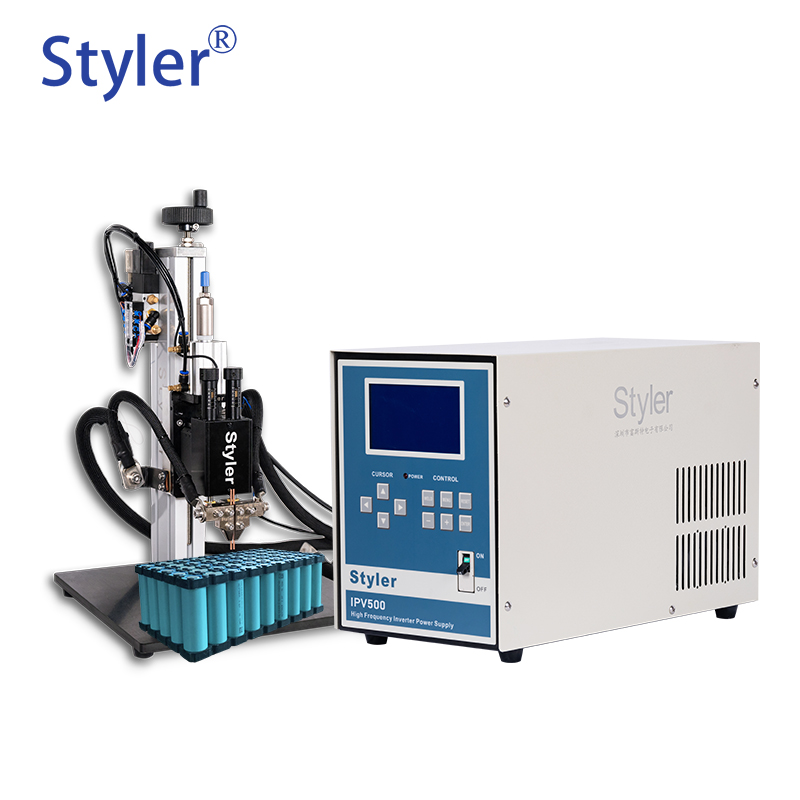
Precision Machinery for High-Power Fabrication
Explore our top-tier industrial welding systems engineered for high conductivity, thick metal sheets, and critical structural frames.
The Evolution of Resistance Welding in High-Power & Structural Applications
In the contemporary manufacturing landscape, the demand for high-power metal sheet components and robust structural chassis has reached unprecedented levels. Industries such as electric vehicles (EVs), renewable energy storage systems (ESS), aerospace, and heavy industrial machinery require joining technologies that guarantee long-term mechanical strength, minimal thermal deformation, and outstanding electrical conductivity. Resistance welding, particularly spot and projection welding, remains the cornerstone of these assembly processes.
Modern electrical enclosures, power distribution busbars, and EV chassis frameworks increasingly utilize thick aluminum alloys and high-purity copper sheets. These materials present significant challenges due to their high thermal and electrical conductivities, demanding high-power welding systems with adaptive control algorithms to prevent joint failure.
Historically, traditional AC (Alternating Current) welding systems struggled to provide the rapid, concentrated heat profile required for heavy-duty metal sheets. The industry has shifted significantly toward Medium Frequency Inverter DC (MFDC) and high-frequency capacitor discharge welding technologies. These modern systems deliver precise energy bursts within milliseconds, optimizing heat-affected zones (HAZ) and preserving the metallurgical integrity of the parent materials. The integration of real-time monitoring, machine vision (CCD), and automated closed-loop feedback systems represents the current benchmark for smart manufacturing facilities globally.
Critical Applications: High-Power Metal Sheets & Chassis Fabrication
Understanding the stress dynamics and physical properties of the materials is vital when deploying resistance welding in heavy-duty environments. Below is a deep dive into the primary industrial applications:
1. Automotive Chassis & Structural Frame Assembly
The chassis serves as the backbone of any vehicle, bearing dynamic structural loads and ensuring occupant safety. Resistance spot welding is the primary joining method for high-strength steel (HSS) and ultra-high-strength steel (UHSS) sheets used in modern automotive frames. The process must deliver high shear strength and fatigue resistance. High-power spot welding machines apply precise force and current profiles to ensure a uniform weld nugget, preventing structural delamination during crash events.
2. Heavy-Duty Industrial Enclosures & Cabinets
Electrical control cabinets, server racks, and power distribution kiosks are fabricated from thick sheet metals. These enclosures require structurally sound, dust-tight, and moisture-resistant joints. Projection welding is frequently utilized here to join fasteners, brackets, and structural ribs to the chassis. This method allows multiple welds to be executed simultaneously, maximizing manufacturing throughput while minimizing panel distortion.
3. EV Battery Pack Busbars & Module Frames
Electric vehicle battery packs consist of hundreds of individual cells connected by thick copper or nickel busbars. Joining these high-conductivity components to transport heavy electrical currents requires specialized resistance welding systems. The weld must exhibit low contact resistance to prevent thermal runaway. Automated assembly lines integrate custom welding heads and placement machines to execute these micro-welds with sub-millimeter precision.
Welding thick metal sheets demands high electrode force and welding current. This accelerates electrode deformation (mushrooming). Implementing advanced copper-chrome-zirconium (CuCrZr) alloy electrodes alongside automated dressing systems is essential to maintain consistent current density and weld quality.
About Us
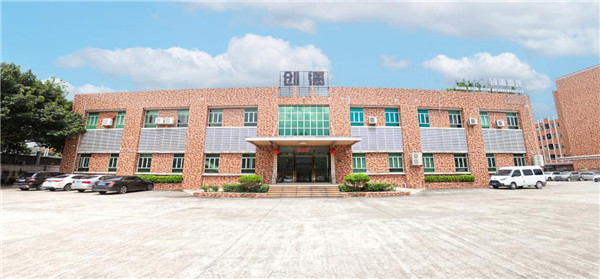
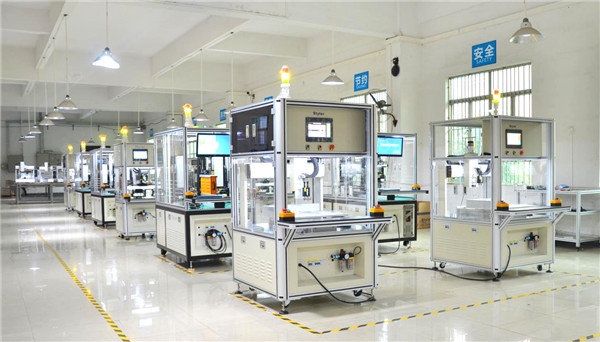
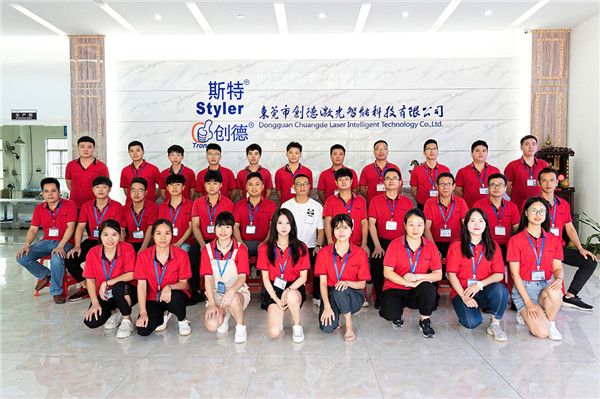
Styler is a professional manufacturer aims to provide high quality and trustful welding machine to the customer. Our company has unique understanding and innovative idea in the field of resistance welding and laser applications, and the welding technology has reached to the international level through continuously investing in the technical research and development. We also cooperate with education institutes on the technology development to enhance our machine’s performance and application area.
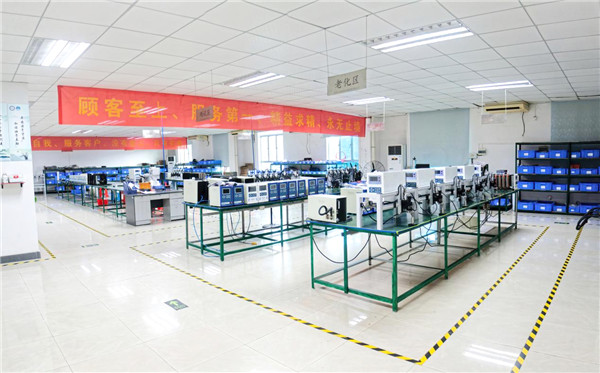
Customer Centric is our core value. Besides of providing personalized high performance and durable machines to the customer, we value the hospitality the most, as we wish customers to have a pleasant purchase experience with us for each visit. Therefore, we have been providing ongoing training internally to provide excellent customer service to our customer. We believe the customer-oriented direction is the key to success, and it has been successfully helping us to develop a strong reputation in the industry, allowing us to retain customers and attracting new customers to start the business with us.
Company Vision
To provide a cutting-edge welding machine in a reasonable price to the customer has been the long-term goal for Styler, and thus, we will continually be developing innovative, stable, and budgeting machine to the customer around the world.

Corporate Social Responsibility
Giving back to the society is important as we are not able to go this far without the community’s support. Therefore, Styler has been actively participating in the charity works and government events each year, to improve the local municipal service and facility.
Employee Development
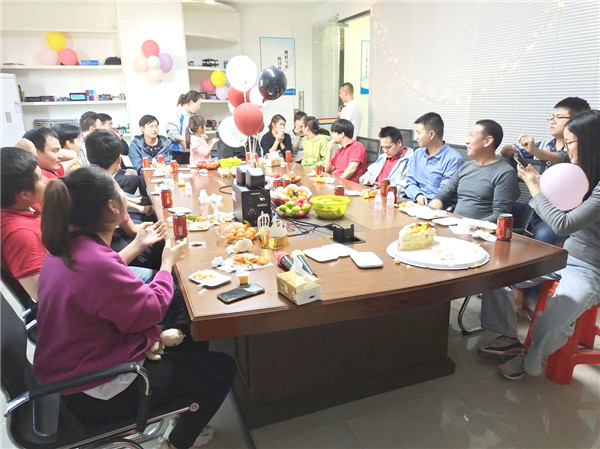
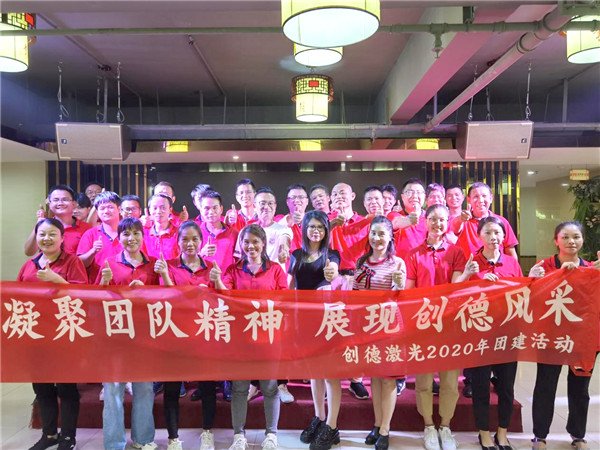
Despite all the growth that has occurred over the years, we remain extremely employee centric. Our management team works tirelessly to ensure each Styler Welding employee feels fulfilled from work and life. As work-life balanced living style is proved that it would increase employee’s performance at work, and consequently, providing better service and product to the customer.
Optimizing Resistance Welding Parameters for Heavy-Duty Chassis and Metal Sheets
Achieving structural reliability in heavy-duty chassis fabrication requires meticulous optimization of the primary welding parameters. Unlike thin-sheet metal fabrication, high-power resistance welding operates under high thermal loads and mechanical pressures. Below are the key engineering factors that demand close control:
- Welding Current (kA): High-power sheet metal joining requires high current outputs to generate the heat needed to melt the faying surfaces. However, excessive current leads to expulsion (spatter) and electrode degradation. Styler's advanced controllers utilize constant current regulation to maintain stability.
- Electrode Force (kN): Adequate force is vital to contain the molten weld pool and reduce contact resistance. For thick chassis components, high force ensures proper consolidation of the weld nugget and minimizes porosity.
- Squeeze, Weld, and Hold Times (ms): Precise timing cycles prevent premature current discharge and allow the weld nugget to solidify under force, maximizing tensile and torsional strength.
Advanced Quality Control: CCD Vision and Closed-Loop Systems
In modern high-power fabrication lines, manual inspection is insufficient. Integrating CCD Visual Inspection Machines allows manufacturers to analyze weld alignment, monitor surface defects, and verify dimensional tolerances in real time. Combined with smart sensors that log force and current curves for every weld joint, factories can achieve 100% traceability, which is a key requirement for automotive and aerospace components.
Our Comprehensive Resistance Welding Solutions
Browse our full range of advanced welding hardware, automated assembly systems, and quality control equipment.
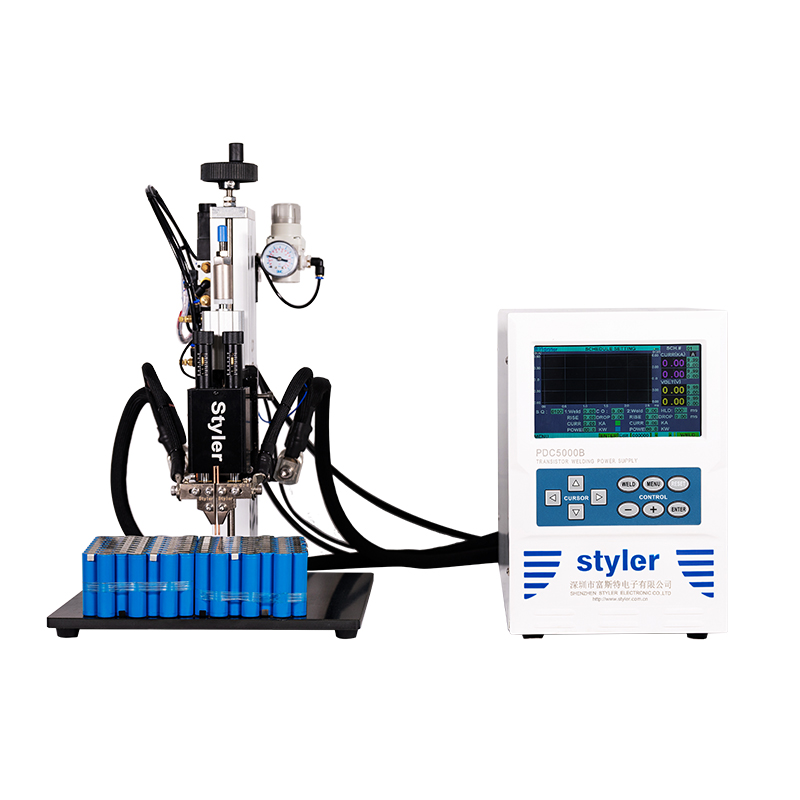
PDC5000B Spot Welder
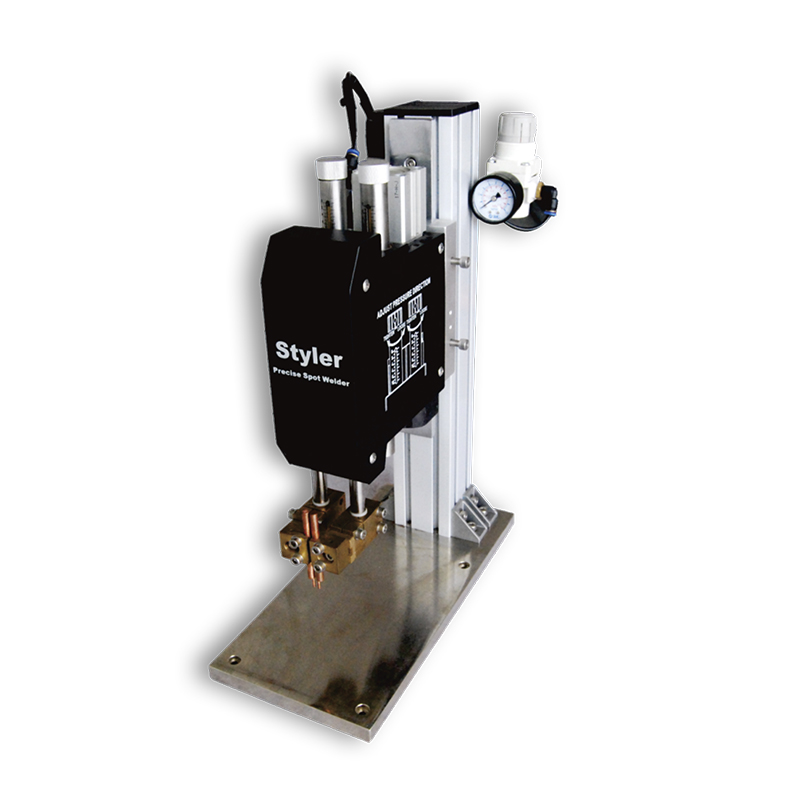
Custom OEM/ODM Welding Head
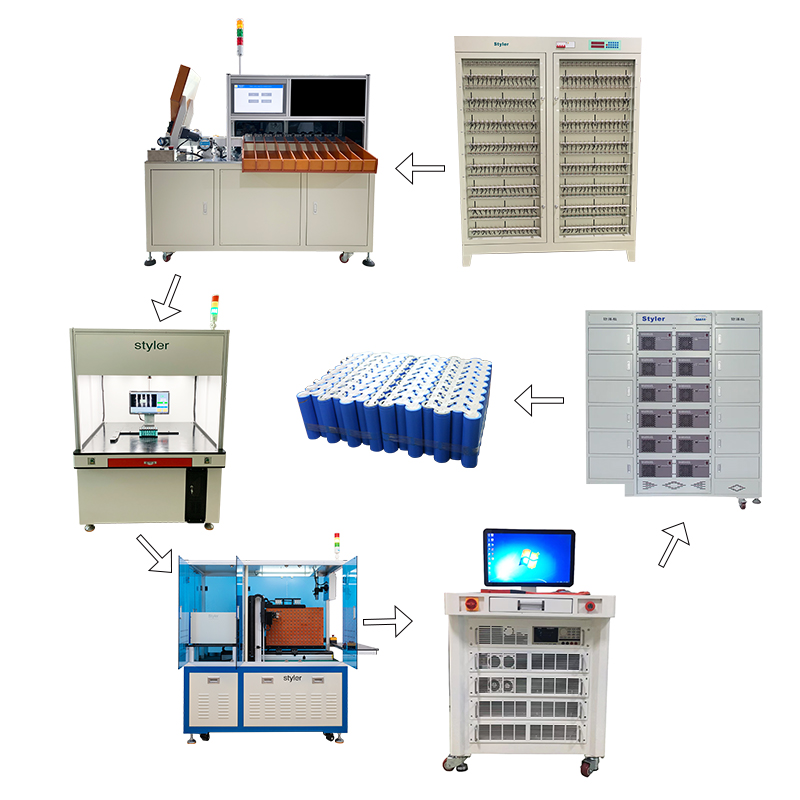
Automatic Lithium Battery Ev Battery Pack Assembly Line
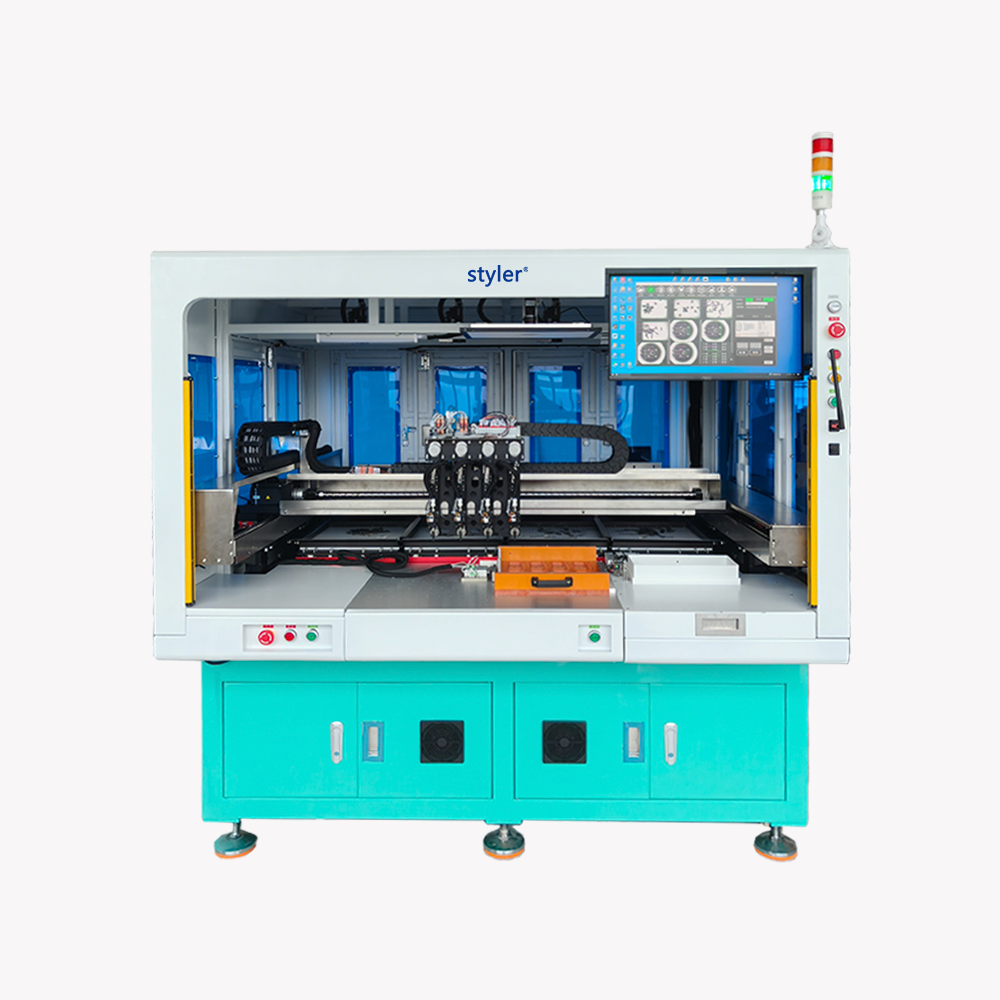
Automatic Nickel Sheet Placement Machine
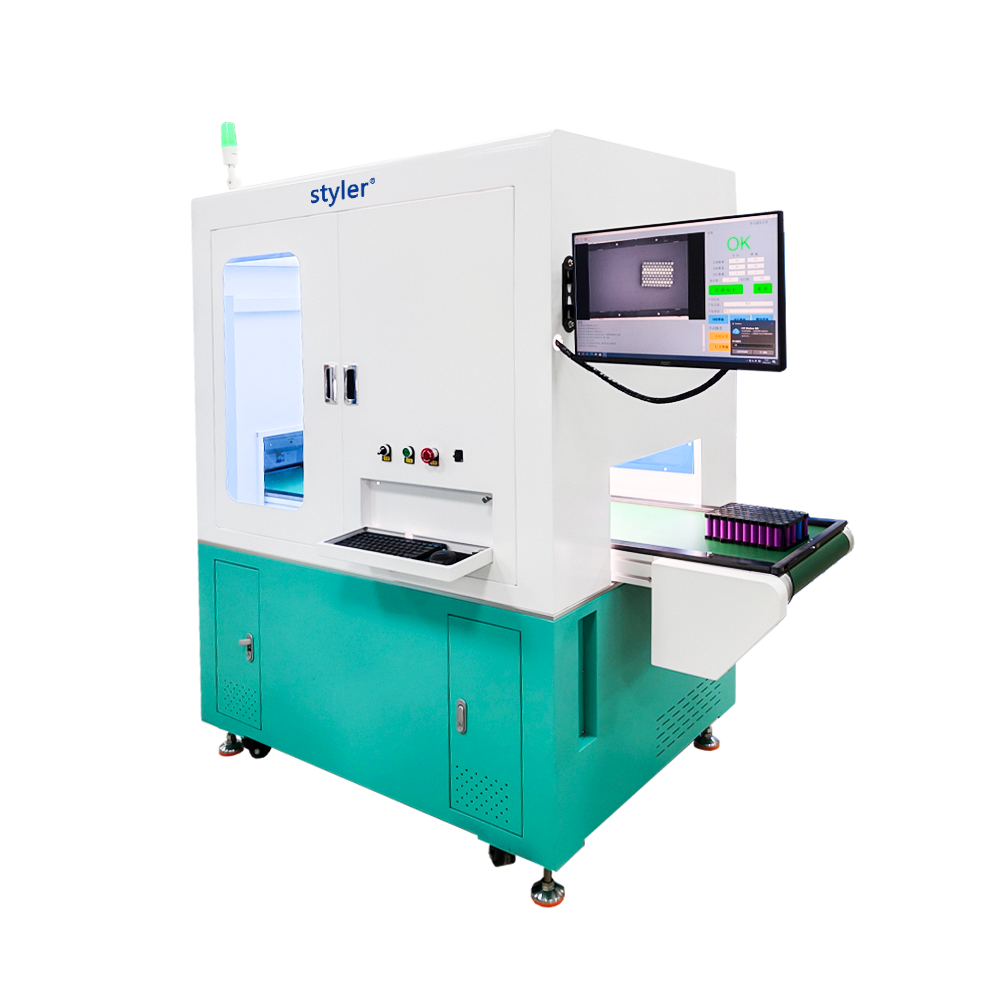
CCD Visual Inspection Machine
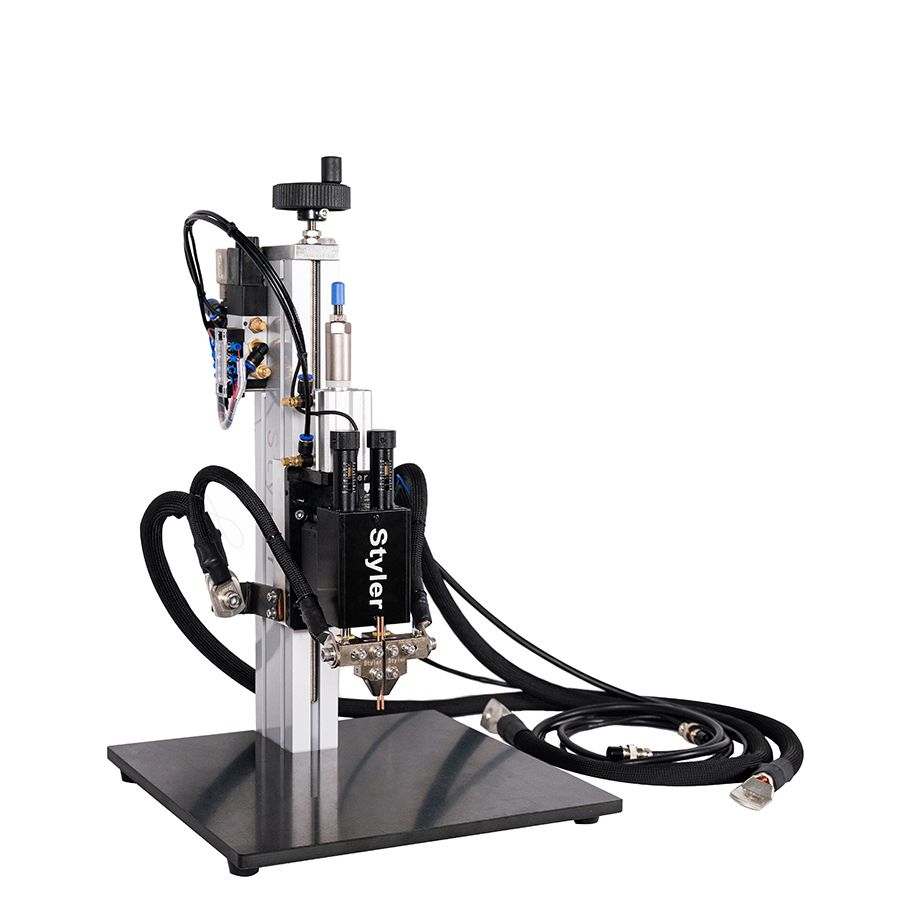
25mm Factory custom service welding head
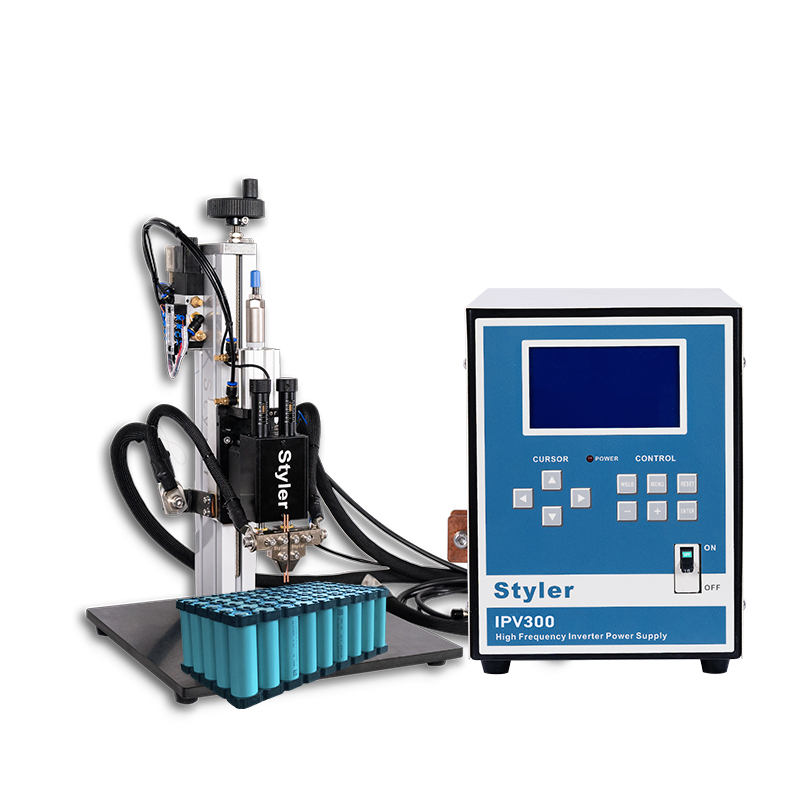
IPV300 Point Welding Machine