Essential Battery Pack Assembly Modules
Deploying the right micro-joining and sorting technologies is paramount to securing high yields and preventing thermal failures in modern portable tool battery packs.
The Cordless Revolution & Portable Power Tool Battery Packs
The global transition from corded electrical equipment to high-performance, battery-powered tools has catalyzed an unprecedented demand for reliable battery packs. From heavy-duty rotary hammers to high-torque impact wrenches and cordless lawnmowers, modern professional power tools demand massive instantaneous currents (often exceeding 30A to 40A per cell) and must withstand severe operational vibrations, drop impacts, and extreme thermal fluctuations. The core of this power delivery system lies in the design and production of the Lithium-Ion (Li-ion) cylindrical cell pack (typically utilizing 18650 or 21700 form factors).
To safely and efficiently harness the energy stored within these cells, manufacturers must connect them in series and parallel configurations using nickel, copper, or nickel-clad copper tabs. This is where Automatic Spot Welding becomes the defining process of the production line. Without precise, high-speed, and consistent micro-joining, a single weak weld joint can lead to increased internal resistance, local overheating (thermal runaway), or complete electrical disconnection under load. Consequently, optimizing the spot welding process is not merely a production step; it is a critical safety and quality parameter that determines the commercial viability of power tool brands.
High Conductivity
Optimized welding minimizes contact resistance, preventing parasitic energy loss and voltage drops under high-rate discharges.
Thermal Safety
Precise energy control prevents localized heat from penetrating the cell structure, ensuring the safety of internal separators.
Vibration Resistance
Strong mechanical bonding withstands the continuous shocks and vibrations characteristic of heavy-duty industrial tools.
Deep Dive: Mechanics of Spot Welding in Battery Packs
Resistance spot welding (RSW) relies on Joule heating, where heat is generated by passing a high electrical current through the contact resistance between the welding electrodes, the nickel tab, and the battery cell terminal. The formula for generated heat is:
Q = I² * R * t
Where Q represents heat, I is the weld current, R is the total contact resistance, and t is the duration of current application. In cylindrical battery pack assembly, controlling this heat is a delicate balancing act:
- The Nickel-to-Steel Interface: The positive terminal of a Li-ion cell is typically a nickel-plated steel cap, while the negative terminal is the steel casing. Welding a pure nickel tab to these surfaces is highly reliable due to compatible melting points and electrical resistivities.
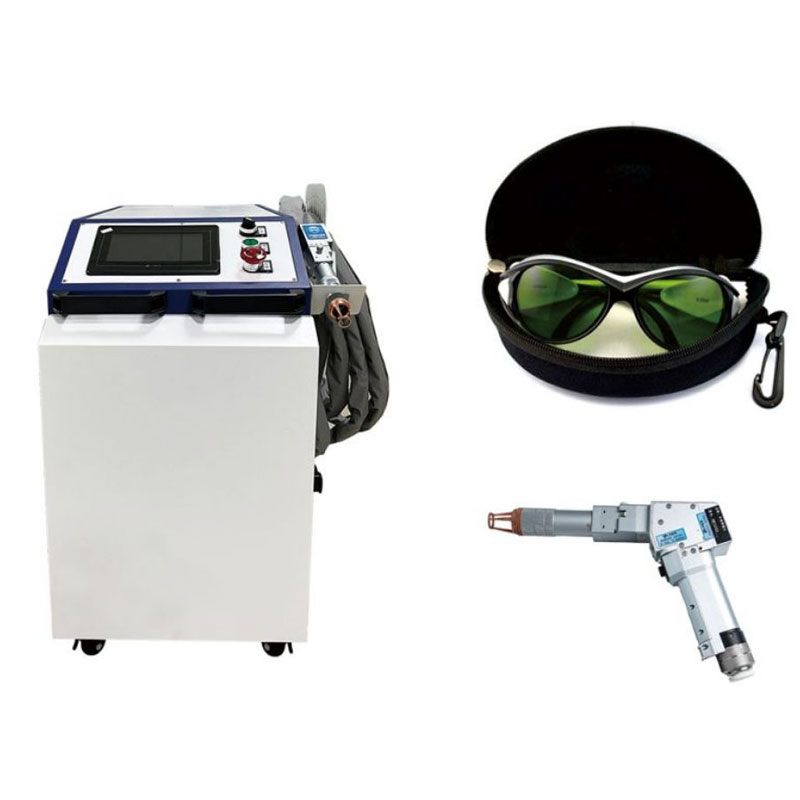
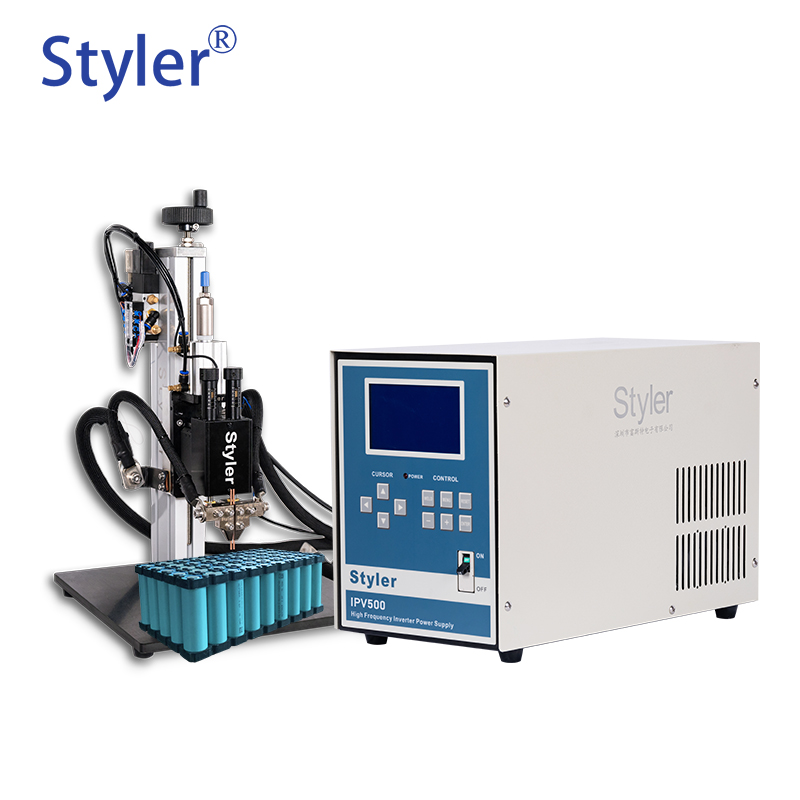
- The Copper Challenge: As discharge currents rise, manufacturers are shifting to copper tabs due to copper's superior conductivity. However, copper's low resistance makes standard RSW extremely difficult, necessitating advanced technologies like dual-pulse capacitor discharge, high-frequency inverter systems, or laser welding.

Industrial Landscape & Commercial Evolution

The industrial landscape for portable power tool manufacturing is characterized by rapid automation and strict quality control. Global brands like Milwaukee, DeWalt, Makita, and Bosch demand battery packs that offer longer runtime, faster charging cycles, and extended lifetimes. Consequently, assembly factories are moving away from manual spot-welding stations to fully integrated, intelligent automatic spot-welding lines.
Key Commercial Drivers:
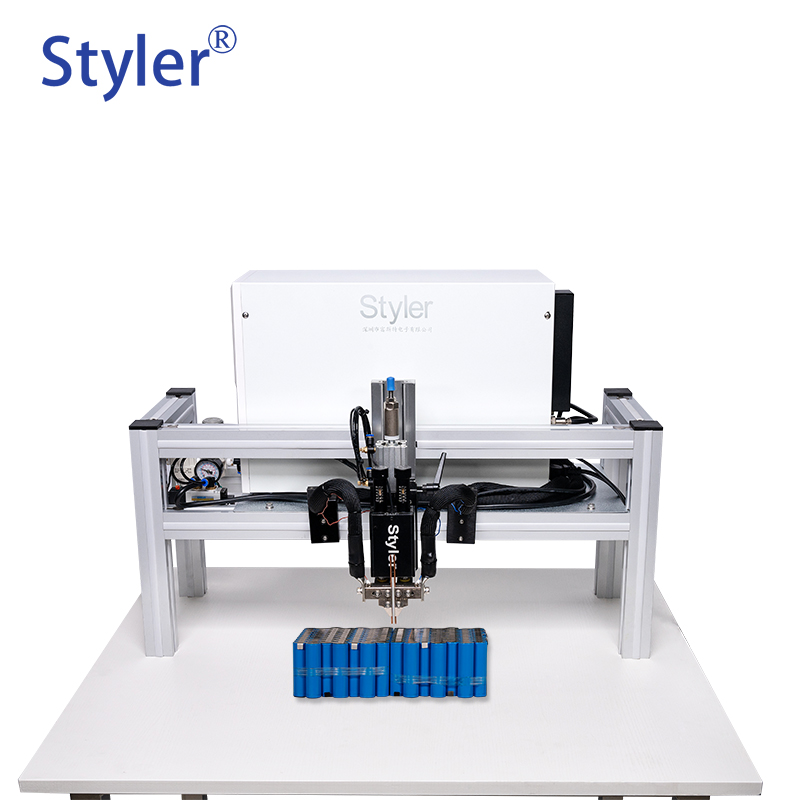
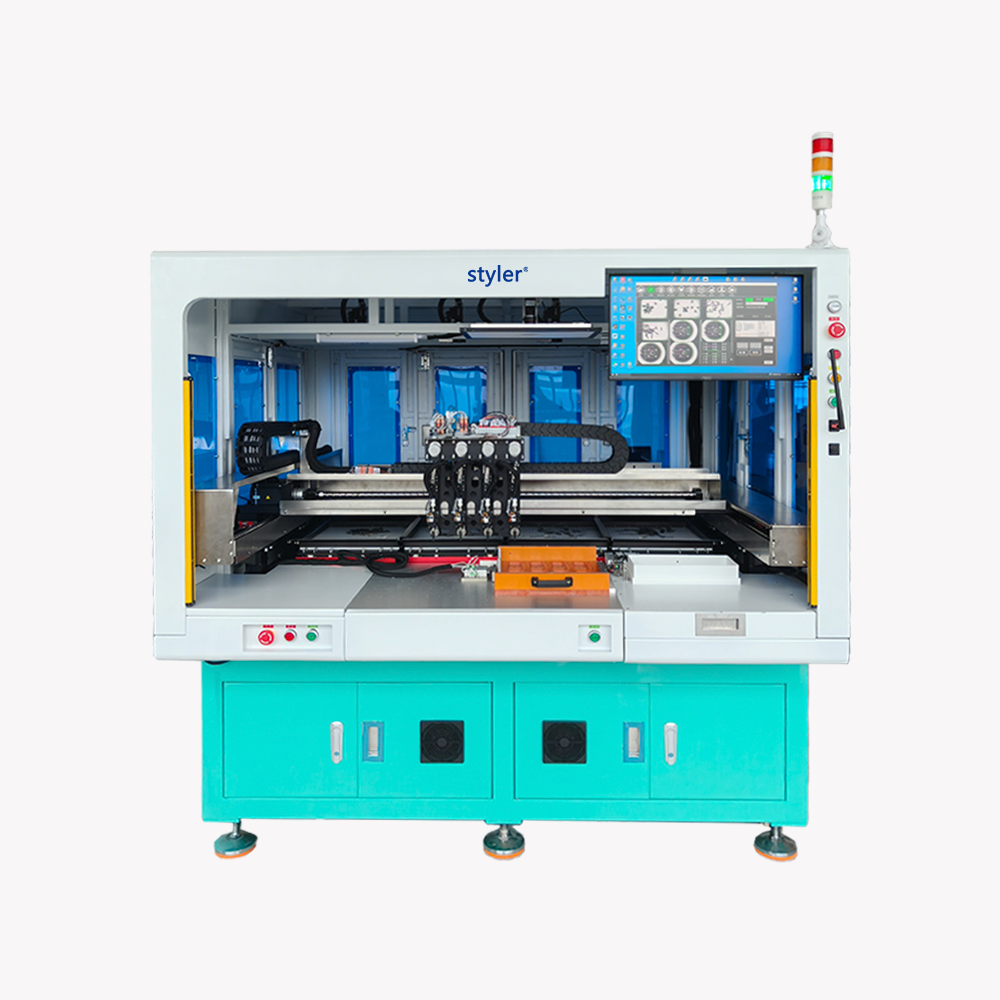
- High Throughput Requirements: Modern production lines require cycle times of less than 0.5 seconds per weld point. Automated Cartesian coordinate gantry systems and rotary indexing tables enable continuous high-speed operation.
- Quality Traceability: With the rise of IoT and Industry 4.0, spot welding machines must record real-time parameters (current, voltage, pressure, displacement) for every single weld joint. This data is linked to the battery pack’s serial number for long-term field tracking.
- Cost Reduction: Automation minimizes operator errors, which are the leading cause of cell damage and scrapped packs. By reducing scrap rates to less than 0.1%, automated spot welders offer a rapid return on investment (ROI).
Cell Sorting
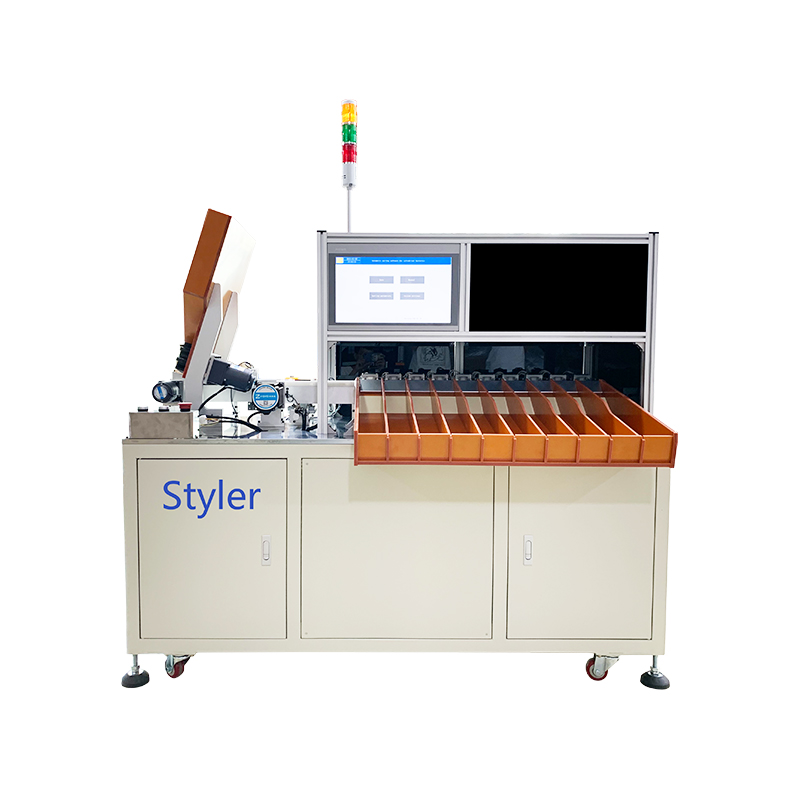
Categorizing cells by voltage and internal resistance using automated sorting machines to ensure pack balance.
Tab Placement
Automated nickel sheet cutting and precise placement over cell matrices using optical alignment systems.
Precision Spot Welding
Executing dual-pulse resistance or laser welding with real-time pressure and current monitoring.
BMS Integration
Final soldering or welding of the Battery Management System (BMS) board to complete the smart power pack.
Specific Application Scenarios in Power Tool Production
Different types of portable power tools dictate distinct design requirements for battery pack spot welding. Let's look at three critical scenarios:
1. Ultra-High-Power Cordless Impact Wrenches and Saws
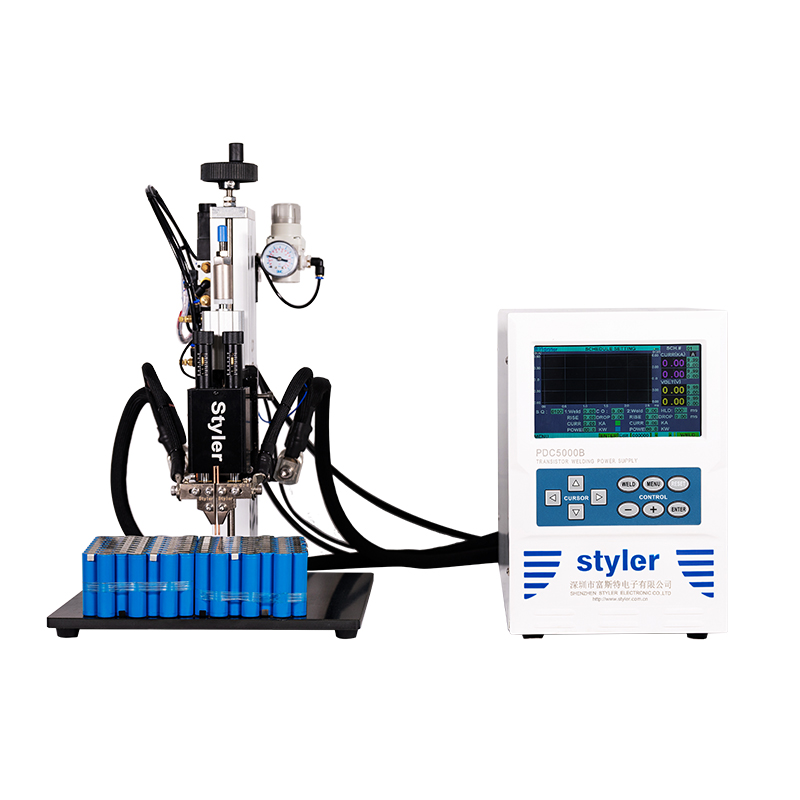
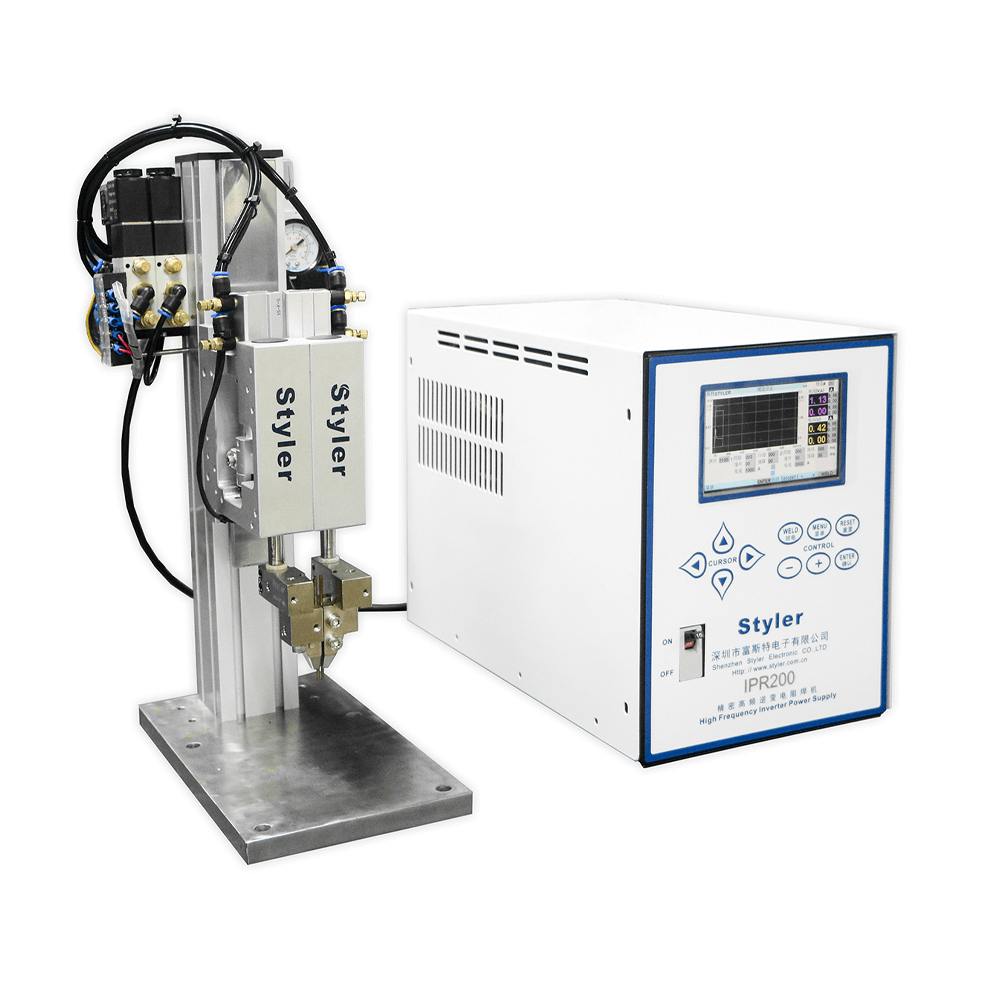
These tools draw massive currents in short bursts. The connection tabs are usually thick (0.2mm to 0.3mm) pure nickel or composite copper-nickel sheets. Standard spot welders struggle to melt these thicker materials without overheating the cell cap. The solution lies in using Inverter DC or Capacitor Discharge (CD) Spot Welders with pneumatic weld heads that deliver high pressure and concentrated energy bursts in milliseconds, preventing thermal propagation down into the lithium chemistry.
2. Garden and Outdoor Power Equipment (OPE)
Lawnmowers and chainsaws operate on 36V, 56V, or even 80V platforms, meaning battery packs contain 10 to 20 cells in series. These large packs are prone to structural deformation. Automatic spot welders with 3D vision and height sensing are used to dynamically adjust the Z-axis height of the welding electrodes, compensating for minor pack irregularities and ensuring uniform pressure at every joint.
3. Compact Handheld Screwdrivers and DIY Tools
For small, lightweight tools, space is at a premium. The battery packs are often non-standard shapes. Here, semi-automatic flexible pack assembly lines or laser welding machines are preferred. Laser welding is non-contact, eliminating mechanical stress on the cells and allowing micro-welds on extremely small tabs where mechanical electrodes cannot fit.
Corporate Profile & Structural Overview
About Us
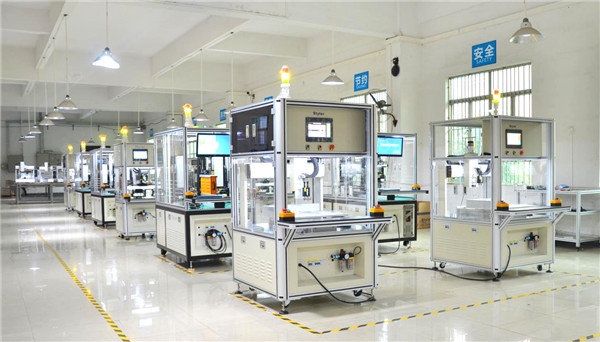
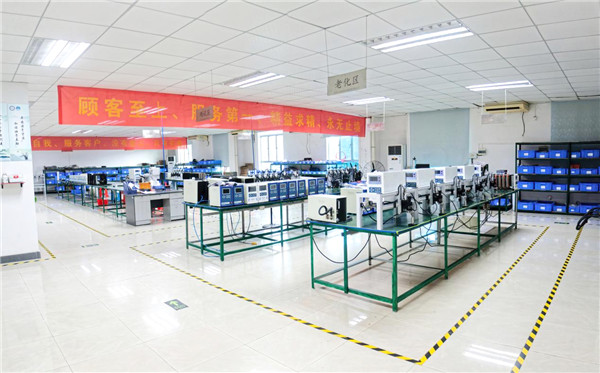
Styler is a professional manufacturer aims to provide high quality and trustful welding machine to the customer. Our company has unique understanding and innovative idea in the field of resistance welding and laser applications, and the welding technology has reached to the international level through continuously investing in the technical research and development. We also cooperate with education institutes on the technology development to enhance our machine’s performance and application area. Customer Centric is our core value. Besides of providing personalized high performance and durable machines to the customer, we value the hospitality the most, as we wish customers to have a pleasant purchase experience with us for each visit. Therefore, we have been providing ongoing training internally to provide excellent customer service to our customer. We believe the customer-oriented direction is the key to success, and it has been successfully helping us to develop a strong reputation in the industry, allowing us to retain customers and attracting new customers to start the business with us.

Company Vision
To provide a cutting-edge welding machine in a reasonable price to the customer has been the long-term goal for Styler, and thus, we will continually be developing innovative, stable, and budgeting machine to the customer around the world.
Corporate Social Responsibility
Giving back to the society is important as we are not able to go this far without the community’s support. Therefore, Styler has been actively participating in the charity works and government events each year, to improve the local municipal service and facility.
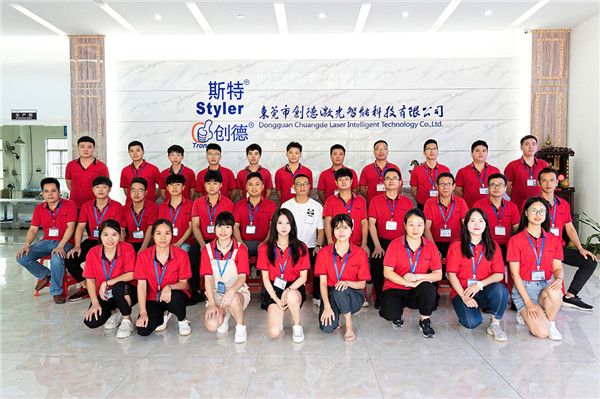
Employee Development
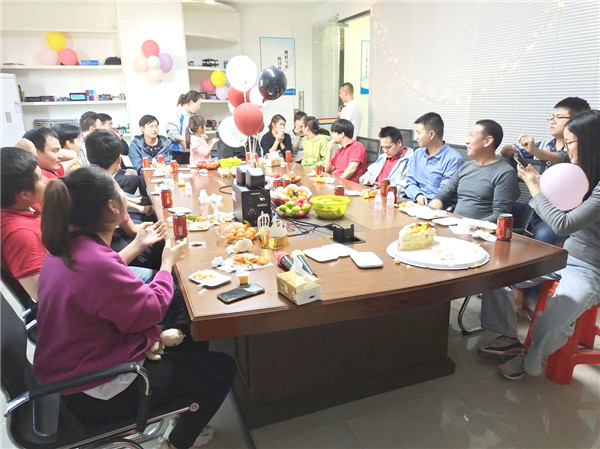
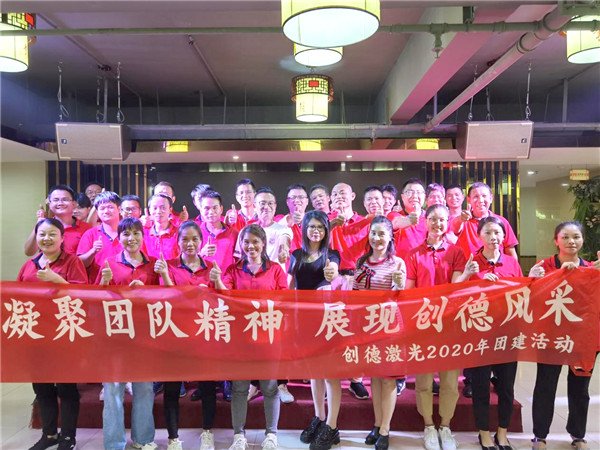
Despite all the growth that has occurred over the years, we remain extremely employee centric. Our management team works tirelessly to ensure each Styler Welding employee feels fulfilled from work and life. As work-life balanced living style is proved that it would increase employee’s performance at work, and consequently, providing better service and product to the customer.
Future Trends in Battery Assembly & Micro-Joining
As the battery industry moves toward higher energy densities and faster charging speeds, spot welding technology is evolving rapidly. We are seeing a transition towards multi-wavelength laser systems that can weld reflective metals like copper and aluminum with minimal spatter. Additionally, machine learning algorithms are beginning to play a role in real-time quality assurance, analyzing the acoustic and optical signatures of each weld to detect defects instantly. Styler remains committed to these advancements, constantly updating our equipment portfolio to meet the changing needs of the global energy sector.
Complete Product Catalog
Explore our comprehensive range of high-precision welding systems, sorting machinery, and complete assembly line configurations engineered for industrial battery production.