
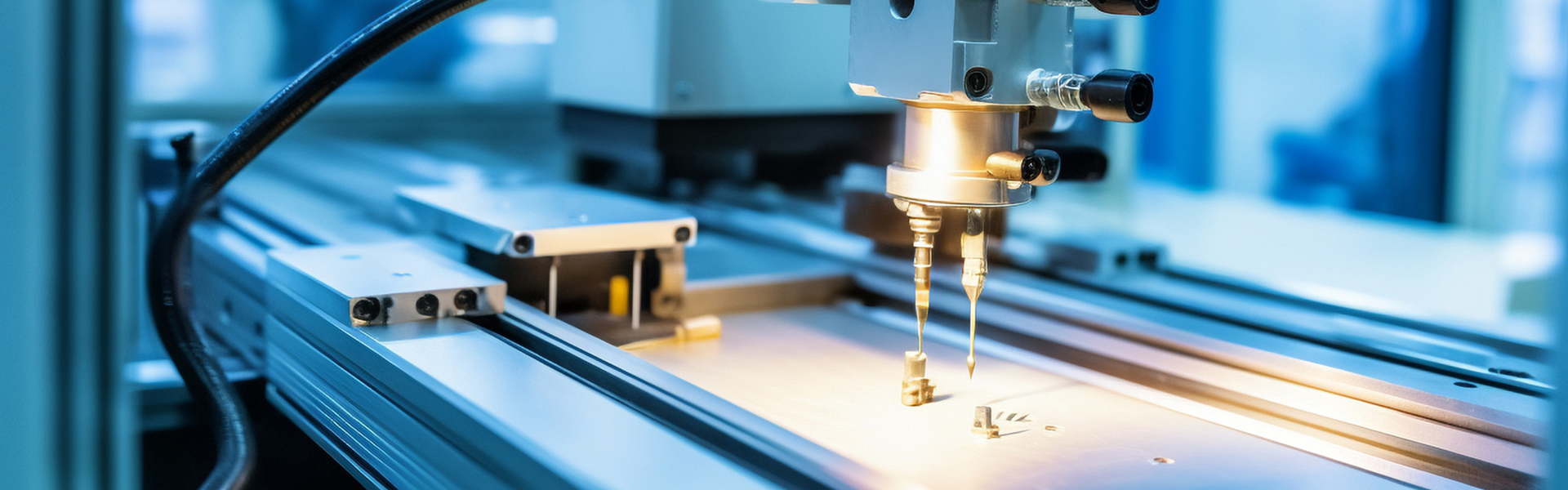
Selling a battery welding machine is rarely just a matter of receiving an inquiry, adding a margin, and sending a quotation.
Battery manufacturers often need technical answers before they are ready to purchase equipment:
● Which welding process should be evaluated?
● What equipment configuration is suitable?
● Can the proposed process handle the actual tab or connector?
● Is sample welding required?
● Should the project use a manual machine, semi-automatic equipment, or an automated production system?
● What inspection and traceability functions are needed?
● How will the welding equipment integrate into the customer’s existing production process?
For battery equipment distributors, these questions can make the difference between a simple equipment inquiry and a technically defined project.
A specialized battery welding equipment manufacturer can support the distributor by helping evaluate the application, define the equipment scope, conduct sample testing, prepare technical information, and support project execution.
The objective is not for the distributor to become a welding engineer. It is to establish an effective technical workflow between the customer, distributor, and equipment manufacturer.
Why Battery Welding Projects Are Difficult to Quote from a Model Name Alone
A customer may contact a distributor and ask:
“Please quote a battery spot welding machine for 21700 cells.”
That is not enough information to select the equipment.
The same battery cell format may be used with very different:
● Tab materials
● Connector thicknesses
● Surface coatings
● Numbers of material layers
● Joint structures
● Weld-point layouts
● Mechanical strength requirements
● Electrical resistance requirements
● Production volumes
● Automation requirements
Two customers using the same 21700 cell may therefore require completely different welding configurations.
The equipment should be evaluated according to the actual welding application rather than the battery model alone.
This is one of the most important points distributors should explain to customers early in a project.
What Information Should a Distributor Collect from the Customer?
Before requesting a detailed equipment recommendation, the distributor should collect as much technical information as possible.
Battery Information
Useful information includes:
● Cell format
● Cell model
● Cell dimensions
● Terminal structure
● Battery pack arrangement
Welding Materials
The manufacturer should understand:
● Tab or connector material
● Surface coating
● Material thickness
● Number of layers
● Busbar material where applicable
Material names alone should not be used to confirm welding feasibility.
For example, copper, aluminum, nickel, nickel-plated steel, and other battery connection materials can behave very differently depending on thickness, coating, joint geometry, heat dissipation, and required weld quality.
Product Structure
Ask the customer for:
● 2D drawings
● 3D drawings where available
● Weld locations
● Weld patterns
● Joint structure
● Representative product samples
This information can help the equipment manufacturer evaluate electrode access, fixture design, positioning, and welding sequence.
Quality Requirements
The distributor should also ask:
● What weld strength is required?
● Is peel or pull testing specified?
● Is electrical resistance controlled?
● Are there appearance requirements?
● Is spatter restricted?
● Is deformation limited?
● Does the customer already have an approved sample?
Statements such as “the weld must be strong” do not provide enough information to establish an equipment acceptance standard.
Production Requirements
Important production inputs include:
● Target units per hour
● Required cycle time
● Number of welds per product
● Daily production volume
● Number of shifts
● Number of product models
● Changeover requirements
A technically feasible welding process still needs to meet the required production cycle.
Do Not Recommend a Welding Process Too Early
Customers may ask the distributor:
“Should we use resistance welding or laser welding?”
There is no universal answer.
Resistance welding and laser welding are different joining processes. The appropriate technology depends on factors such as:
● Material combination
● Material thickness
● Joint geometry
● Required weld area
● Electrode or optical access
● Required heat input
● Mechanical strength requirement
● Electrical performance
● Production cycle
● Automation requirements
The distributor does not need to make this determination independently.
Instead, collect the customer’s application information and allow the equipment manufacturer to evaluate the process.
For uncertain applications, sample testing may be necessary before the final equipment configuration is confirmed.
Why Sample Welding Can Be Important
A customer may provide a drawing and ask for an immediate machine quotation.
For an established and previously validated application, this may sometimes be sufficient for an initial equipment discussion.
For a new material combination or joint structure, actual sample welding can provide much more useful information.
The customer may be asked to provide:
● Actual battery cells
● Tabs
● Nickel strips
● Connectors
● Busbars
● Material specifications
● Product drawings
● Quality requirements
Initial testing may evaluate:
● Weld appearance
● Peel or pull strength
● Electrical resistance
● Spatter
● Deformation
● Electrode indentation
● Initial process consistency
● Approximate welding cycle
The result can help determine whether the proposed welding process is feasible and what equipment configuration should be evaluated.
However, successful sample welding should not be described as mass-production validation.
Continuous production must also consider material tolerances, electrode wear, fixture repeatability, production speed, maintenance, and other operating conditions.
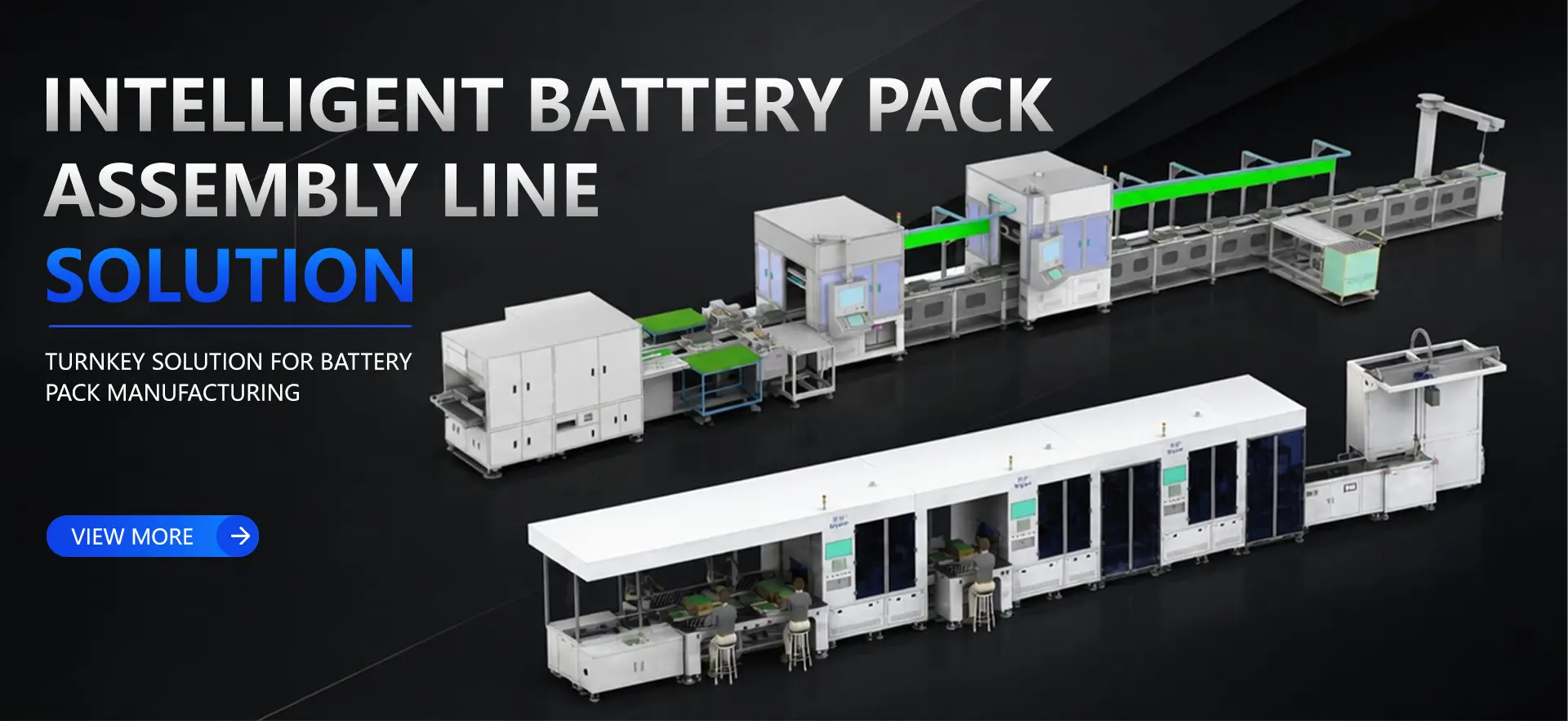
Manual Machine, Semi-Automatic Equipment, or Automation?
Another common distributor question is how much automation the customer actually needs.
The answer should be based on the production process rather than simply asking whether the buyer wants a “fully automatic machine.”
Manual Equipment
Manual battery welding equipment may be suitable when:
● Production volume is relatively low
● Product models change frequently
● Flexible loading is required
● The operator can position the product consistently
Semi-Automatic Equipment
Semi-automatic equipment may be considered when:
● Manual loading remains acceptable
● Welding position needs better repeatability
● Automatic welding can improve production consistency
● The investment does not justify a complete automated line
Automated Equipment
Automation may be evaluated when the project requires:
● Automatic loading
● Positioning
● Multiple weld points
● Inspection
● Reject handling
● Production data
● Traceability
● Product identification
● Integration with upstream or downstream equipment
Automation is therefore not simply a welding head mounted on a moving platform.
The complete production process needs to be defined.
What Technical Support Should a Distributor Expect?
A battery welding equipment manufacturer can support distributors at different stages of a project.
Depending on the application, this may include:
Application Evaluation
The manufacturer reviews the customer’s:
● Battery
● Materials
● Joint structure
● Quality requirements
● Production requirements
Equipment Selection
The technical team can evaluate which:
● Welding power supply
● Weld head
● Electrode configuration
● Fixture
● Machine platform
should be considered.
Sample Testing
For applications requiring validation, actual battery cells and welding materials can be tested before the equipment configuration is finalized.
Technical Proposal
The distributor may receive relevant:
● Equipment specifications
● Layouts
● Technical drawings
● Process descriptions
● Configuration information
● Application materials
to support customer communication.
Customized Equipment Development
Where a standard machine does not meet the process requirement, a customized fixture, machine structure, automation function, or production configuration may be evaluated.
Customization should always be based on technical feasibility and an agreed project scope.
Helping Distributors Compare Equipment Quotations
Distributors may also need to explain why two battery welding machine quotations are priced differently.
Comparing only the machine name and maximum current is usually not enough.
A quotation may or may not include:
● Welding power supply
● Weld head
● Electrodes
● Fixtures
● Cooling system
● Safety guarding
● Product positioning
● PLC controls
● HMI
● Inspection
● Data recording
● Automation
● Installation
● Training
● Spare parts
The distributor should therefore compare the technical scope, not only the equipment price.
A lower quotation may simply include less equipment or a narrower project scope.
From Spot Welding Machines to Battery Production Automation
Not every customer requires the same level of equipment.
One customer may only need a battery spot welding machine for small-batch production.
Another may require:
● Automatic battery positioning
● Multiple welding stations
● Vision inspection
● Product traceability
● Automated reject handling
● Production-line integration
A distributor benefits from working with a manufacturer that can discuss both the individual welding process and the broader production requirement.
However, no single equipment configuration should be presented as suitable for every battery application.
The solution should be developed according to the actual project.
Define Responsibilities Before the Order
One of the most important parts of a distributor project is defining who is responsible for what.
Before the purchase order, the customer, distributor, and manufacturer should clarify:
● Who provides the product samples?
● Who confirms the drawings?
● Who defines the welding acceptance criteria?
● Who supplies fixtures?
● Who provides factory utilities?
● Who arranges installation?
● Who performs operator training?
● Who handles local first-line support?
● When should the manufacturer provide remote support?
● When is on-site engineering support required?
● Who supplies spare parts?
● What is included in FAT?
● What is required for SAT?
This is particularly important when the distributor is the customer’s primary commercial contact.
Clear responsibility boundaries reduce misunderstandings during project execution.
FAT, Training, and After-Sales Support
Technical support should continue beyond the quotation stage.
Depending on the project, support may include:
● Factory Acceptance Test
● Equipment operation training
● Maintenance training
● Installation guidance
● Commissioning support
● Technical documentation
● Recommended spare parts
● Remote troubleshooting
● On-site support where agreed
The exact service scope should be confirmed for each project.
A distributor should understand these responsibilities before presenting the final proposal to the customer.
Distributor Project Checklist
When a customer requests battery welding equipment, ask:
1. What battery cell is being used?
2. What materials need to be joined?
3. What are the material thicknesses and coatings?
4. What does the joint look like?
5. Are drawings available?
6. What weld quality is required?
7. Has the welding process already been validated?
8. Can actual samples be provided?
9. What production cycle is required?
10. What automation level is needed?
11. Does the customer need inspection or traceability?
12. What installation and after-sales support is expected?
The more clearly these questions are answered, the easier it becomes to develop a technically meaningful proposal.
Why Work with Styler?
Styler is a battery welding equipment manufacturer providing resistance welding, laser welding, and battery pack assembly solutions for battery production applications.
For distributor projects, Styler can participate in the technical evaluation of the actual application and support areas such as:
● Battery welding equipment selection
● Welding process evaluation
● Sample testing
● Technical proposals
● Fixture and equipment configuration
● Equipment drawings and application information
● Factory testing
● Installation and training communication
● Technical and after-sales support
The exact equipment and support scope depends on the individual project.
For new welding applications, the final configuration should be confirmed after the battery, materials, joint structure, production requirements, and acceptance criteria have been evaluated.
Frequently Asked Questions
Can a distributor request a quotation without complete customer drawings?
Yes, an initial discussion can begin with basic product and production information.
However, a detailed equipment recommendation normally requires more information about the battery, material, thickness, joint design, quality requirement, and production cycle.
Can one battery welding machine process different battery models?
Possibly, but this cannot be determined from the cell models alone.
Different products may require different welding parameters, fixtures, electrodes, positioning systems, or equipment configurations.
Can Styler help evaluate a customer’s welding samples?
Yes. For new applications, sample testing can be used to evaluate initial welding feasibility and help determine an appropriate equipment configuration.
Successful sample welding should still be followed by production validation for mass-production applications.
Does every busbar application require laser welding?
No.
The appropriate joining process depends on the material, thickness, joint design, required weld quality, heat input, accessibility, and production requirements. The application should be evaluated before the process is selected.
Can a distributor work with Styler on automated battery projects?
Yes. Styler provides battery welding equipment and battery pack assembly solutions that can be evaluated for semi-automatic and automated applications.
The required automation scope should be defined according to the customer’s product and production process.
Conclusion
A strong battery welding equipment proposal requires more than a competitive machine price.
The distributor first needs to understand the customer’s battery, welding materials, joint structure, quality requirements, production cycle, and automation needs.
The equipment manufacturer can then help evaluate the welding process, conduct sample testing where necessary, define the equipment configuration, and support project execution.
This creates a clearer technical workflow between the customer, distributor, and manufacturer and makes it easier to compare equipment based on actual project requirements rather than machine names alone.
Looking for a Battery Welding Equipment Partner?
If you distribute battery manufacturing equipment or develop battery production projects, send Styler the customer’s battery information, welding materials, drawings, production targets, and automation requirements.
We can review the application and discuss the appropriate equipment and technical support scope for the project.
Recommended CTA: Discuss a Distributor Project with Styler
**Website:** [www.stylerwelding.com]
**Email:** [katherine@styler.com.cn]
**WhatsApp:** +86-13392488455
The information provided by Styler on https://www.stylerwelding.com/ is for general informational purposes only. All information on the Site is provided in good faith, however, we make no representation or warranty of any kind, express or implied, regarding the accuracy, adequacy, validity, reliability, availability or completeness of any information on the Site. UNDER NO CIRCUMSTANCE SHALL WE HAVE ANY LIABILITY TO YOU FOR ANY LOSS OR DAMAGE OF ANY KIND INCURRED AS A RESULT OF THE USE OF THE SITE OR RELIANCE ON ANY INFORMATION PROVIDED ON THE SITE. YOUR USE OF THE SITE AND YOUR RELIANCE ON ANY INFORMATION ON THE SITE IS SOLELY AT YOUR OWN RISK.
Post time: Sep-03-2026


