Precision Welder Modules for ESS Assembly
Explore our core high-performance welding heads and automated systems designed for seamless integration into battery pack manufacturing lines.
Industrial Landscape of ESS Battery Pack Manufacturing
How high-frequency resistance spot welding is defining the quality, throughput, and safety of utility-scale and residential energy storage systems.
The Boom in Global Energy Storage (ESS)
The global transition to renewable energy sources, such as solar and wind power, has triggered an unprecedented surge in demand for large-scale Energy Storage Systems (ESS). Whether deployed for grid stabilization, peak shaving, industrial backup, or residential solar storage, the core of these systems remains the lithium-ion battery pack. Manufacturing these massive packs requires thousands of reliable electrical connections between cells and busbars, where even a single micro-ohm variance can lead to thermal runaway or system failure.
Resistance spot welding (RSW) stands out as the most reliable, cost-effective, and highly controllable method to join these critical battery components. Unlike laser welding, which requires extreme optical precision and is sensitive to surface reflectivity, resistance spot welding directly utilizes the electrical resistivity of the materials to create a localized, high-strength metallurgical bond with minimal heat distribution.
Why Resistance Welding for ESS?
It provides precise control over the weld energy profile, avoiding excessive heat penetration that could damage sensitive battery safety vents or internal chemistry. High-frequency inverter systems ensure millisecond-level feedback loops to guarantee consistency across millions of spots.
Technical Challenges in Welding Thick Busbars & Tabs
Modern ESS designs often utilize high-capacity prismatic cells or cylindrical battery formats (such as 21700 and the newer 4680 series). Connecting these cells requires welding thick nickel-plated steel, pure nickel, or even copper busbars to the cell terminals. Copper is highly conductive, both electrically and thermally, making it notoriously difficult to weld because the heat rapidly dissipates away from the weld joint.
To overcome this, advanced resistance spot welders utilize high-frequency inverter technology (often operating at 4kHz or higher). By delivering a rapid, controlled pulse of current, these machines concentrate the heat precisely at the interface of the tab and the terminal. This creates a solid weld nugget before the heat can escape into the cell body, protecting the delicate internal structure of the battery.
High-Frequency Control
Inverter power supplies adjust current in real-time, compensating for surface oxidation or slight pressure variances during the weld cycle.
Quality Monitoring
Integrated displacement and force sensors track the exact deformation of the materials during the weld, ensuring zero-defect output.
Automation Integration
Multi-axis servo systems enable rapid movement across large-format ESS trays, matching high-volume manufacturing speeds.
Deep Application Scenarios in ESS Production Lines
Within a standard ESS manufacturing facility, resistance spot welders are integrated at multiple stages of the assembly line:
- Cell-to-Cell Interconnections: Cylindrical cells are grouped in parallel and series configurations. Automated CNC-controlled spot welders move dynamically across the pack to weld nickel tabs to the positive and negative terminals.
- BMS Wire Harness Connections: Battery Management Systems (BMS) monitor individual cell voltages. Micro-spot welding is used to attach thin voltage sensing wires or flex circuits directly to the main busbars.
- High-Current Busbar Joining: For utility-scale containers, thick copper or aluminum plates are joined to feed the cumulative energy to the power conversion systems (PCS). High-frequency inverter resistance welders provide the high thermal energy required for these structural and electrical joins.

About Us
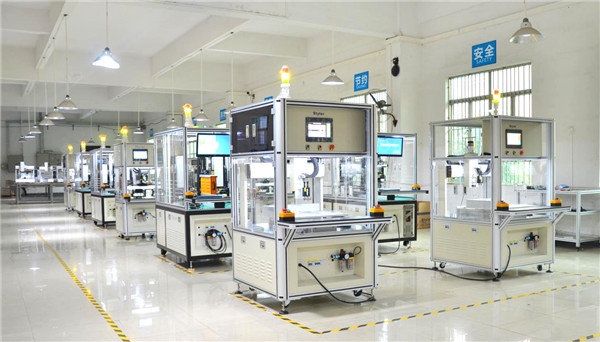
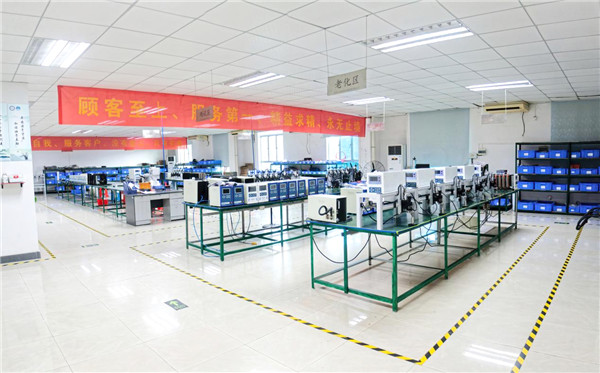
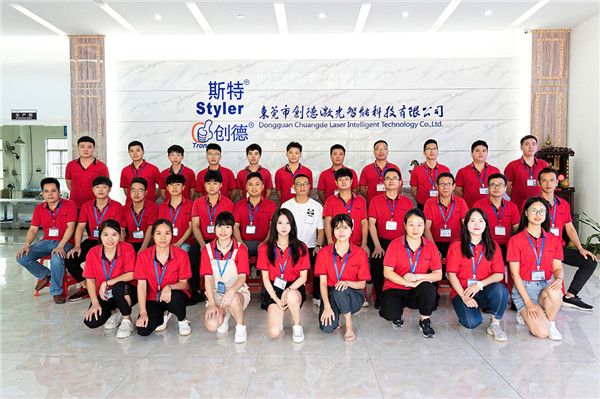
Styler is a professional manufacturer aims to provide high quality and trustful welding machine to the customer. Our company has unique understanding and innovative idea in the field of resistance welding and laser applications, and the welding technology has reached to the international level through continuously investing in the technical research and development. We also cooperate with education institutes on the technology development to enhance our machine’s performance and application area.
Customer Centric is our core value. Besides of providing personalized high performance and durable machines to the customer, we value the hospitality the most, as we wish customers to have a pleasant purchase experience with us for each visit. Therefore, we have been providing ongoing training internally to provide excellent customer service to our customer. We believe the customer-oriented direction is the key to success, and it has been successfully helping us to develop a strong reputation in the industry, allowing us to retain customers and attracting new customers to start the business with us.
Company Vision
To provide a cutting-edge welding machine in a reasonable price to the customer has been the long-term goal for Styler, and thus, we will continually be developing innovative, stable, and budgeting machine to the customer around the world.

Corporate Social Responsibility
Giving back to the society is important as we are not able to go this far without the community’s support. Therefore, Styler has been actively participating in the charity works and government events each year, to improve the local municipal service and facility.
Employee Development
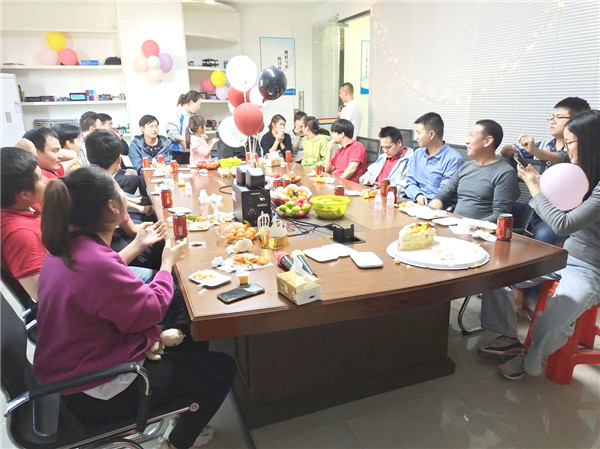
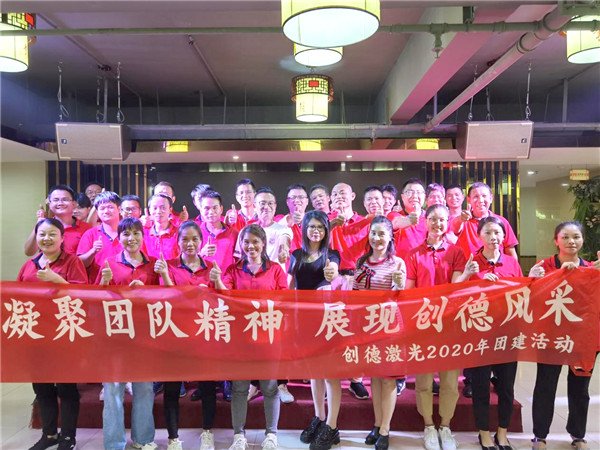
Despite all the growth that has occurred over the years, we remain extremely employee centric. Our management team works tirelessly to ensure each Styler Welding employee feels fulfilled from work and life. As work-life balanced living style is proved that it would increase employee’s performance at work, and consequently, providing better service and product to the customer.
Advanced Technological Trends in Resistance Spot Welding for ESS
As the clean energy sector scales rapidly, manufacturing requirements are shifting from manual and semi-automatic setups to fully integrated, intelligent smart factory lines. The resistance spot welder is no longer just a standalone tool; it is a critical node in an interconnected, data-driven manufacturing ecosystem. Understanding these emerging trends is vital for battery pack integrators looking to maintain a competitive edge.
1. Inverter Technology: High-Frequency DC vs. AC Welding
Traditional AC spot welders, while robust, lack the speed and control necessary for the delicate foils and precise busbars used in modern battery chemistry. The industry standard has firmly shifted toward High-Frequency Inverter DC (HFDC) power supplies. Operating at frequencies like 1kHz, 4kHz, or even higher, these systems convert 3-phase incoming AC power to a high-frequency AC signal, which is then rectified into smooth, low-ripple DC current.
The benefits of HFDC in ESS manufacturing are profound:
- Faster Energy Delivery: Weld energy can be ramped up in microseconds, preventing heat from sinking into the active materials of the battery cell.
- Precise Control: Feedback loops monitor electrical variables (current, voltage, power) thousands of times per second, dynamically adjusting the output to compensate for surface abnormalities.
- Longer Electrode Life: Consistent energy delivery reduces thermal stress on the copper alloy electrodes, reducing maintenance downtime.
2. The Integration of Machine Vision and AI Inspection
In high-volume battery pack assembly, manual alignment is a bottleneck and a major source of defects. Modern automated welding systems, such as the 7 AXIS Automatic Welding Machine, are paired with CCD Visual Inspection Machines. These systems capture high-resolution images of the battery pack layout before welding. The onboard AI algorithms detect the exact center of each terminal and busbar slot, adjusting the welding head's trajectory in real-time.
Post-weld visual inspection is equally important. Optical systems analyze the diameter, color, and texture of the weld nugget to identify anomalies such as surface burns, blowouts, or off-center welds. Integrating these inspection steps ensures that only 100% compliant packs move forward to the testing and enclosure stages.
3. Multi-Axis Servo Control and Dynamic Force Feedback
Pneumatic cylinders were historically used to apply pressure to the welding electrodes. However, pneumatics lack the precision required for delicate battery tabs. The industry has adopted servo-motor-driven welding heads. Servo actuators allow manufacturers to program the exact force profile during the weld cycle:
- Squeeze Phase: The electrode contacts the tab with a controlled, gentle force to avoid physical damage to the cell cap.
- Weld Phase: Force is maintained precisely to ensure minimal contact resistance between the tab and terminal.
- Hold Phase: The force is slightly increased as the metal solidifies, preventing micro-cracks inside the weld nugget.
This dynamic force control is essential when working with varying materials, such as joining aluminum busbars to nickel-plated copper tabs, a common requirement in large-scale ESS designs.
4. Data Logging and Traceability for Industry 4.0
With utility-scale battery systems storing megawatt-hours of energy, traceability is a critical regulatory and safety requirement. Modern resistance spot welders are equipped with communication protocols (such as Ethernet/IP, Modbus, or OPC UA) to stream weld data directly to Manufacturing Execution Systems (MES). For every single spot weld, parameters like peak current, voltage drop, weld time, and electrode displacement are recorded against the battery pack's unique barcode. If a pack fails in the field years later, engineers can retrieve the exact welding footprint to analyze the root cause.
Complete ESS Battery Assembly & Welding Portfolio
Discover our full range of resistance spot welders, automated multi-axis systems, inspection machines, and custom production lines.
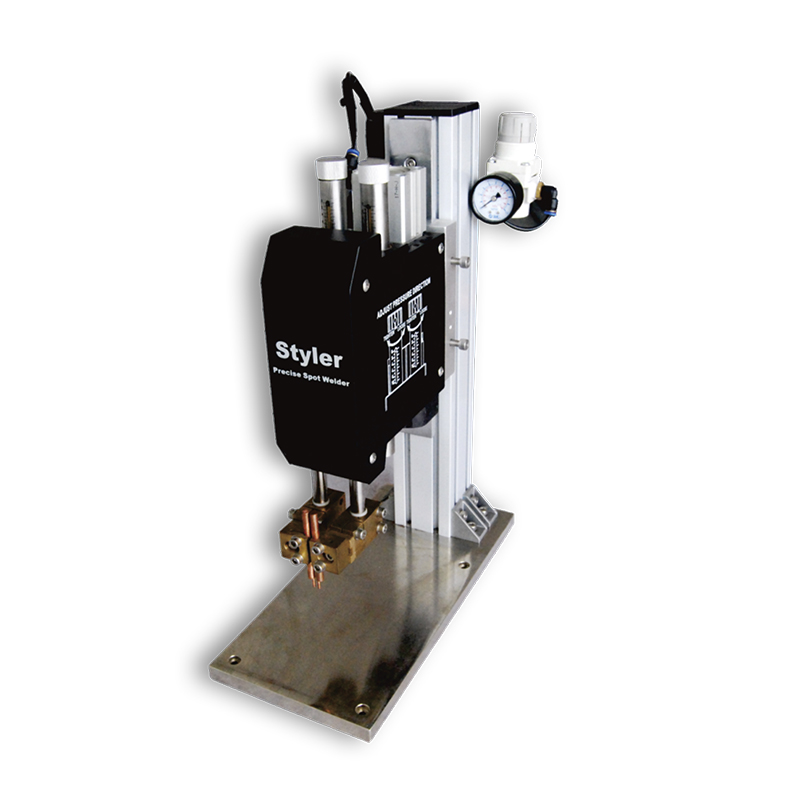
Custom OEM/ODM Welding Head
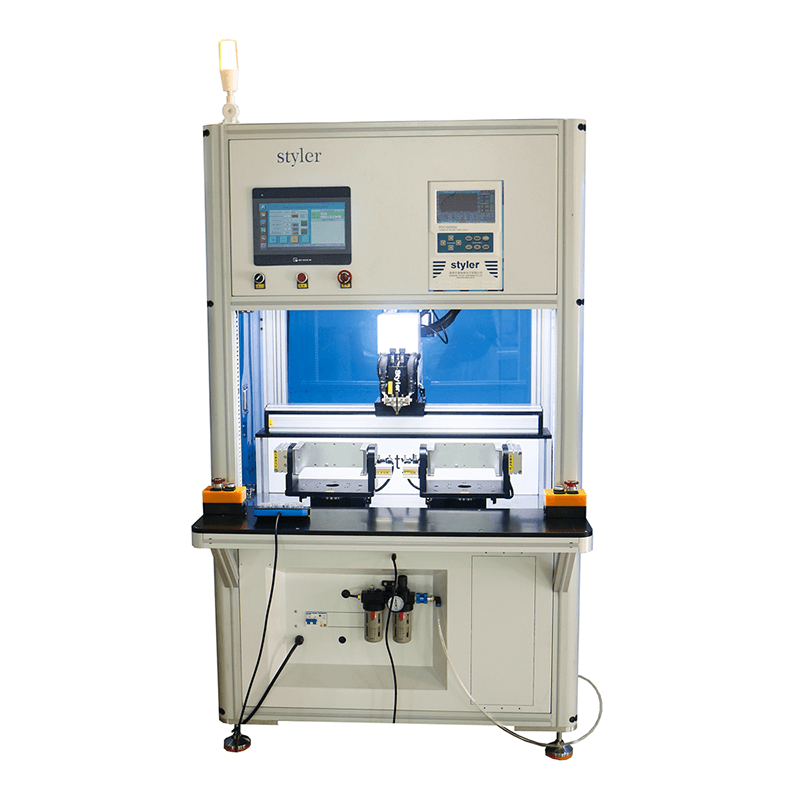
7 AXIS Automatic Welding Machine
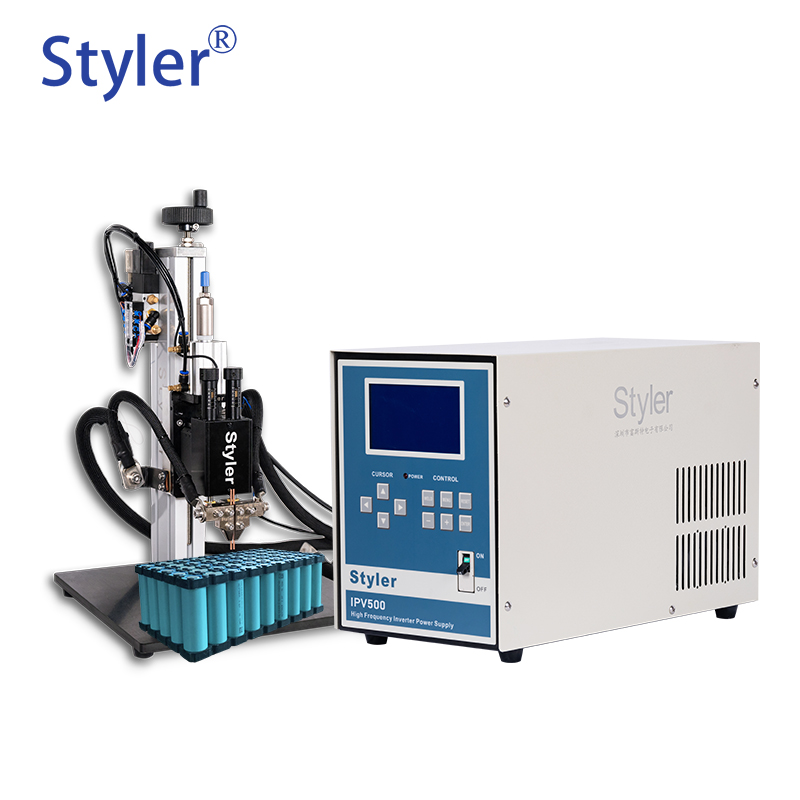
Styler 5000A Spot Soldering Machine
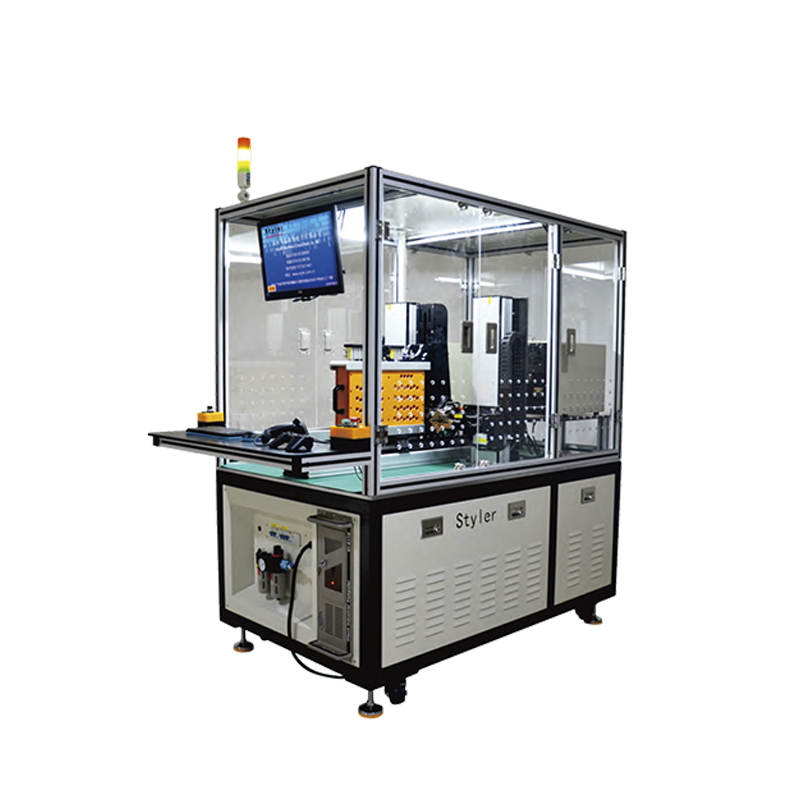
DUO-HEADED – IPC Spot Welder
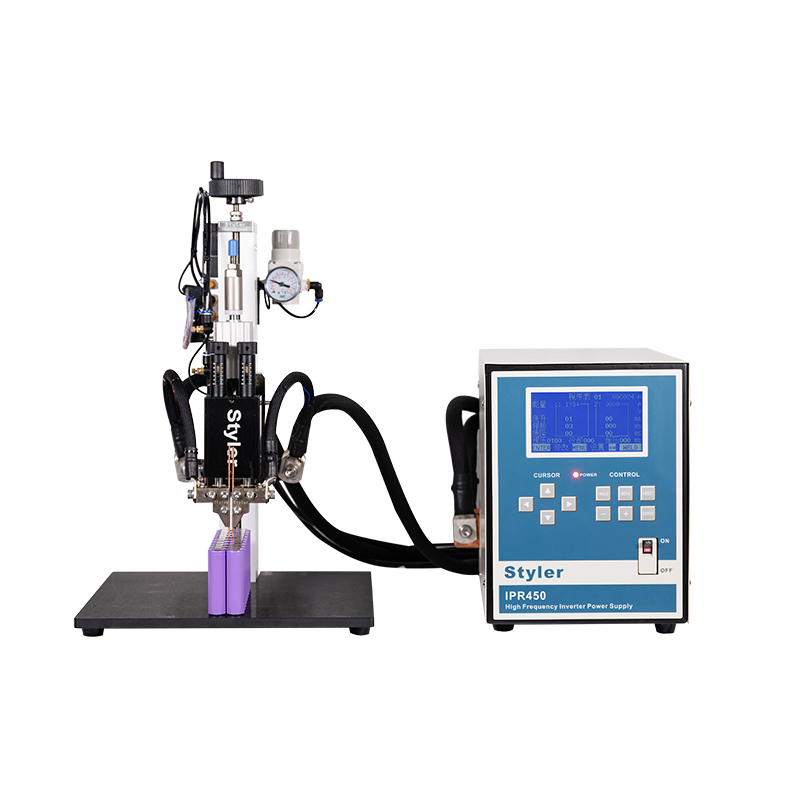
IPR450 High-Frequency Inverter Welder
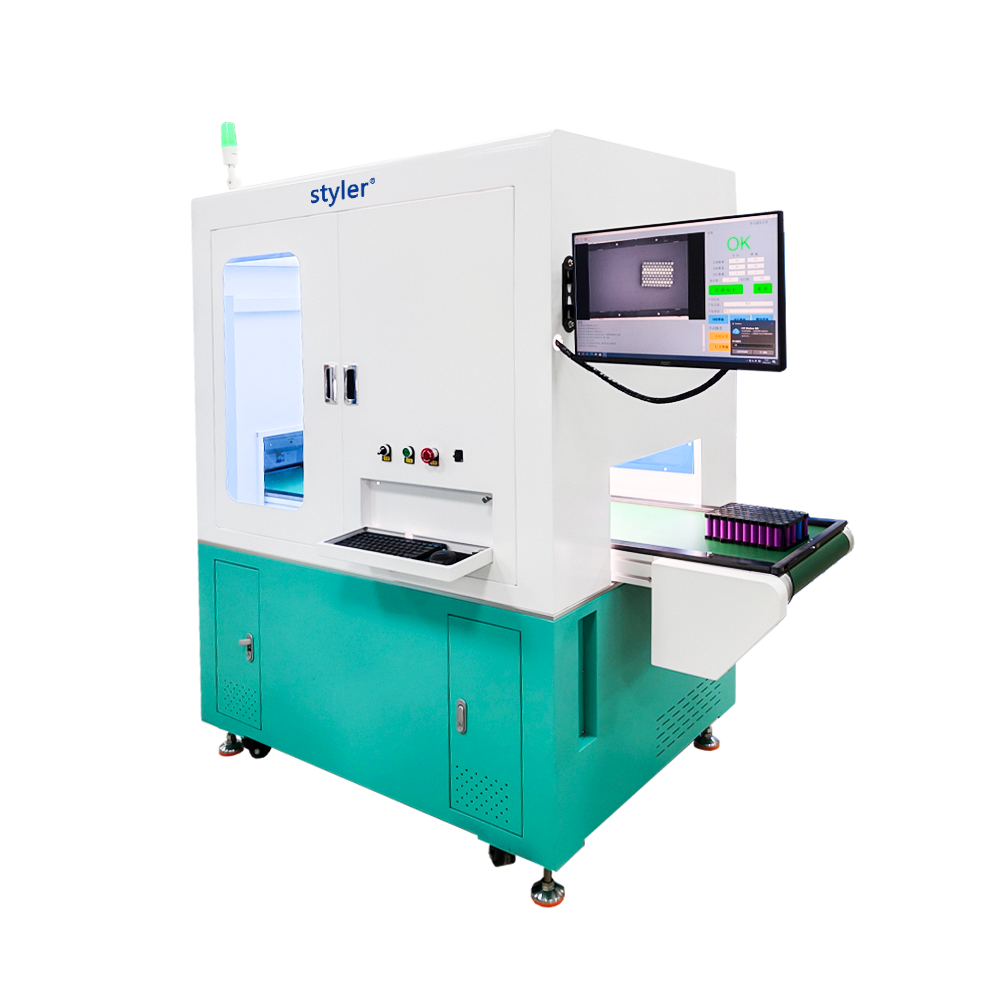
CCD Visual Inspection Machine
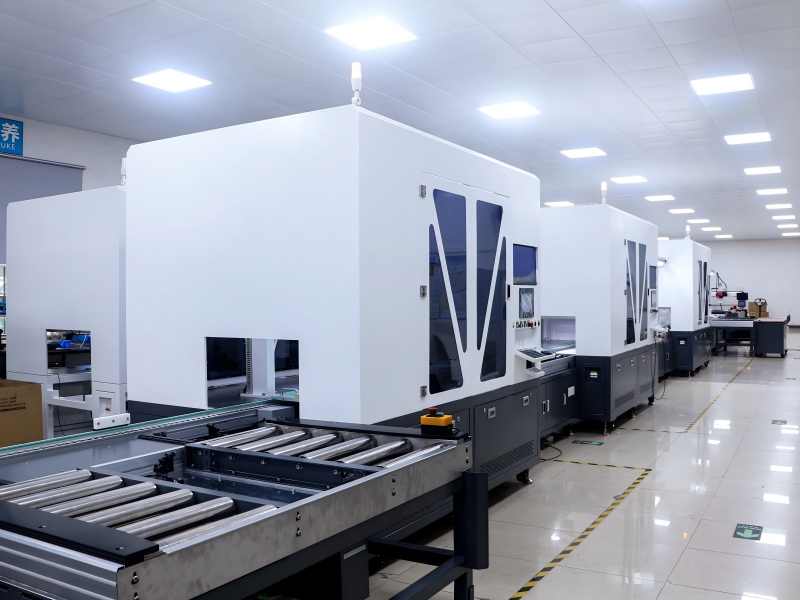
Semi-automatic Square Battery Assembly Line