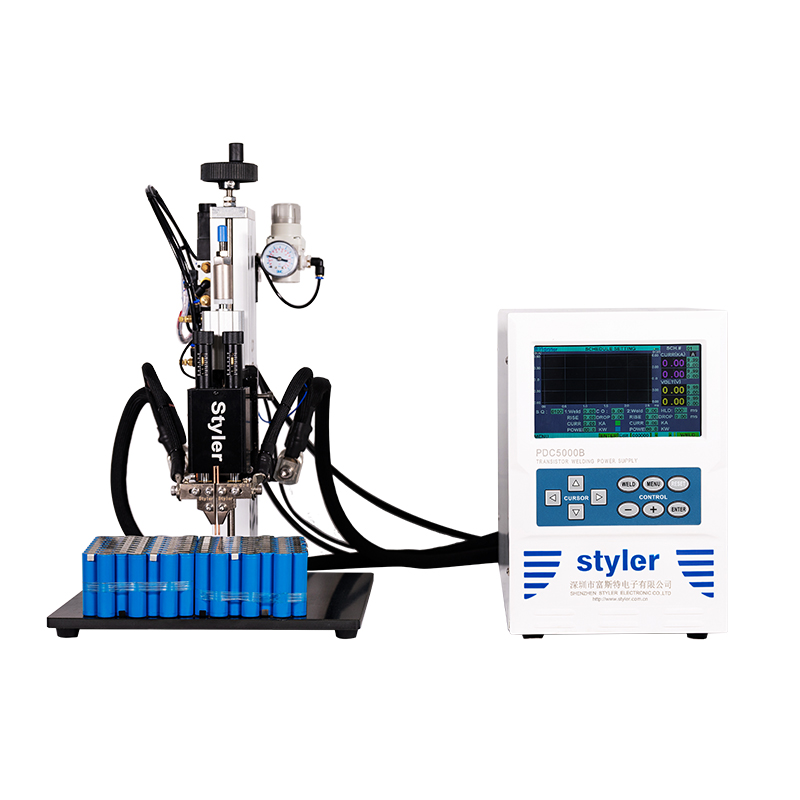
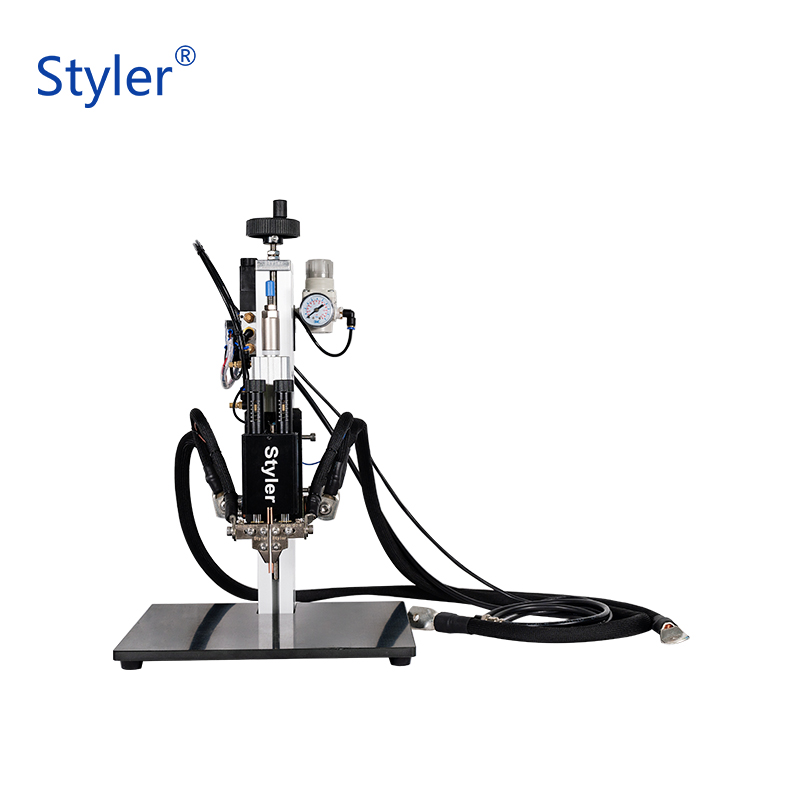
Core ESS Precision Welding Machines
High-speed, closed-loop inverter spot welders and robotic multi-axis welding heads engineered for prismatic, pouch, and cylindrical module interconnects.
Comprehensive Types Of Spot Welders in ESS Manufacturing
Selecting the correct power supply topology and mechanical architecture is crucial to achieving low contact resistance, minimal heat-affected zones (HAZ), and absolute safety against thermal runaway.
Medium-Frequency Inverter DC (MFDC) Spot Welders
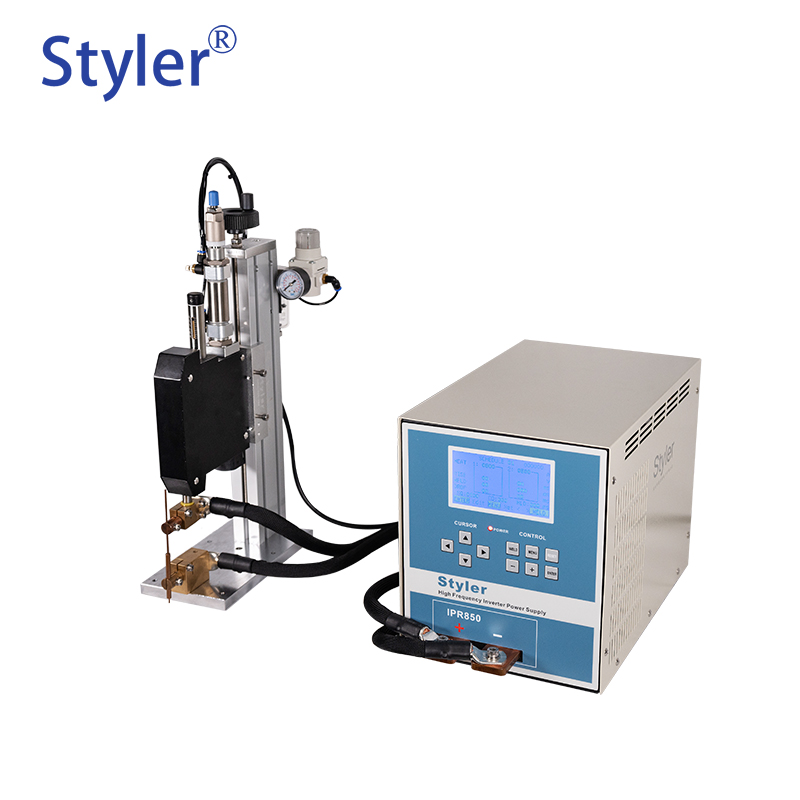
MFDC systems operate between 1 kHz and 4 kHz, converting 3-phase AC into a high-density, direct current square wave. In Energy Storage System (ESS) fabrication, MFDC power supplies (like the IPR series) provide millisecond-level feedback loops. By dynamically balancing current, voltage, and power output, MFDC reduces spatter during copper-to-nickel or nickel-to-steel busbar welding, preventing cell cap micro-punctures and dielectric damage.
Capacitive Discharge (CD) Pulse Spot Welders
Capacitive Discharge welders store high energy in capacitor banks and discharge it across a duration ranging from 1 to 10 milliseconds. This rapid discharge delivers a localized thermal spike ideal for welding high-conductivity metals such as pure nickel tabs to cylindrical battery can bottoms (21700, 4680). The ultra-fast cycle ensures minimal thermal conduction into internal active materials, preserving separator integrity and electrolyte stability.
Transistor (Linear DC) Precision Welders
Linear DC transistor welders offer ultra-fast response times (microsecond control) with clean direct current output. They are the standard for micro-welding thin tab materials, sensor connections, and BMS wire harnesses in residential ESS modules. The ultra-stable current wave prevents micro-arcing and delivers zero electrical ripple, making it ideal for fragile foil-to-tab connections in pouch-type ESS configurations.
Automated Multi-Axis CNC Spot Welding Platforms
For industrial ESS container modules containing thousands of interconnected cells, gantry-style automated systems with dual-sided or duo-head welding units (such as the Duo-Headed Automatic Machine) deliver high throughput. Integrated with optical positioning cameras, laser surface profilometry, and automated pneumatic/servo weld heads, these platforms achieve repeatable positioning accuracy within ±0.02 mm across extensive arrays.
AC Resistance Spot Welders
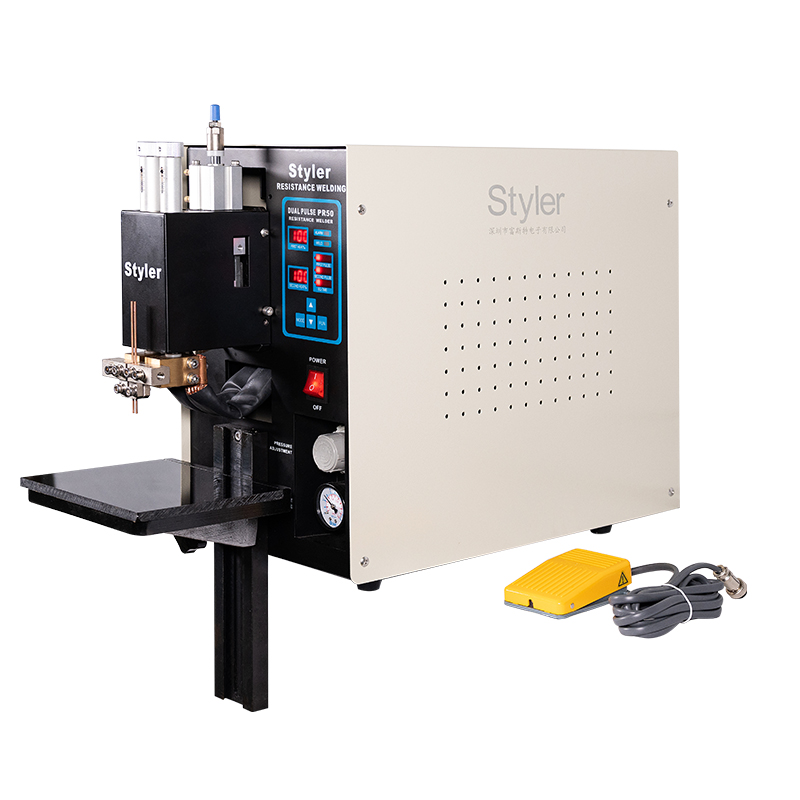
Traditional line-frequency AC spot welders remain utilized for heavy structural fabrication within the ESS envelope, including outer steel enclosure assembly, structural bracing, module rack chassis, and grounding terminal connections. While less suited for direct terminal-to-chemistry micro-joining due to thermal latency, their ruggedness and cost efficiency make them standard equipment for structural ESS hardware.
Hybrid Laser-Resistance Micro-Welding Systems
Emerging ESS manufacturing protocols for massive grid-scale prismatic cells (280Ah/314Ah) demand hybrid joining strategies. Resistance spot welding is utilized to tack and mechanically clamp multi-layered laminated busbars, followed by continuous laser welding, or vice-versa, suppressing joint interface resistance down to sub-microhm levels while ensuring high mechanical shear strength under seismic conditions.
Commercial Landscape & Industrial Evolution in ESS
The transition toward multi-megawatt-hour battery energy storage systems has transformed spot welding from a basic mechanical step into a critical quality gate governed by real-time Industry 4.0 process analytics.
Rising Demand for High-C-Rate Thermal Management
As grid-scale ESS installations expand to support intermittent solar and wind farms, battery packs operate under higher continuous discharge rates. Electrical joints must feature near-zero electrical resistance. A single poor weld nugget in a 1P52S module can generate localized hot spots, triggering cell degradation or catastrophic BMS failure. Consequently, modern spot welders integrate dynamic displacement sensing to measure thermal expansion and mechanical collapse during the weld cycle in real time.
Dissimilar Metal Micro-Joining Challenges
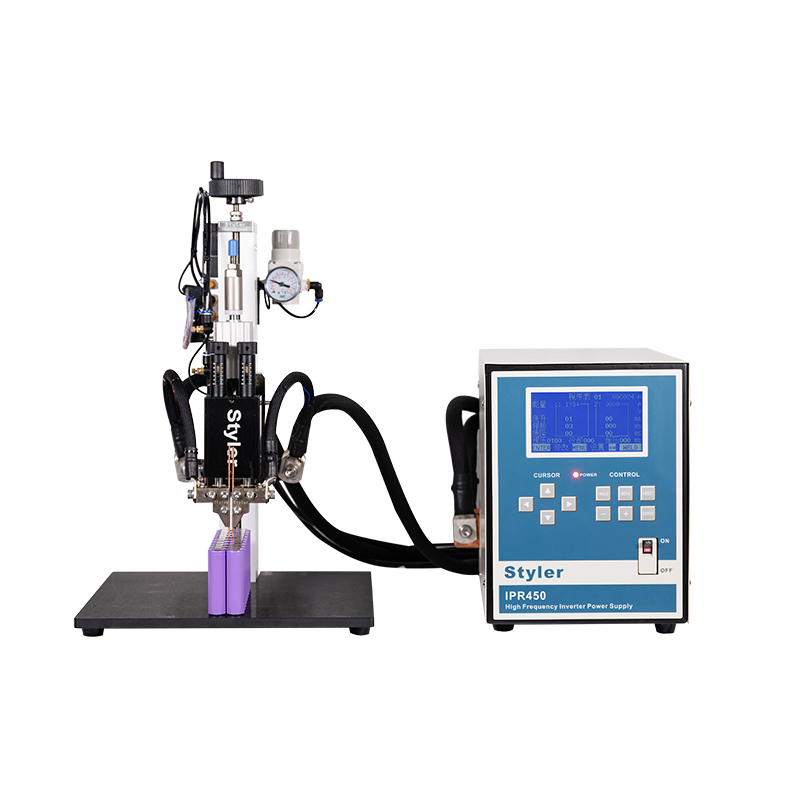
Contemporary ESS architectures frequently require joining dissimilar materials: aluminum busbars to copper terminals, nickel-plated copper to aluminum-clad steel, and brass current collectors. High-frequency inverter DC systems (such as the IPR450 and IPR850) solve metallurgical challenges such as brittle intermetallic compound (IMC) formation by applying dual-pulse profiles—a pre-heat cleaning pulse followed immediately by a high-energy shaping pulse.
Integration of AI In-line Inspection & Closed-Loop Control
Modern battery pack lines are moving away from destructive pull-testing toward non-destructive, real-time quality verification. Spot welders with built-in monitoring units capture dynamic resistance curves, instantaneous voltage drops, and acoustic emissions for every weld nugget. If the dynamic curve deviates from the calibrated envelope, the machine automatically flags the specific coordinate for robotic inspection or re-work, securing a Six Sigma defect rate.
Transition to Large Form Factor Cylindrical Cells (4680, 4695)
Commercial and industrial (C&I) ESS systems are transitioning toward large format cylindrical cells. These cells feature tabless (all-tab) current collectors that require rapid, multi-point spot welding directly across the collector plate. Precision welding heads like the AH03, equipped with independent servo-controlled force actuators and low-inertia follow-up mechanisms, ensure constant electrode force and zero surface denting on thin cell shells.
| Welding Technology | Current Output Profile | Heat Affected Zone (HAZ) | Best ESS Joining Application | Spatter Risk |
|---|---|---|---|---|
| High-Frequency MFDC | Constant DC Square (1–4 kHz) | Very Low / Controllable | Prismatic Cell Terminals & Heavy Busbars | Extremely Low |
| Capacitive Discharge (CD) | High-Peak Pulse (1–10 ms) | Minimal / Highly Localized | Cylindrical Cell Base to Pure Nickel Tabs | Low to Moderate |
| Linear Transistor DC | Pure Ripple-Free DC | Ultra-Low / Micro-Scale | BMS Sensing Leads, Thermistor Tabs, Thin Foils | Negligible |
| AC Line Frequency | Sinusoidal 50/60 Hz | Broad / High Thermal Spread | Module Outer Metal Frame & Grounding Lugs | Moderate |
Deep Application Scenarios in ESS Battery Pack Manufacturing
From utility-scale containerized BESS down to wall-mounted residential powerwalls, micro-resistance spot welding is deployed across several critical assembly stages.
Utility-Scale Megawatt BESS Containers
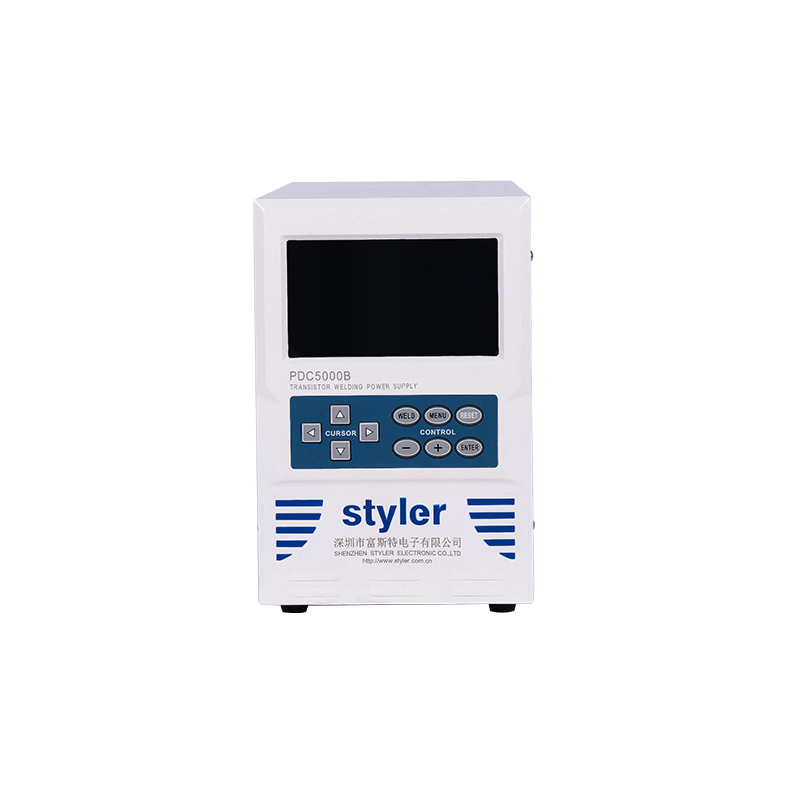
Utility BESS systems (e.g., 20ft/40ft containers reaching 3.7MWh to 5MWh) rely on large prismatic LFP cells. Spot welders are utilized for joining voltage-sensing harnesses, fuse tabs, and multi-layer flexible copper interconnects. High-current precision welders (IPV100 and PDC5000B) deliver the process repeatability needed to minimize thermal drift across thousands of serial-parallel connections.
Residential Solar Storage (Powerwalls)
Home energy storage modules typically employ arrays of 18650, 21700, or small pouch cells. The automated duo-headed spot welders execute high-speed matrix welding of stamped nickel busbar plates onto cell caps. Consistent electrode pressure and dynamic follow-up mechanics ensure uniform weld penetration without damaging the positive terminal safety valve (CID).
Commercial & Industrial (C&I) Backup Units
Uninterruptible Power Supplies (UPS) and C&I peak-shaving systems demand flexible manufacturing lines capable of handling variable cell configurations. Resistance welding machines equipped with quick-change tooling heads and programmable weld schedule banks allow operators to shift seamlessly between cylindrical blocks and prismatic cell tap-off connections.
About Styler Welding
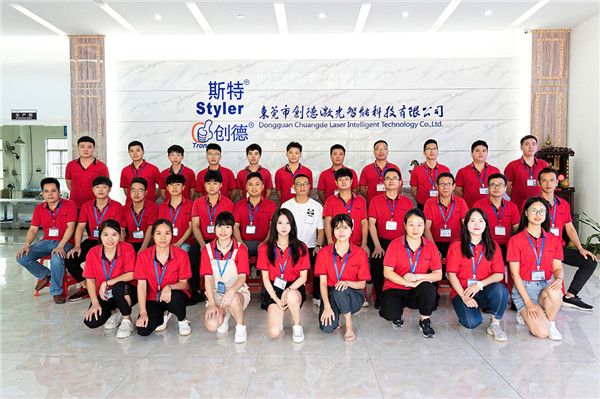
Styler is a professional manufacturer aims to provide high quality and trustful welding machine to the customer. Our company has unique understanding and innovative idea in the field of resistance welding and laser applications, and the welding technology has reached to the international level through continuously investing in the technical research and development. We also cooperate with education institutes on the technology development to enhance our machine’s performance and application area.
Customer Centric is our core value. Besides of providing personalized high performance and durable machines to the customer, we value the hospitality the most, as we wish customers to have a pleasant purchase experience with us for each visit. Therefore, we have been providing ongoing training internally to provide excellent customer service to our customer. We believe the customer-oriented direction is the key to success, and it has been successfully helping us to develop a strong reputation in the industry, allowing us to retain customers and attracting new customers to start the business with us.

Company Vision
To provide a cutting-edge welding machine in a reasonable price to the customer has been the long-term goal for Styler, and thus, we will continually be developing innovative, stable, and budgeting machine to the customer around the world.
Corporate Social Responsibility
Giving back to the society is important as we are not able to go this far without the community’s support. Therefore, Styler has been actively participating in the charity works and government events each year, to improve the local municipal service and facility.
Employee Development
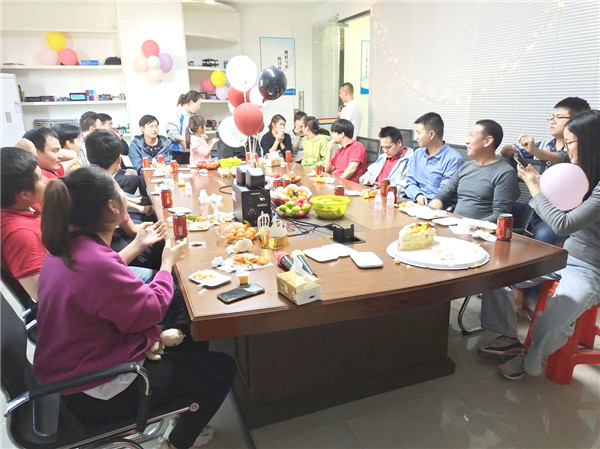
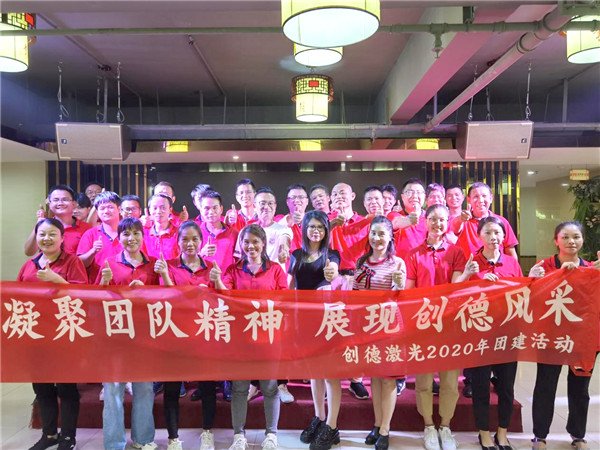
Despite all the growth that has occurred over the years, we remain extremely employee centric. Our management team works tirelessly to ensure each Styler Welding employee feels fulfilled from work and life. As work-life balanced living style is proved that it would increase employee’s performance at work, and consequently, providing better service and product to the customer.
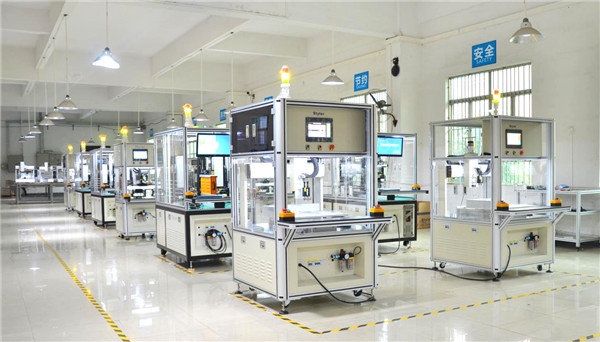
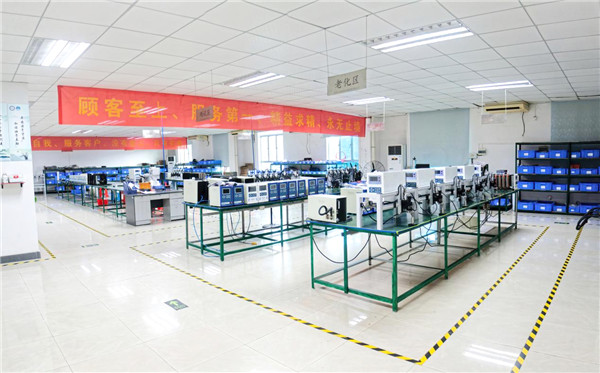

Complete Industrial ESS Spot Welding Machine Catalog
Explore our full line of spot welders, high-current resistance welding power supplies, and precision heads engineered for Energy Storage System (ESS) manufacturing lines.